The 15-Minute Sea Bass Recipe That Tastes Like Luxury (No Fluff)
Imagine this: It’s the middle of the week, you’re craving something truly special—a meal that whispers of fine dining and culinary craft—but your clock and energy levels are screaming for takeout. It’s a familiar dilemma. We often equate luxurious food with long hours, complex techniques, and a mountain of dishes. But what if I told you that one of the most elegant, mouth-watering dishes you could imagine is only 15 minutes away? No tricks, no fluff, just pure, unadulterated flavor.
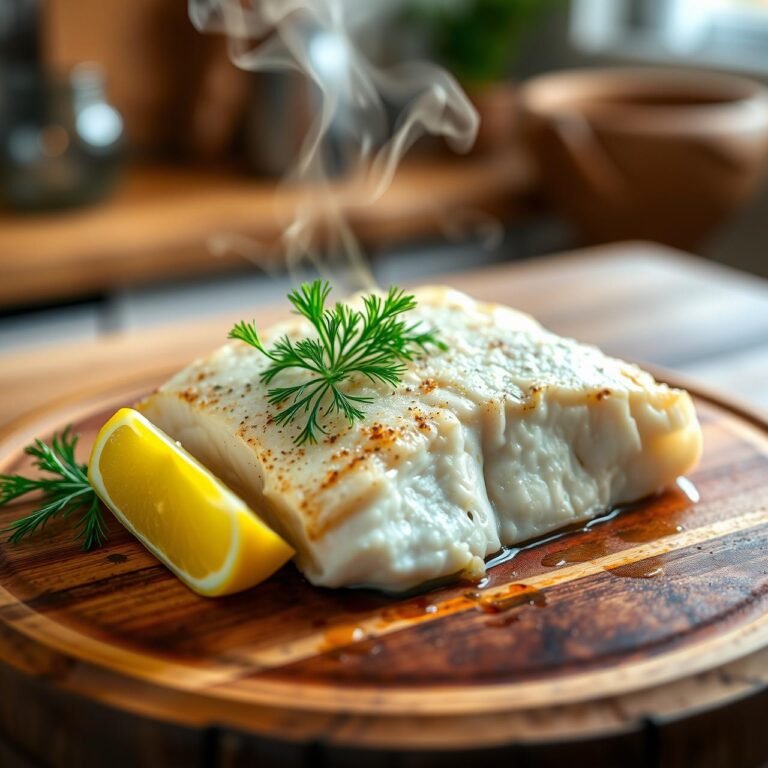
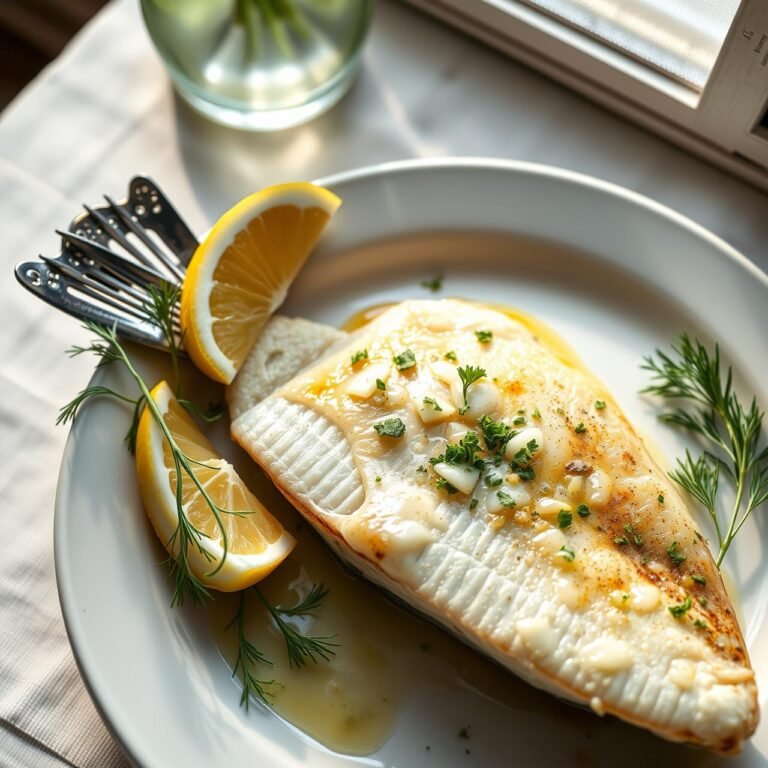
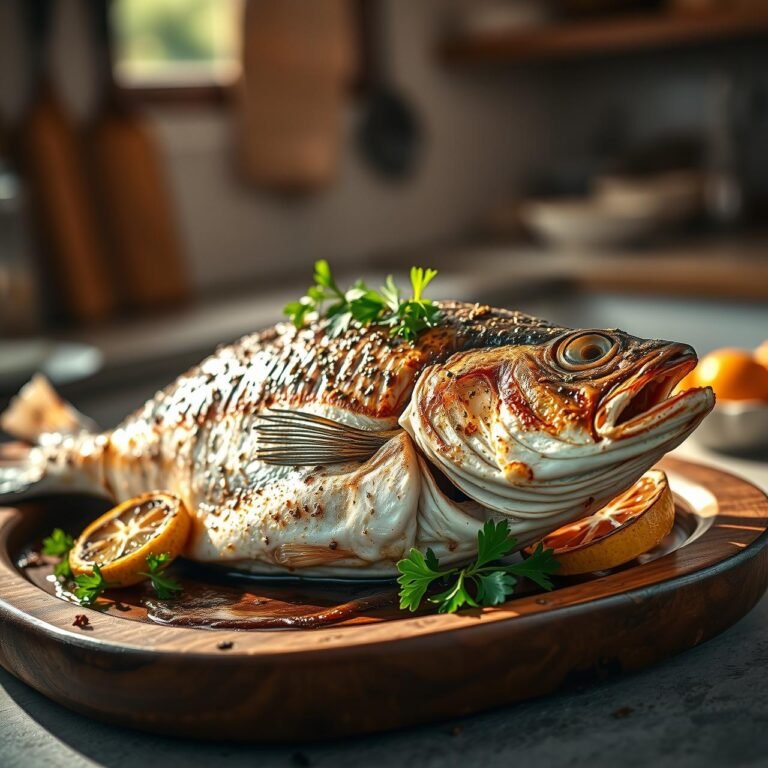
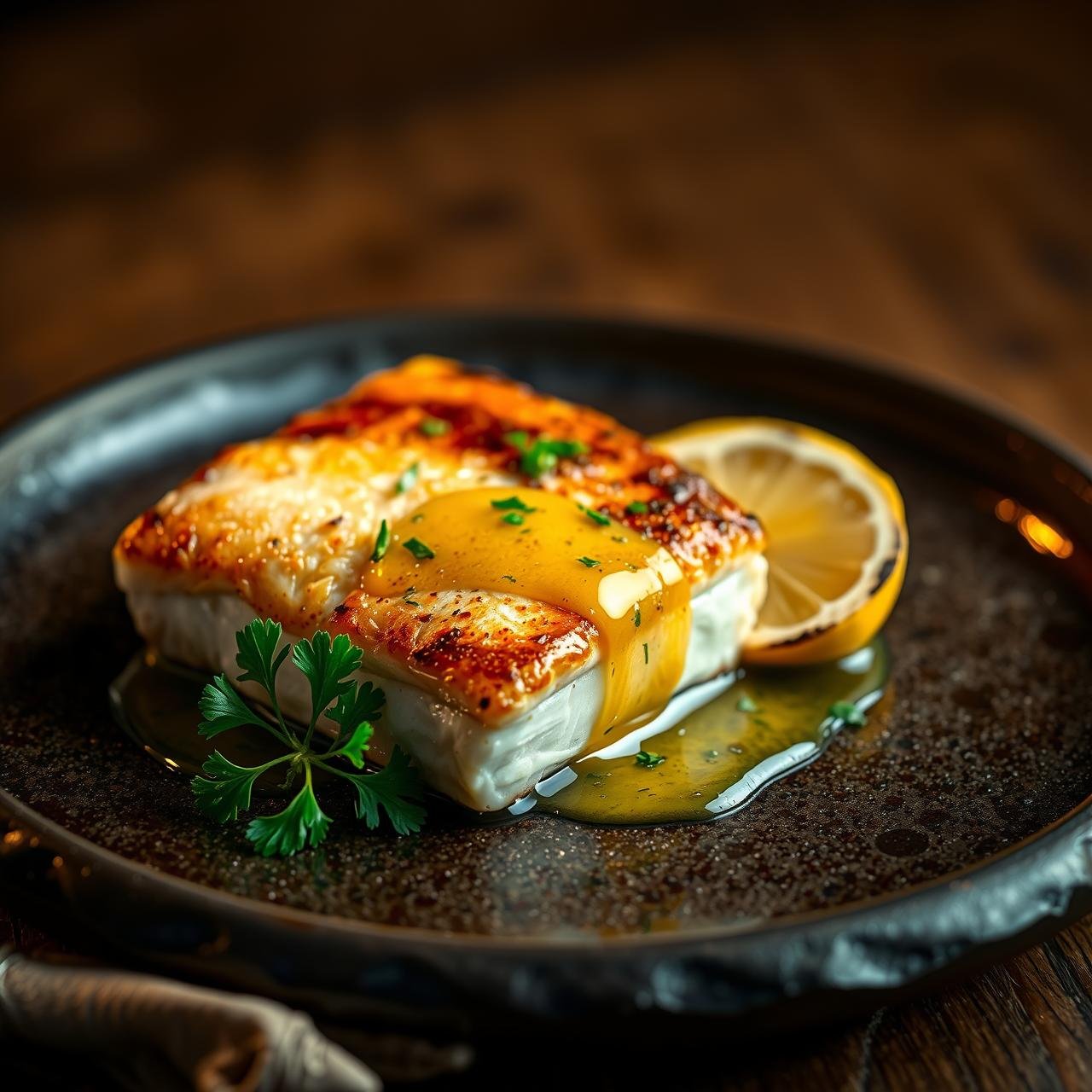
Enter the Pan-Seared Sea Bass. This is not just another fish recipe. This is your passport to feeling like a gourmet chef in your own kitchen. Sea bass is a magnificent fish; its flesh is firm yet delicate, with a mild, slightly sweet flavor that provides the perfect canvas for simple, high-impact ingredients. The true magic, however, lies in the skin. When seared correctly, it transforms into a shatteringly crisp, savory cracker that provides an incredible textural contrast to the tender meat beneath. Paired with a classic, velvety pan sauce of browned butter, garlic, lemon, and herbs, this dish transcends the everyday and becomes an experience. Forget the idea that luxury is out of reach on a Tuesday night. Let’s cook.
Why This Sea Bass Recipe Is a Game-Changer
This recipe isn’t about a long list of fancy ingredients; it’s about technique and understanding the ‘why’ behind each step. Its brilliance lies in its simplicity and the synergy between a few key elements:
- Maximum Flavor, Minimum Time: The entire cooking process, from prep to plate, is engineered for speed without sacrificing a single drop of flavor. High-heat searing and creating a pan sauce in the same skillet are classic chef techniques for efficiency.
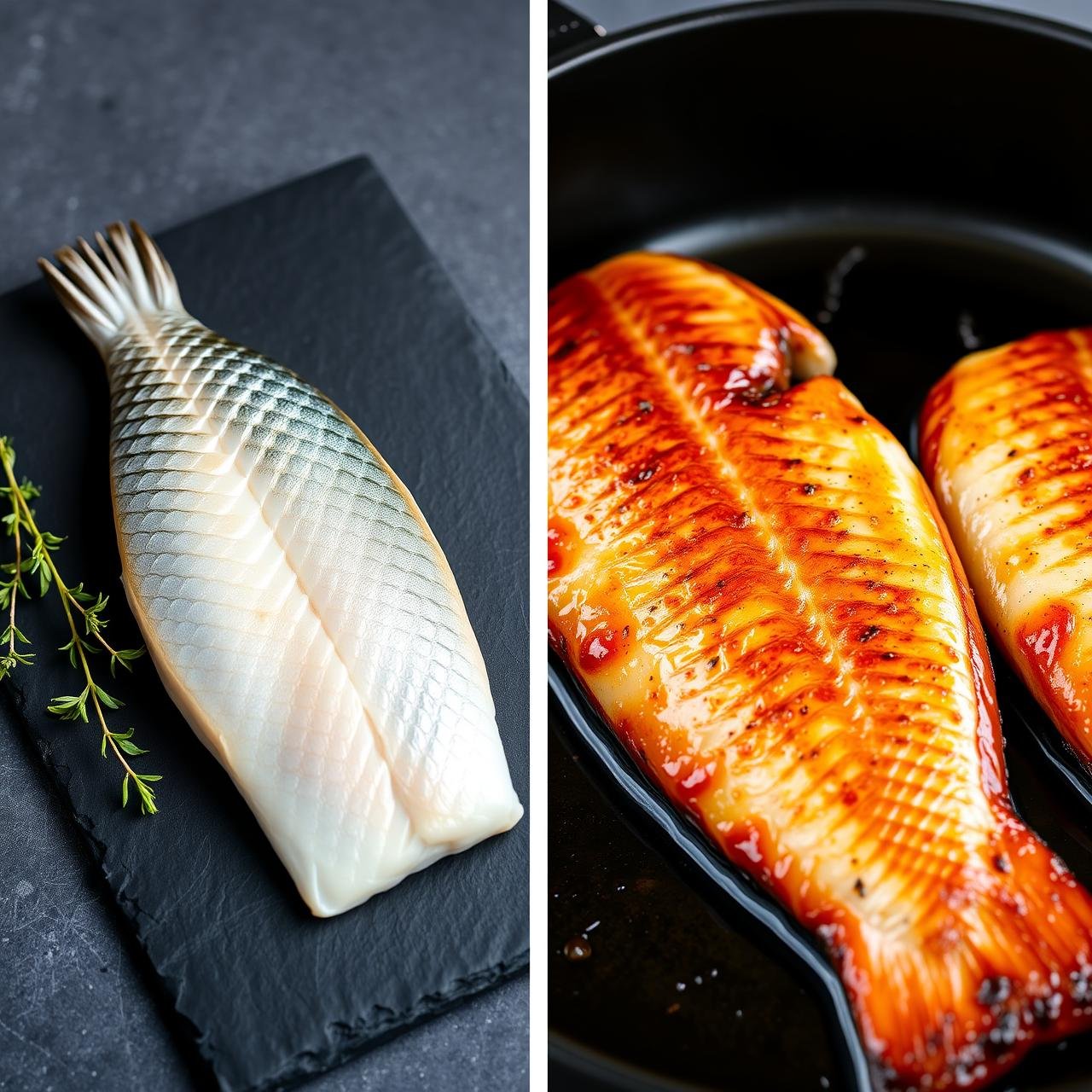
- The Crispy Skin Secret: We’ll focus on the single most important factor for achieving that coveted crispy skin: a completely dry surface and an appropriately hot pan. This creates a powerful Maillard reaction, developing deep, savory flavors and an unbeatable texture.
- The Instant Pan Sauce: The ‘fond’—those little browned bits left in the pan after searing the fish—is pure gold. By deglazing the pan with butter and lemon, we capture all that concentrated flavor and create a luscious, emulsified sauce in under a minute.
- Healthy & Elegant: Sea bass is rich in lean protein and Omega-3 fatty acids. This recipe uses healthy fats like olive oil and a modest amount of butter for flavor, making it a meal that nourishes your body while delighting your palate. It’s clean eating at its most delicious.
The Essential Tools for Pan-Searing Perfection
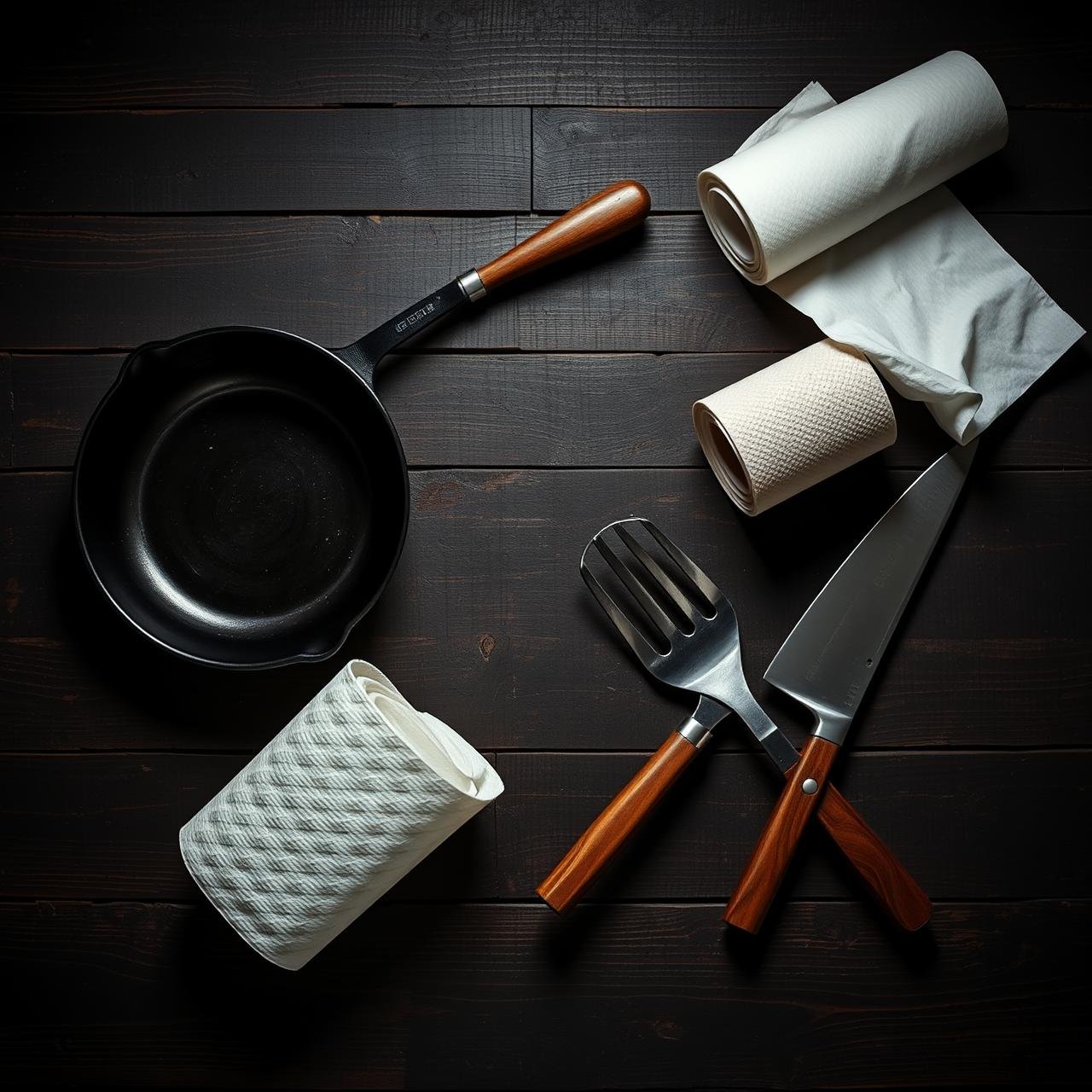
You don’t need a professional kitchen setup for this recipe, but a few key tools will make the process seamless and guarantee a perfect result every time. Think of these as your partners in culinary crime.
Your Shortlist of Equipment:
- A High-Quality Skillet: This is the most crucial tool. A 10 or 12-inch stainless steel or cast-iron skillet is ideal. These materials retain and distribute heat evenly, which is essential for a uniform, hard sear. Avoid thin, non-stick pans if possible, as they often don’t get hot enough for a truly crispy skin.
- Fish Spatula (Fish Turner): Its thin, flexible head is designed to slide cleanly under delicate fish fillets without breaking them apart. It’s a game-changer and will prevent the heartbreak of a beautiful fillet crumbling during the flip.
- Paper Towels: Never underestimate their power! They are your number one tool for getting the fish skin bone-dry.
- Chef’s Knife & Cutting Board: For prepping your garlic, lemon, and herbs.
- Tongs: Useful for flipping the fish if you don’t have a fish spatula, and for handling herbs.
A Symphony of Simple Ingredients
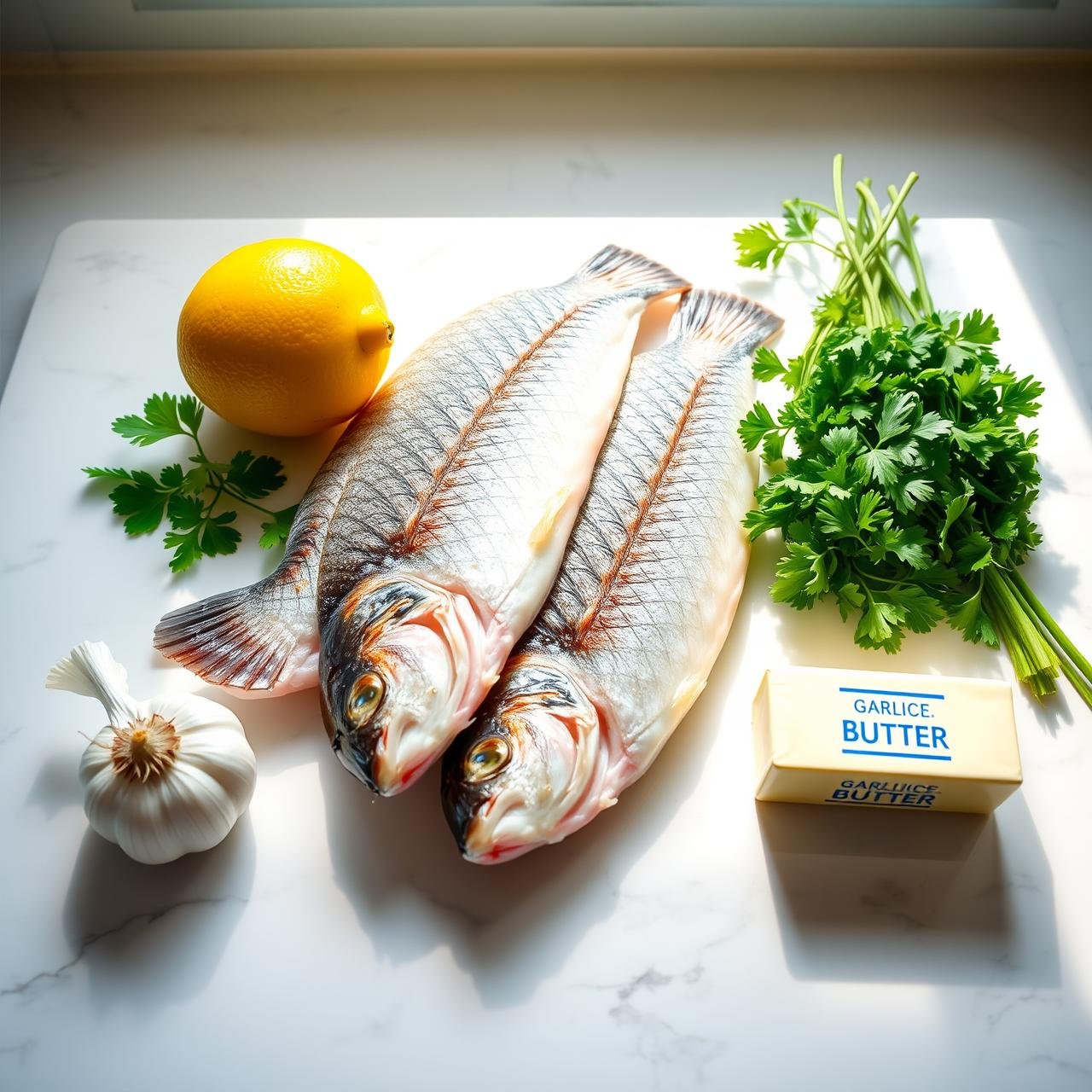
True luxury in cooking often comes from allowing high-quality ingredients to shine. This recipe uses a handful of fresh, powerful components to create something truly memorable. Quality over quantity is the mantra here.
- Sea Bass Fillets: You’ll need two 6-ounce (170g) fillets, skin-on. Look for fillets with firm, translucent flesh and vibrant, intact skin. If you can, ask your fishmonger for center-cut pieces as they tend to be more uniform in thickness, ensuring even cooking.
- High-Smoke Point Oil: 1 tablespoon of avocado oil, grapeseed oil, or even a light olive oil. This is for the initial sear, so we need an oil that can handle high heat without smoking and burning.
- Unsalted Butter: 3 tablespoons, cut into pieces. Using unsalted butter allows you to control the final seasoning. It’s the foundation of our pan sauce, adding richness and a nutty flavor as it browns.
- Garlic: 2-3 cloves, thinly sliced or roughly chopped. Slicing it prevents it from burning as quickly as minced garlic in the hot butter. It infuses the sauce with its aromatic, pungent flavor.
- Lemon: 1 whole lemon. We’ll use the juice of half for the sauce to add brightness and cut through the richness of the butter, and the other half can be cut into wedges for serving.
- Fresh Herbs: 2 tablespoons of freshly chopped parsley or 2-3 sprigs of fresh thyme. Herbs added at the end bring a fresh, clean finish to the dish. Parsley adds a peppery brightness, while thyme provides a subtle, earthy note.
- Salt and Freshly Ground Black Pepper: To taste. Don’t be shy with the initial seasoning of the fish; it’s crucial for building the first layer of flavor.
The 15-Minute Method: From Pan to Plate
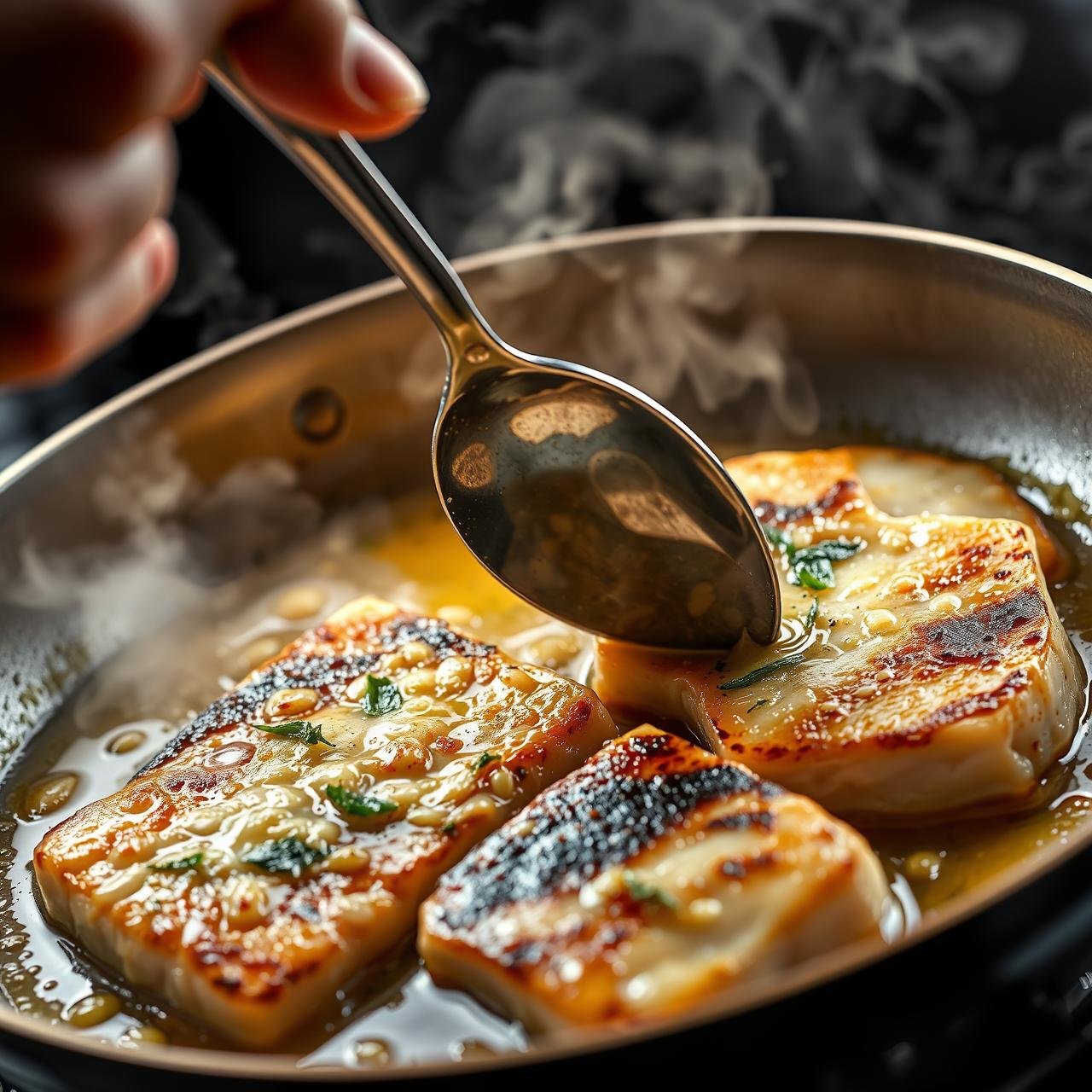
This is where the magic happens. The timeline is tight, so have all your ingredients prepped and ready to go before you even think about turning on the stove. This chef practice, known as ‘mise en place’, is the key to a stress-free experience.
-
Step 1: Prepare the Fish (Minutes 1-3)
Remove the sea bass fillets from the refrigerator. Using paper towels, pat the entire surface of each fillet, especially the skin side, until it is completely and utterly dry. Any moisture left on the skin will steam the fish instead of searing it, resulting in a soggy texture. Once dry, season both sides generously with salt and freshly ground black pepper. The salt will not only add flavor but also help draw out any remaining moisture from the skin.
-
Step 2: The Perfect Sear (Minutes 4-9)
Place your stainless steel or cast-iron skillet over medium-high heat. Let the pan get hot for a good 2-3 minutes. You’ll know it’s ready when a drop of water sizzles and evaporates instantly. Add the 1 tablespoon of high-smoke point oil. It should shimmer almost immediately. Carefully place the sea bass fillets in the pan, skin-side down. Press down gently on each fillet with your fish spatula for about 10-15 seconds to ensure the entire surface of the skin makes contact with the hot pan. This prevents it from curling up. Now, do not touch it. Let it sear for 4-5 minutes. You’ll see the flesh turning opaque from the bottom up. The skin should be a deep golden-brown and release easily from the pan when it’s ready.
-
Step 3: The Flip & Finish (Minutes 10-11)
Using your fish spatula, carefully flip the fillets. They should need only 1-2 minutes on the flesh side, depending on their thickness. The residual heat will continue to cook them through. Cook until the fish is just opaque and flakes easily with a fork.
-
Step 4: Create the Pan Sauce (Minutes 12-14)
Remove the fish from the skillet and set aside on a warm plate. Reduce the heat to low. Add the 3 tablespoons of butter to the pan. It will melt and begin to foam. Add the sliced garlic and swirl the pan, cooking for about 30-45 seconds until the garlic is fragrant and lightly golden—be careful not to burn it. Squeeze in the juice of half a lemon. The sauce will bubble vigorously. Scrape up any browned bits from the bottom of the pan with a wooden spoon. Turn off the heat and toss in the fresh parsley or thyme. Swirl the pan one last time to combine everything.
-
Step 5: Serve Immediately (Minute 15)
Place a sea bass fillet on each plate, crispy skin up. Spoon the glorious, fragrant lemon-butter pan sauce over the top. Serve immediately with a wedge of lemon on the side. Enjoy your masterpiece.
Chef’s Secrets for Flawless Sea Bass, Every Time
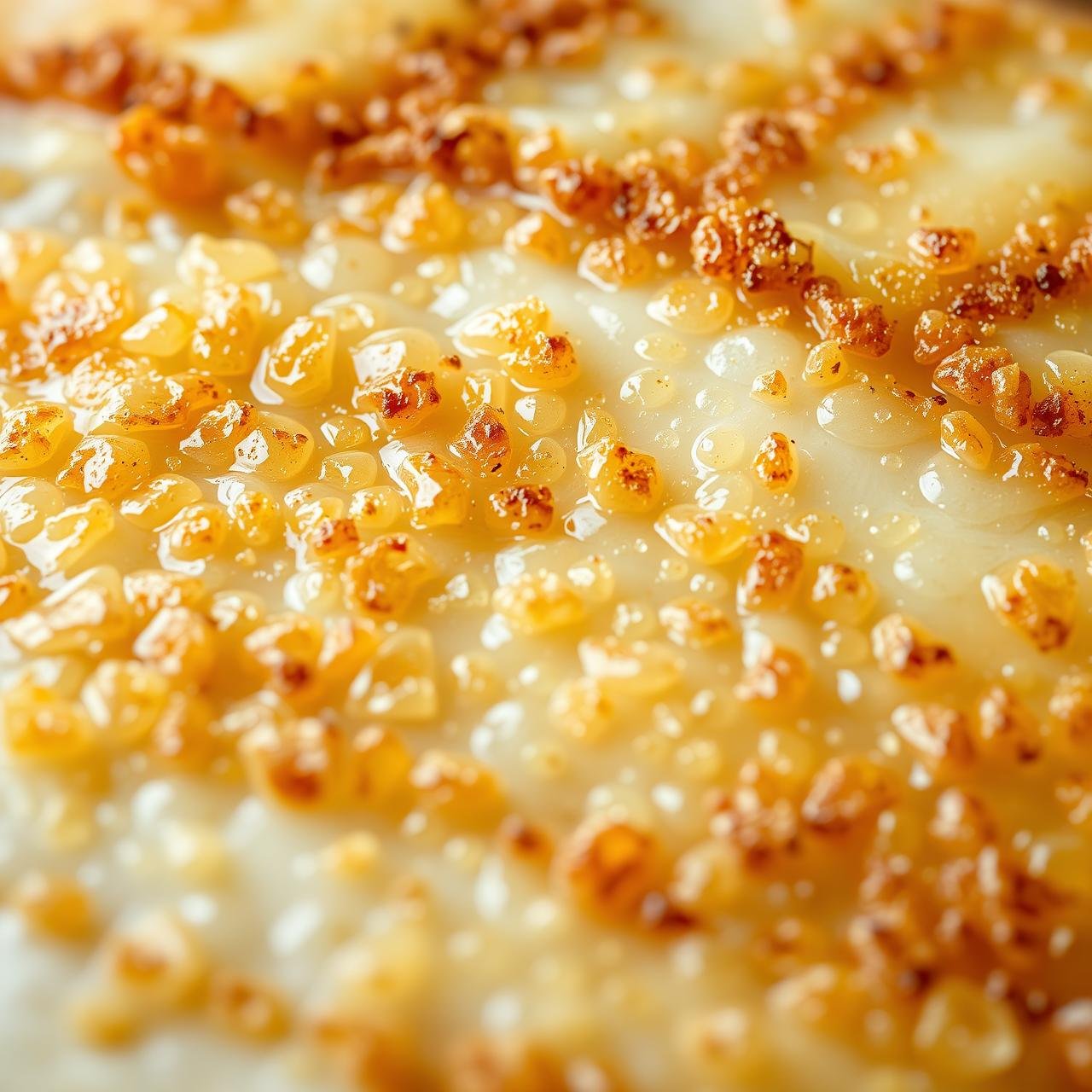
The Dry Skin Doctrine
I cannot overstate this: moisture is the mortal enemy of crispy skin. Patting it dry is good, but for an extra guarantee, you can leave the fillets uncovered on a plate in the refrigerator for an hour before cooking. The cold, dry air will wick away even more surface moisture, ensuring a glass-like, crispy finish.
Don’t Fear the Heat
Many home cooks are afraid to get their pan hot enough. A timid pan will only steam the fish. You need that initial blast of high heat to create the Maillard reaction that forms the delicious crust. Be confident, let the pan preheat properly, and listen for that loud, satisfying sizzle when the fish hits the oil.
The Weight-Down Trick
When you first place the fish skin-down, the skin contracts and can curl away from the pan’s surface, leading to uneven cooking. Pressing down firmly with a spatula for the first 15 seconds ensures the entire skin makes contact, rendering the fat evenly and creating a perfectly flat, crispy surface.
Know When It’s Done
The best way to check for doneness is to gently press on the thickest part of the fillet. It should be firm but yield slightly and begin to flake. If you’re unsure, you can insert a small knife into the center; the flesh should be opaque, not translucent. Remember, the fish will continue to cook from residual heat after you remove it from the pan, so it’s better to err on the side of slightly undercooked.
Pairing Perfection: What to Serve with Your Sea Bass
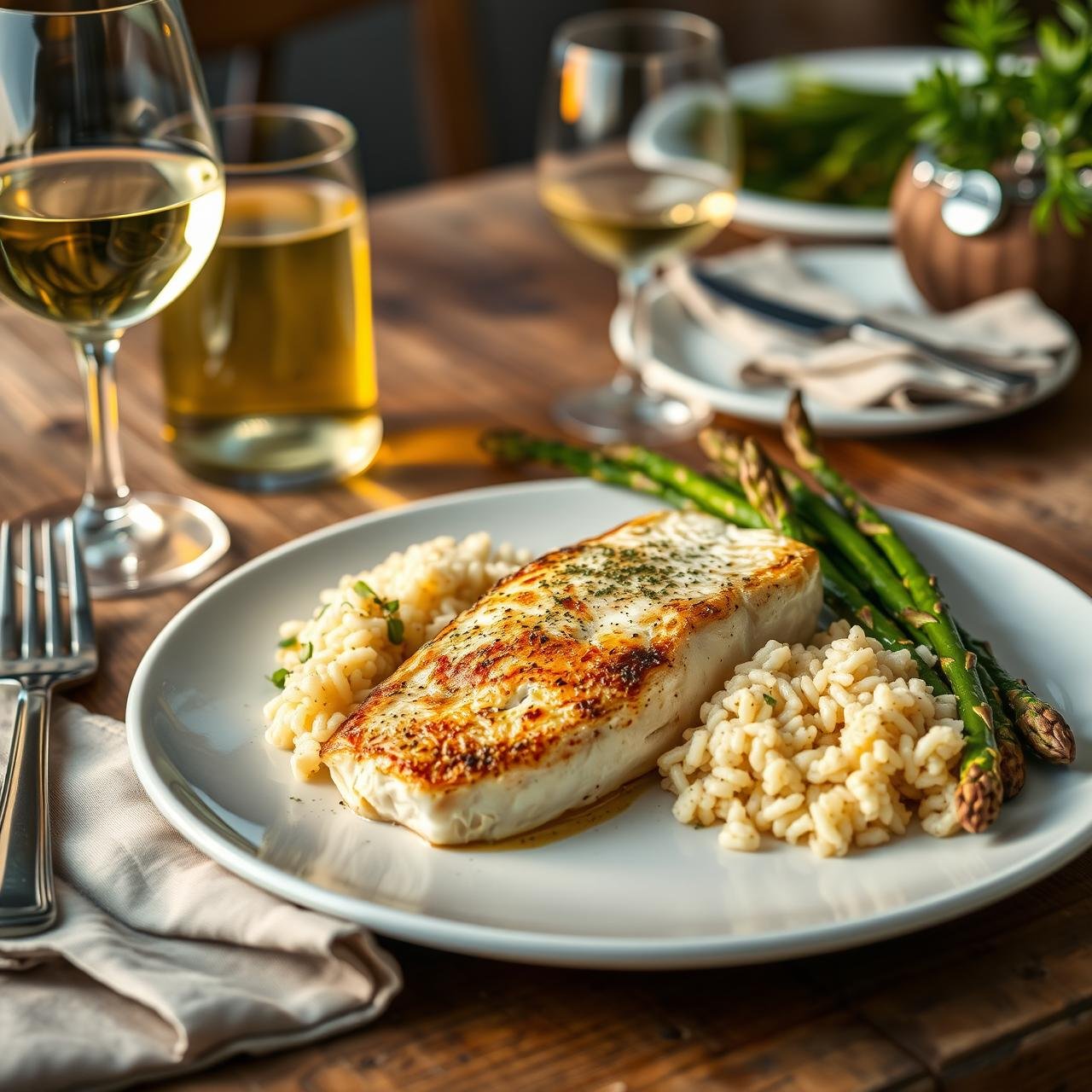
This elegant sea bass stands beautifully on its own, but the right accompaniments can elevate it to a full-fledged feast. The key is to choose sides that complement, rather than overpower, its delicate flavor.
Light & Healthy Options:
- Roasted Asparagus with Parmesan: Toss asparagus spears in olive oil, salt, and pepper. Roast at 400°F (200°C) for 10-12 minutes until tender-crisp. Sprinkle with Parmesan cheese in the last few minutes.
- Simple Arugula Salad: A bed of peppery arugula dressed with a light vinaigrette of olive oil, lemon juice, and a pinch of salt provides a fresh, clean counterpoint.
- Steamed Green Beans with Almonds: A quick and easy side that adds color and crunch.
Slightly More Substantial Pairings:
- Lemon-Garlic Orzo: While the fish rests, cook some orzo according to package directions. Drain and toss with olive oil, lemon zest, garlic powder, and fresh parsley.
- Creamy Parmesan Risotto: For a truly decadent, restaurant-style meal, serve the sea bass atop a bed of creamy risotto.
- Garlic Mashed Potatoes: A classic comfort pairing that soaks up the delicious pan sauce beautifully.
Wine Pairing Suggestion:
A crisp, dry white wine is the perfect partner. Look for a Sauvignon Blanc with its citrusy notes, a Pinot Grigio for its clean minerality, or an unoaked Chardonnay to complement the buttery sauce without overwhelming the fish.
Nutritional Profile: A Gourmet & Guilt-Free Meal
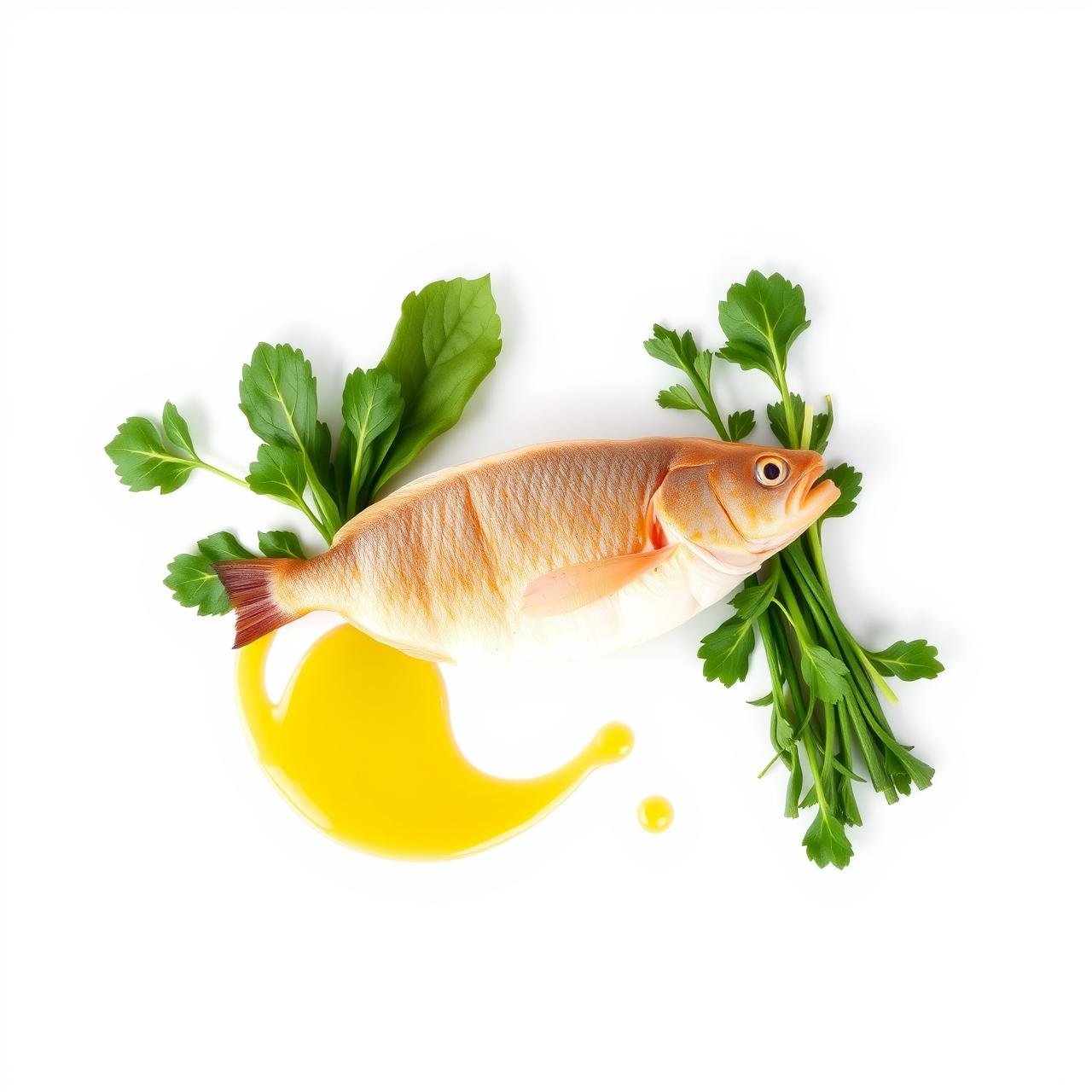
This dish is a powerhouse of nutrition, proving that indulgent-tasting food can also be incredibly good for you. Sea bass is an excellent source of lean protein, which is vital for muscle repair and satiety, and it’s packed with heart-healthy omega-3 fatty acids, known to reduce inflammation and support brain health. Here is an estimated nutritional breakdown per serving.
| Nutrient | Amount per Serving (approx.) |
|---|---|
| Calories | 410 kcal |
| Protein | 35g |
| Fat | 28g |
| Saturated Fat | 10g |
| Carbohydrates | 3g |
| Sodium | 450mg |
| Omega-3 Fatty Acids | ~1500mg |
Disclaimer: These values are estimates and can vary based on the exact size of the fish fillet and ingredients used.
Storing & Reheating Your Culinary Creation
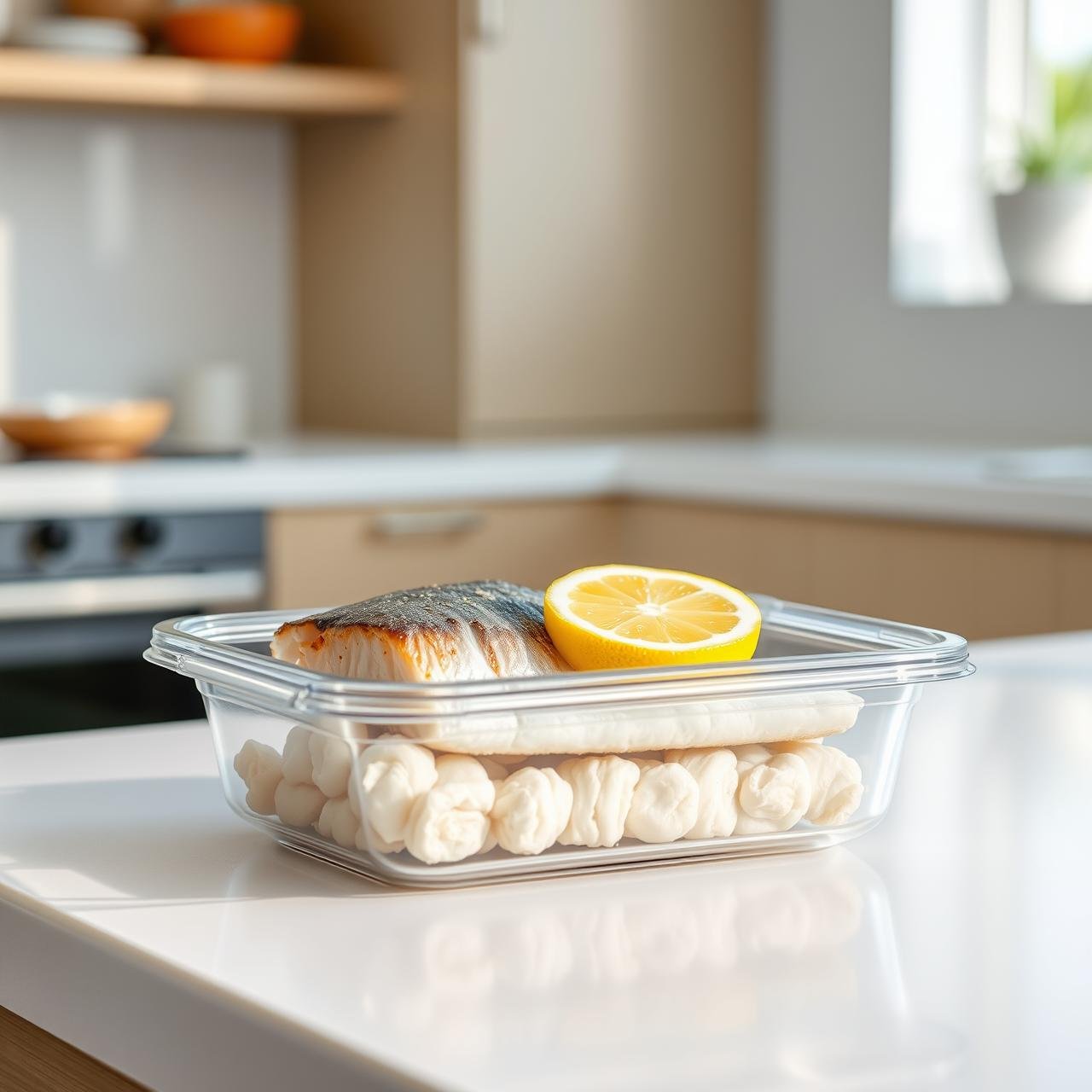
While this sea bass is undeniably best enjoyed fresh from the pan, leftovers can still be delicious if handled with care. The biggest challenge is preserving the texture of the delicate fish and the crispy skin.
Storage:
Allow the fish to cool completely to room temperature. Store it in an airtight container in the refrigerator for up to 2 days. Store any leftover pan sauce separately in a small airtight container.
Reheating: The Right Way
Avoid the microwave at all costs; it will turn the fish rubbery and destroy the crispy skin. Instead, follow this method:
- Preheat your oven or a toaster oven to 300°F (150°C).
- Place the fish fillet on a small baking sheet. Heat for 5-8 minutes, or until just warmed through.
- For a last-minute crisp-up of the skin, you can place the fillet skin-side up in a hot, dry skillet for 30 seconds after it comes out of the oven.
- Gently warm the leftover sauce in a small saucepan over low heat until liquid. Do not boil. Spoon over the reheated fish and enjoy.
Conclusion
And there you have it—a meal of pure, unadulterated luxury, brought to life in your kitchen in just 15 minutes. We’ve journeyed from selecting the perfect fillet to mastering the art of the sear, creating a pan sauce worthy of any fine dining establishment. This recipe is more than just a set of instructions; it’s a testament to the idea that fantastic food doesn’t need to be complicated, time-consuming, or reserved for special occasions. It’s about applying simple techniques to quality ingredients to create something truly extraordinary.
The next time you find yourself short on time but long for flavor, I hope you’ll remember the sizzle of the sea bass hitting the pan and the fragrant aroma of the lemon-butter sauce. Step into your kitchen with confidence, knowing that a moment of culinary bliss is never more than a few minutes away. Happy cooking!