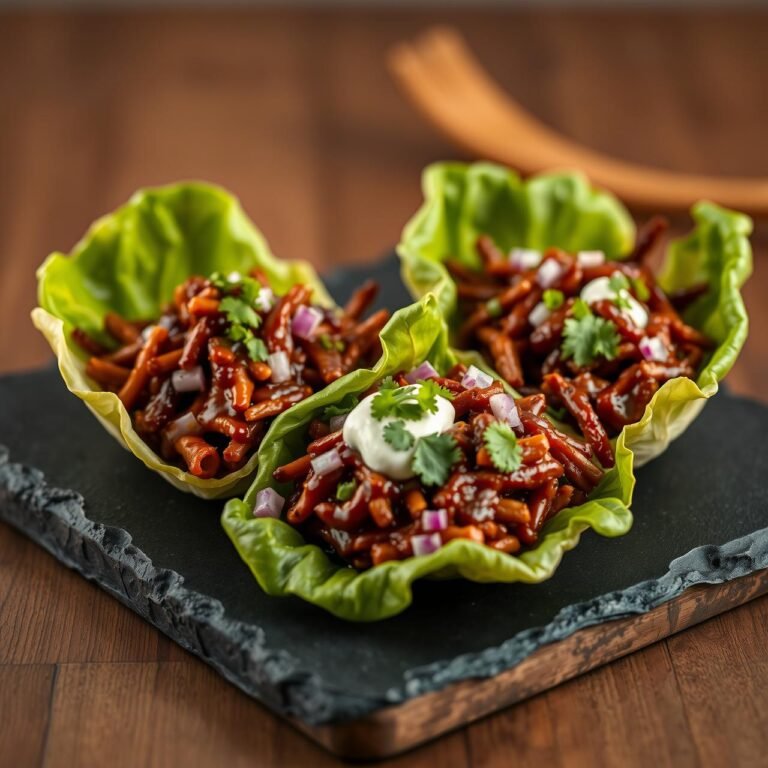
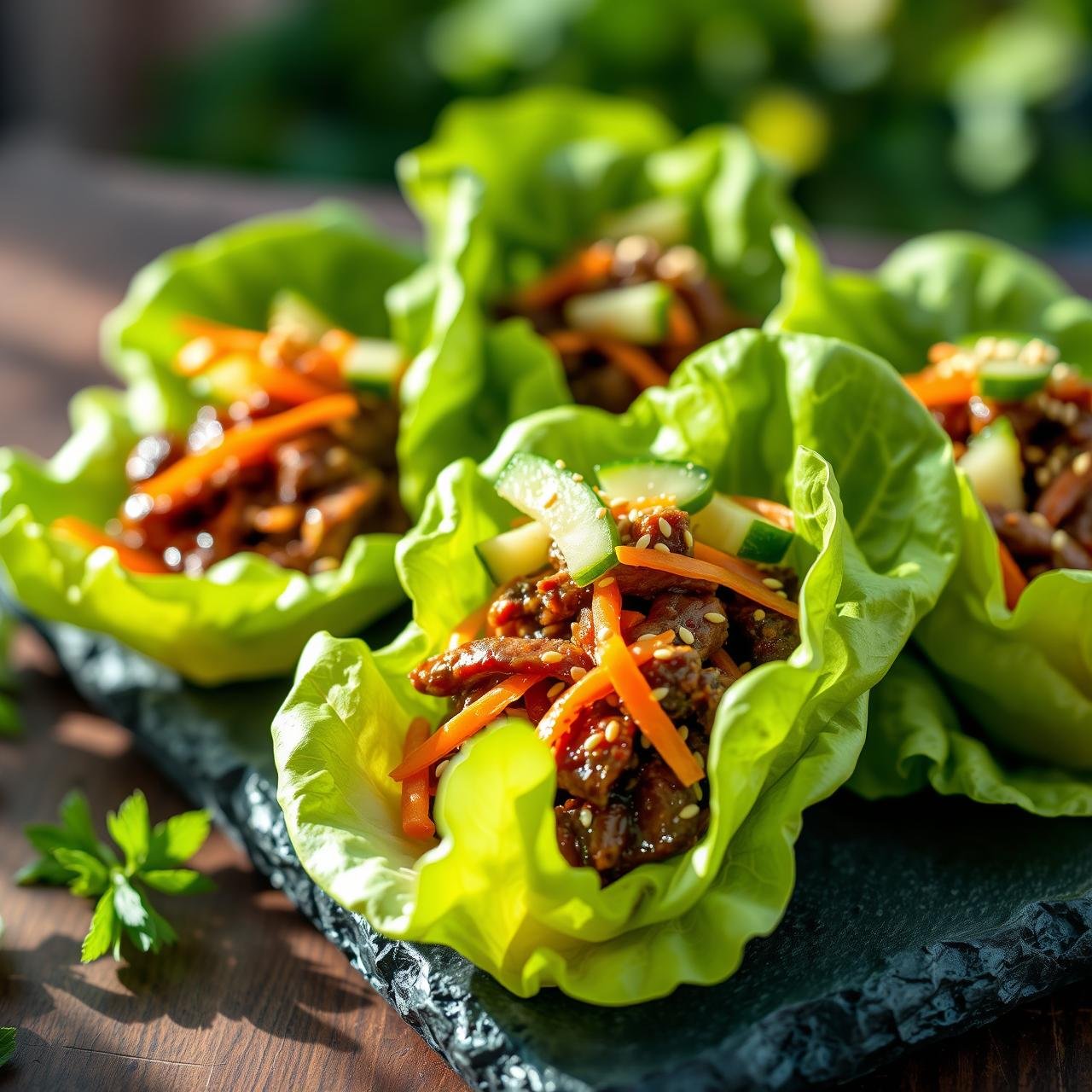
Skinny Korean Beef Wraps: Sweet, Spicy, and Zero Guilt
There are certain cravings that strike with an undeniable force—and for me, the siren song of Korean barbecue is one of the strongest. That perfect, magical alchemy of sweet, savory, and spicy; the tantalizing sizzle of thinly sliced beef hitting a hot pan; the rich, umami-packed flavor that coats every single bite. Traditionally, this indulgence comes with heaps of rice and often a significant amount of sugar and oil. But what if you could capture that same soul-satisfying flavor in a dish that was light, vibrant, and refreshingly guilt-free?
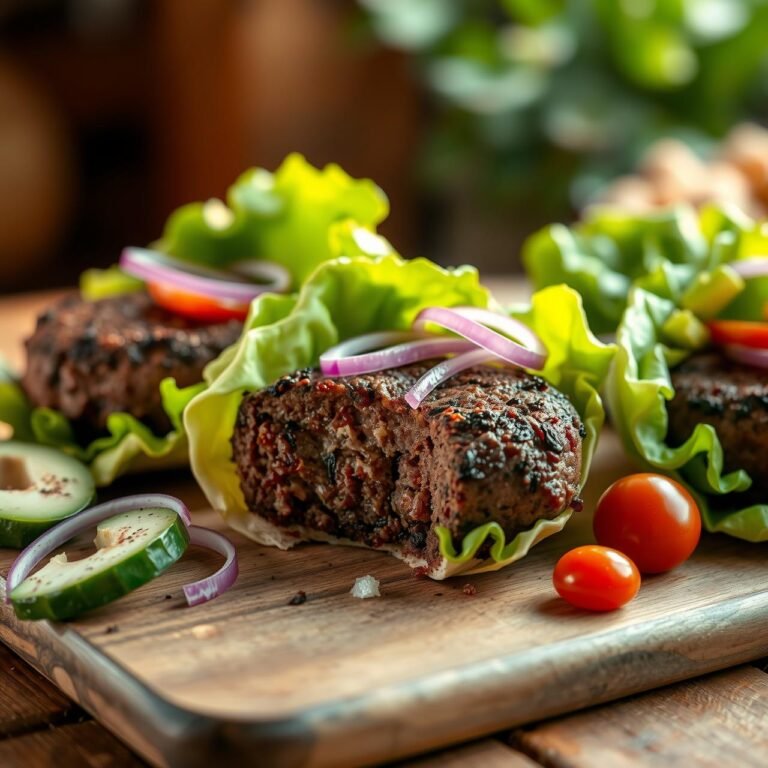
Enter these Skinny Korean Beef Wraps. This recipe is my love letter to bulgogi, reimagined for a healthier lifestyle without sacrificing an iota of taste. We swap heavy carbs for crisp, hydrating lettuce cups that provide the perfect crunchy vessel for the star of the show: exquisitely tender, marinated beef. The marinade itself is a masterclass in flavor balance, achieving that signature sweetness from natural sources and a fiery kick from gochujang, all while keeping things clean and light. It’s a meal that feels both decadent and nourishing, a culinary contradiction that works in the most delicious way possible. Prepare to transform your weeknight dinner routine with a dish that’s as fun to assemble as it is to devour.
The Heart of the Flavor: A Guilt-Free Marinade
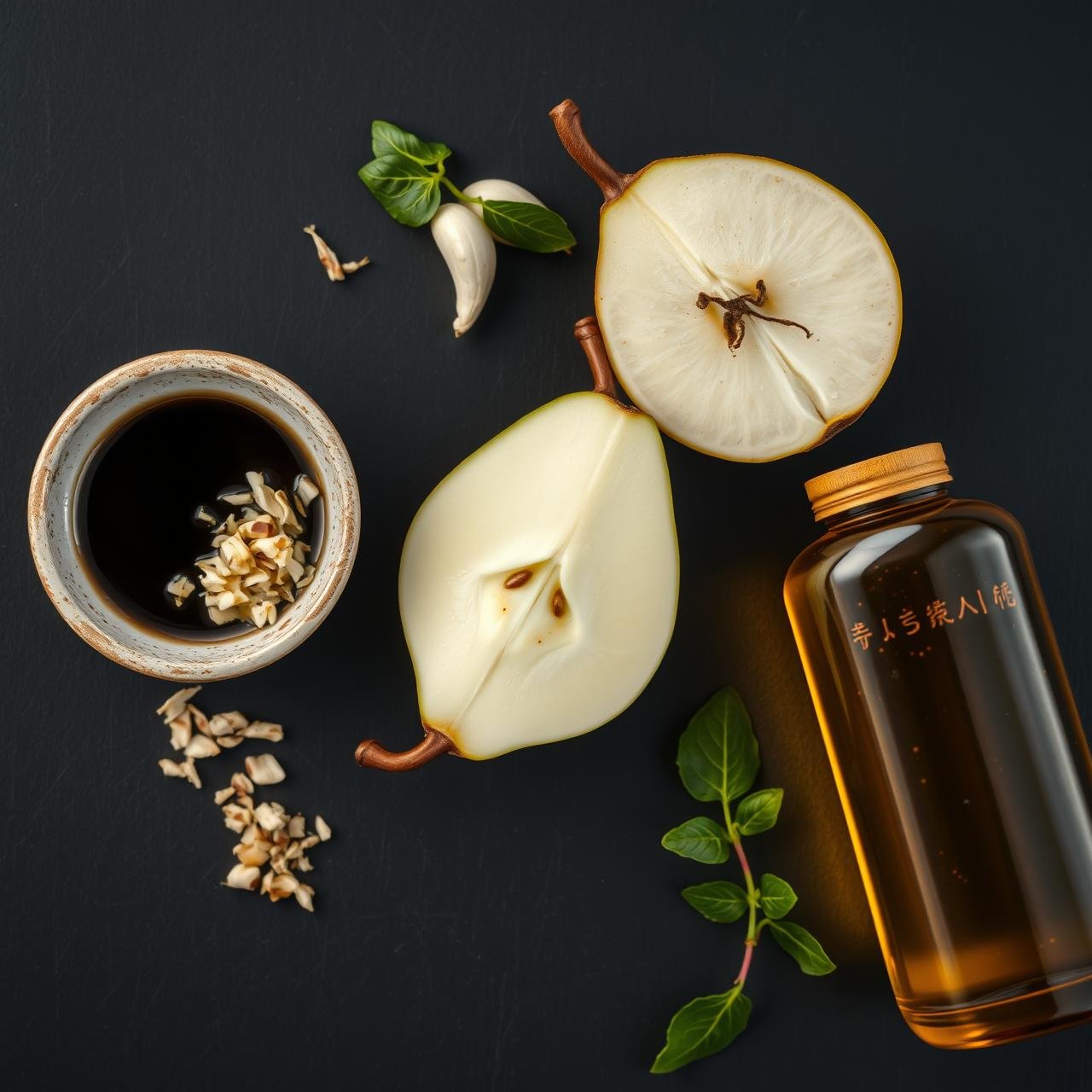
The soul of any great Korean barbecue dish lies in its marinade, and this recipe is no exception. Our goal is to build layers of complex flavor without relying on heaps of refined sugar or sodium. Each ingredient is chosen with purpose, working in harmony to tenderize the beef and create that signature bulgogi taste.
The Flavor Architects:
- Low-Sodium Soy Sauce or Tamari: This forms the savory, umami-rich base of our marinade. Using a low-sodium version gives us control over the saltiness while still providing that essential fermented depth. For a gluten-free option, Tamari is a perfect substitute.
- Toasted Sesame Oil: A little goes a long way. This isn’t a cooking oil, but a finishing oil, added for its incredibly nutty, aromatic fragrance that is quintessentially Korean.
- Freshly Grated Asian Pear: This is the chef’s secret. Not only does the pear provide a delicate, natural sweetness, but it also contains an enzyme called calpain, which works as a fantastic natural tenderizer for the beef, resulting in a melt-in-your-mouth texture. An apple can be used in a pinch, but the Asian pear is superior.
- Garlic and Ginger: The aromatic power duo. Freshly minced garlic provides a pungent bite, while grated ginger adds a warm, zesty spice that cuts through the richness of the beef.
- Gochujang (Korean Chili Paste): This is where the magic happens. Gochujang brings a complex heat—it’s not just spicy, but also slightly sweet and deeply savory from its fermented soybean base. You can adjust the amount to your personal heat preference.
By whisking these components together, you create a marinade that’s not just a sauce, but a transformative elixir for the beef. It seeps into the meat, tenderizing the fibers and infusing it with a flavor that will blossom beautifully in the heat of the skillet.
Gather Your Tools: Kitchen Essentials
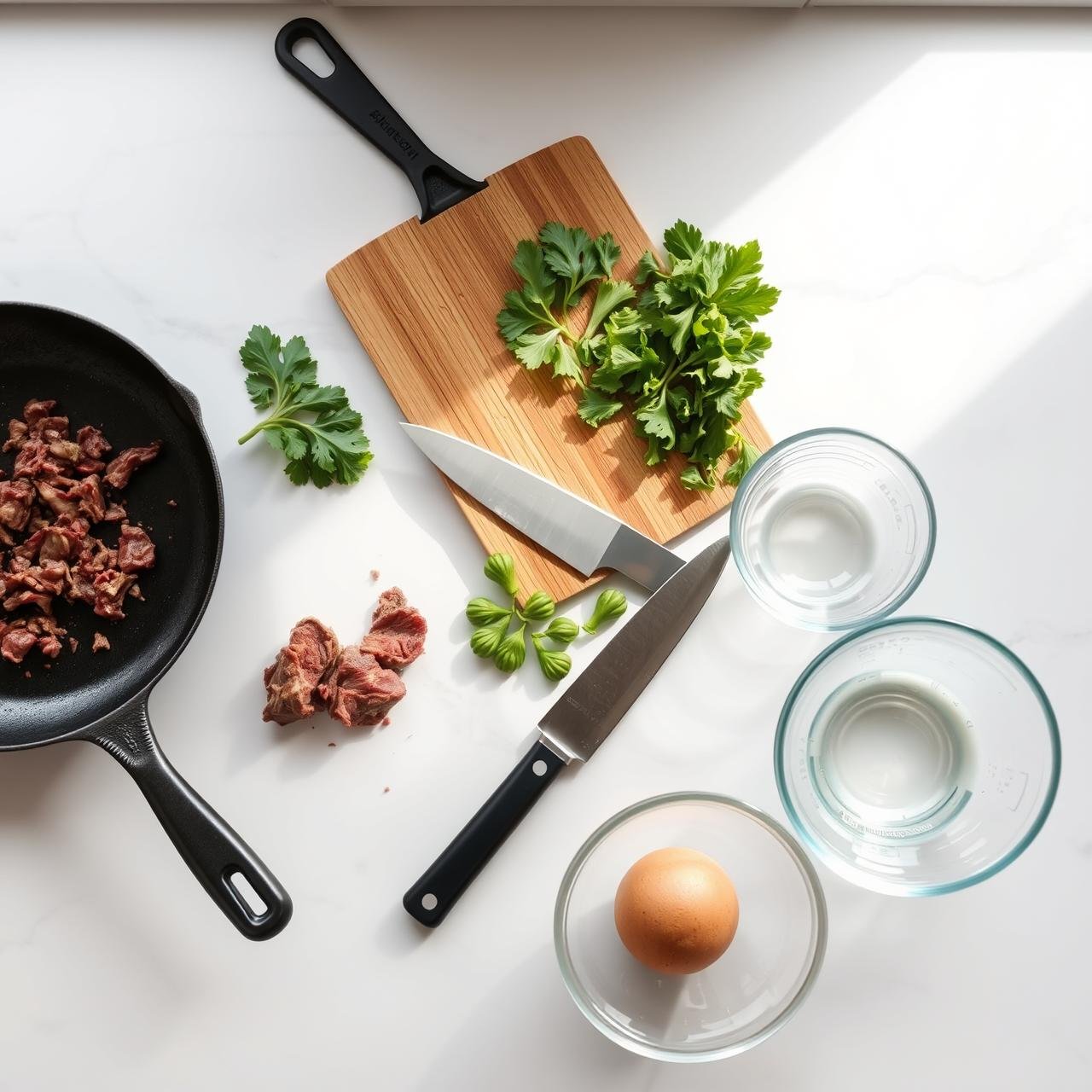
A great meal is made easier with the right tools. You don’t need any fancy gadgets for this recipe, just a few kitchen workhorses that will help you achieve a perfect sear on the beef and prep your fresh components with ease.
| Tool | Purpose |
|---|---|
| Large Skillet or Wok | A cast-iron skillet is ideal for achieving a high, even heat, which is crucial for getting that beautiful caramelization on the beef without stewing it. A wok is also an excellent choice. |
| Large Mixing Bowl | You’ll need a bowl spacious enough to thoroughly mix the beef with the marinade, ensuring every slice is evenly coated. |
| Sharp Chef’s Knife | Essential for slicing the beef thinly and for julienning your fresh vegetables with precision. |
| Cutting Board | A large, stable cutting board is a must for safe and efficient prep work. Use a separate one for meat and vegetables if possible. |
| Microplane or Grater | The best way to grate your ginger, garlic, and Asian pear for a smooth marinade that clings to the beef. |
| Tongs | For easily turning and tossing the beef in the hot skillet, preventing it from clumping and ensuring even cooking. |
The Cast of Characters: Fresh & Flavorful Ingredients
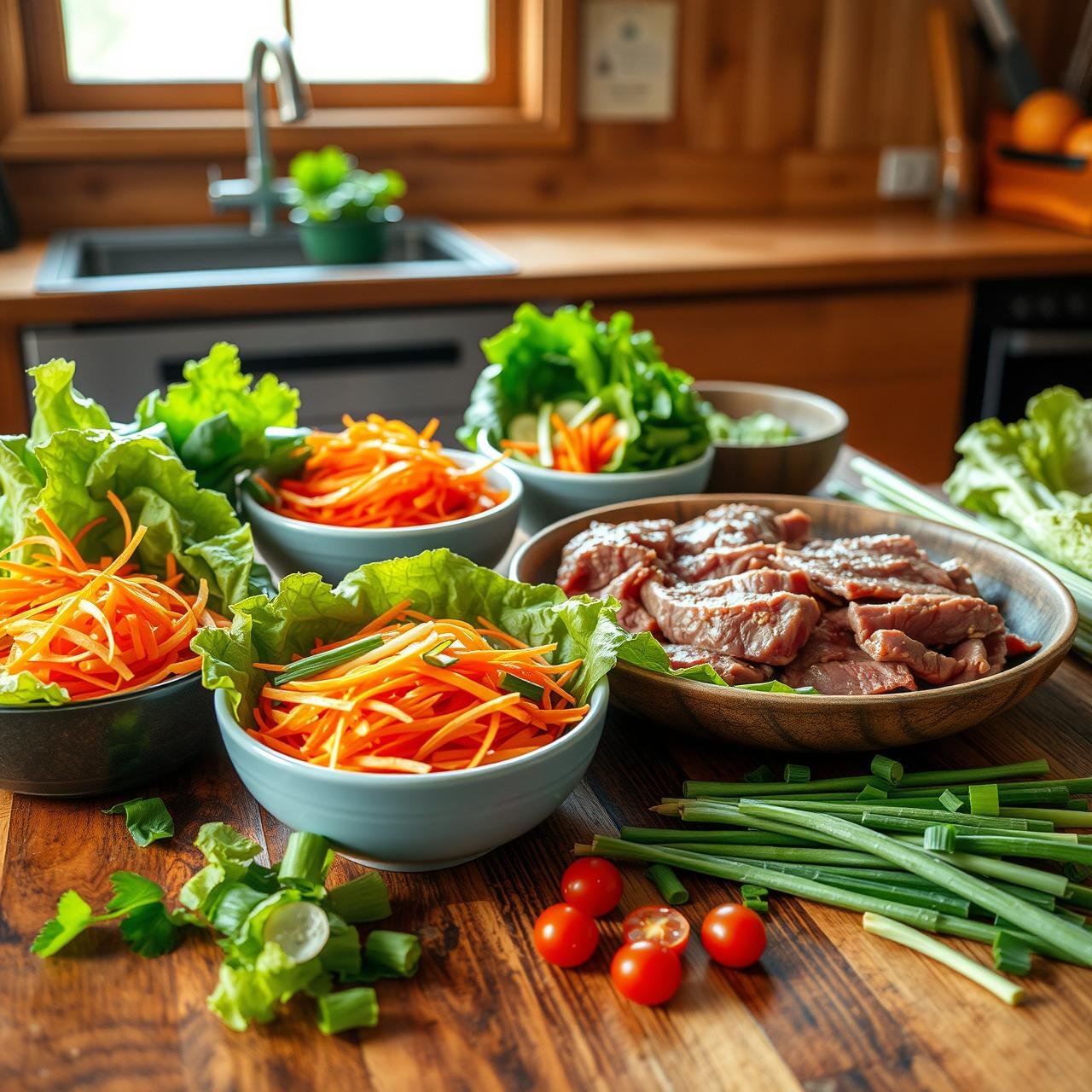
Quality ingredients are the foundation of this simple yet elegant dish. The freshness of the vegetables provides a cool, crisp counterpoint to the warm, savory beef.
For the Korean Beef & Marinade:
- 1.5 lbs flank steak, sirloin, or ribeye, sliced very thinly against the grain
- 1/2 cup low-sodium soy sauce or tamari
- 1/4 cup water
- 1/2 a medium Asian pear, peeled and grated (about 1/3 cup)
- 4 cloves garlic, minced
- 1 tbsp fresh ginger, grated
- 2 tbsp gochujang (Korean chili paste), or more to taste
- 1 tbsp toasted sesame oil
- 1 tbsp avocado oil or other high-heat neutral oil, for cooking
- 2 scallions, thinly sliced, for garnish
- 1 tsp toasted sesame seeds, for garnish
For the Wraps & Toppings:
- 1 large head of butter lettuce, Boston lettuce, or romaine hearts, leaves separated and washed
- 1 large carrot, julienned or shredded
- 1 English cucumber, julienned
- Optional additions: Kimchi, sliced radishes, fresh cilantro, or a drizzle of Sriracha mayo.
Bringing It All Together: Step-by-Step Instructions
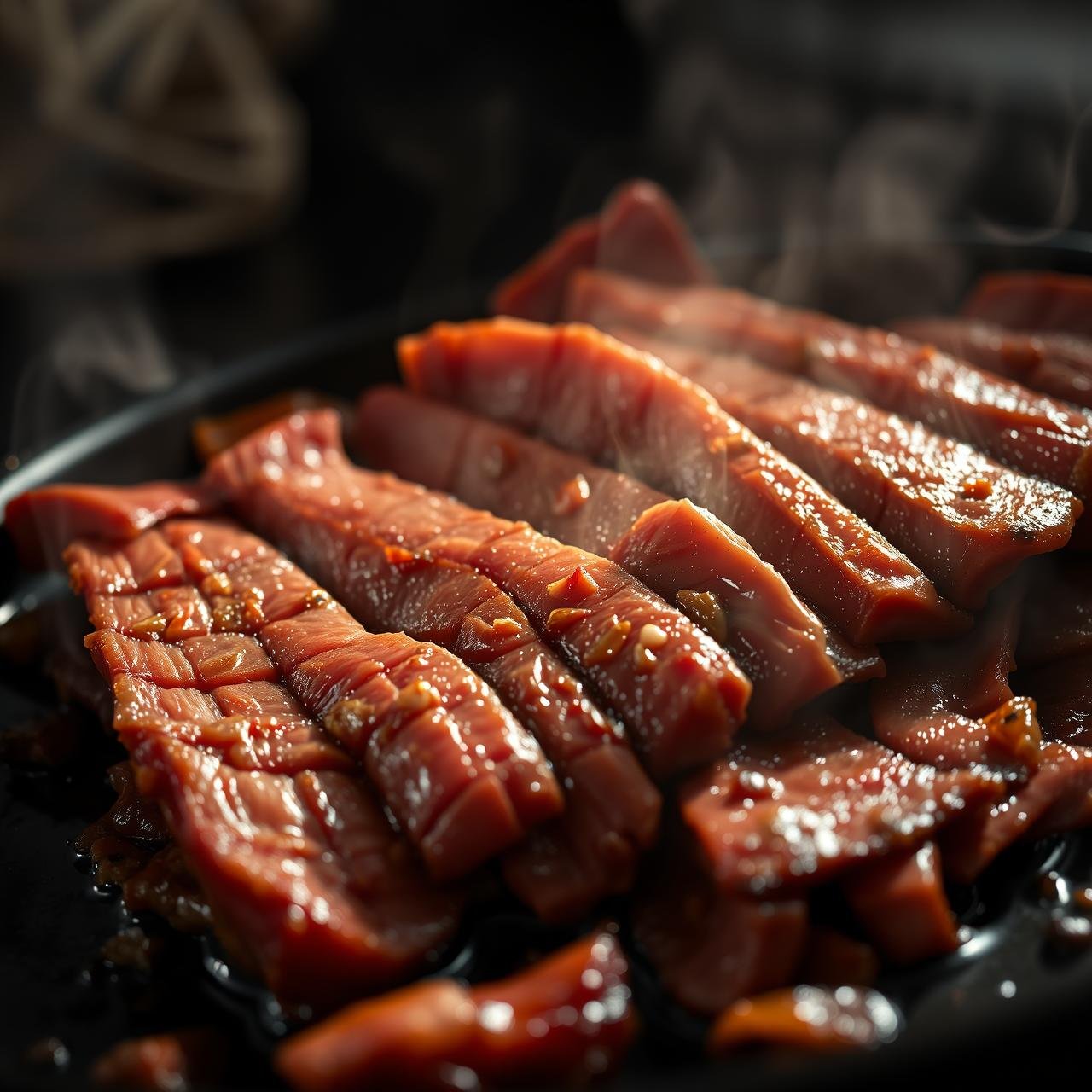
This is where the magic happens. The process is quick, so it’s best to have all your ingredients prepped and ready to go before you even think about turning on the stove. This is the chef’s principle of ‘mise en place’—everything in its place.
-
Prepare the Beef:
If you haven’t bought pre-sliced beef, here’s a pro tip: place your steak in the freezer for 15-20 minutes. This firms up the meat, making it significantly easier to slice into paper-thin strips. Always slice against the grain to ensure maximum tenderness.
-
Create the Marinade:
In a large mixing bowl, combine the low-sodium soy sauce, water, grated Asian pear, minced garlic, grated ginger, gochujang, and toasted sesame oil. Whisk everything together until the gochujang is fully incorporated and the marinade is uniform.
-
Marinate the Beef:
Add the thinly sliced beef to the marinade. Use your hands or a spoon to gently toss the beef, ensuring every single piece is coated in the flavorful sauce. Cover the bowl and let it marinate for at least 30 minutes at room temperature, or up to 4 hours in the refrigerator for a deeper flavor infusion. Don’t marinate for too long, as the pear enzymes can start to break down the meat’s texture too much.
-
Cook the Beef:
Place a large cast-iron skillet or wok over medium-high heat. Add the avocado oil and let it get shimmering hot. You want to hear a loud sizzle when the beef hits the pan. Working in batches to avoid overcrowding the pan, add the beef in a single layer. Cook for 1-2 minutes per side, until it’s beautifully caramelized and cooked through. The high heat and thin slices mean it will cook incredibly fast. Remove the cooked beef to a plate and repeat with the remaining meat.
-
Assemble and Serve:
Arrange your crisp lettuce leaves on a large platter. Set out small bowls with the cooked beef, julienned carrots, and cucumber. Garnish the beef with a sprinkle of toasted sesame seeds and sliced scallions. To serve, simply let everyone build their own wraps, spooning a generous amount of the warm, savory beef into a cool lettuce cup and topping it with the fresh, crunchy vegetables.
Chef’s Secrets for Wrap Perfection
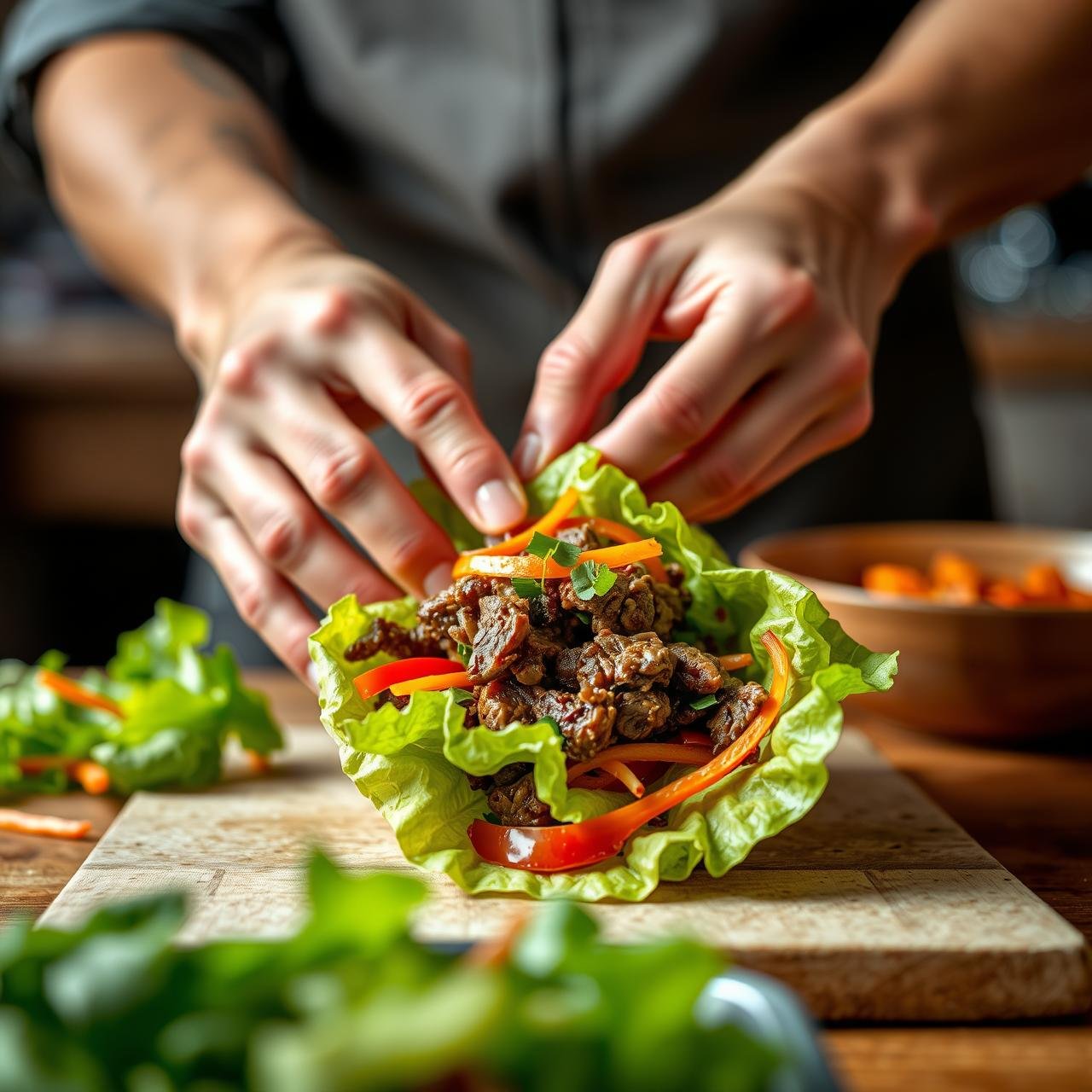
Little details can elevate a good dish to a great one. Here are some professional tips and variations to help you master these Korean beef wraps and customize them to your liking.
Getting the Cut Right:
The choice of beef matters. While flank steak and sirloin are lean and flavorful, using a cut with a bit more marbling, like ribeye, will yield an even more tender and juicy result. The key, regardless of the cut, is the thinness. If you struggle with slicing it yourself, ask your butcher to slice it thinly for you—many will do this for free.
The Best Lettuce Vessels:
The crunch and shape of your lettuce cup are important! Butter lettuce or Boston lettuce are fantastic choices because their leaves are naturally cup-shaped, tender, and pliable. For a sturdier, crunchier option, the inner hearts of a head of romaine lettuce work beautifully.
Don’t Crowd the Pan:
This is the most critical rule for achieving that perfect caramelized crust. If you add too much beef to the skillet at once, the temperature will drop, and the meat will steam in its own juices instead of searing. Cook in at least two or three batches, allowing the pan to get hot again between each batch. That delicious browning is flavor!
Creative Topping Ideas:
- Quick Pickled Onions: Thinly slice a red onion and submerge it in a mixture of vinegar, a touch of sweetener, and water for 30 minutes. It adds a bright, acidic pop.
- Kimchi: For a funky, spicy, and probiotic-rich addition, add a small amount of chopped kimchi to your wraps.
- Creamy Gochujang Drizzle: Mix a spoonful of gochujang with a little Greek yogurt or mayonnaise and a splash of lime juice for a creamy, spicy sauce to drizzle over the top.
Nutritional Snapshot: Healthy & Delicious

This recipe is designed to be as nourishing as it is delicious. By focusing on lean protein, fresh vegetables, and a marinade made with whole ingredients, you get a meal that fuels your body while delighting your taste buds. Here is an estimated nutritional breakdown per serving (assuming 4 servings per recipe).
| Nutrient | Estimated Amount per Serving |
|---|---|
| Calories | ~410 kcal |
| Protein | ~40g |
| Fat | ~22g |
| Carbohydrates | ~12g |
| Fiber | ~3g |
| Sugar | ~7g |
| Sodium | ~590mg |
Disclaimer: The nutritional information provided is an estimate and can vary based on the specific ingredients and portion sizes used.
Make-Ahead & Storage Solutions
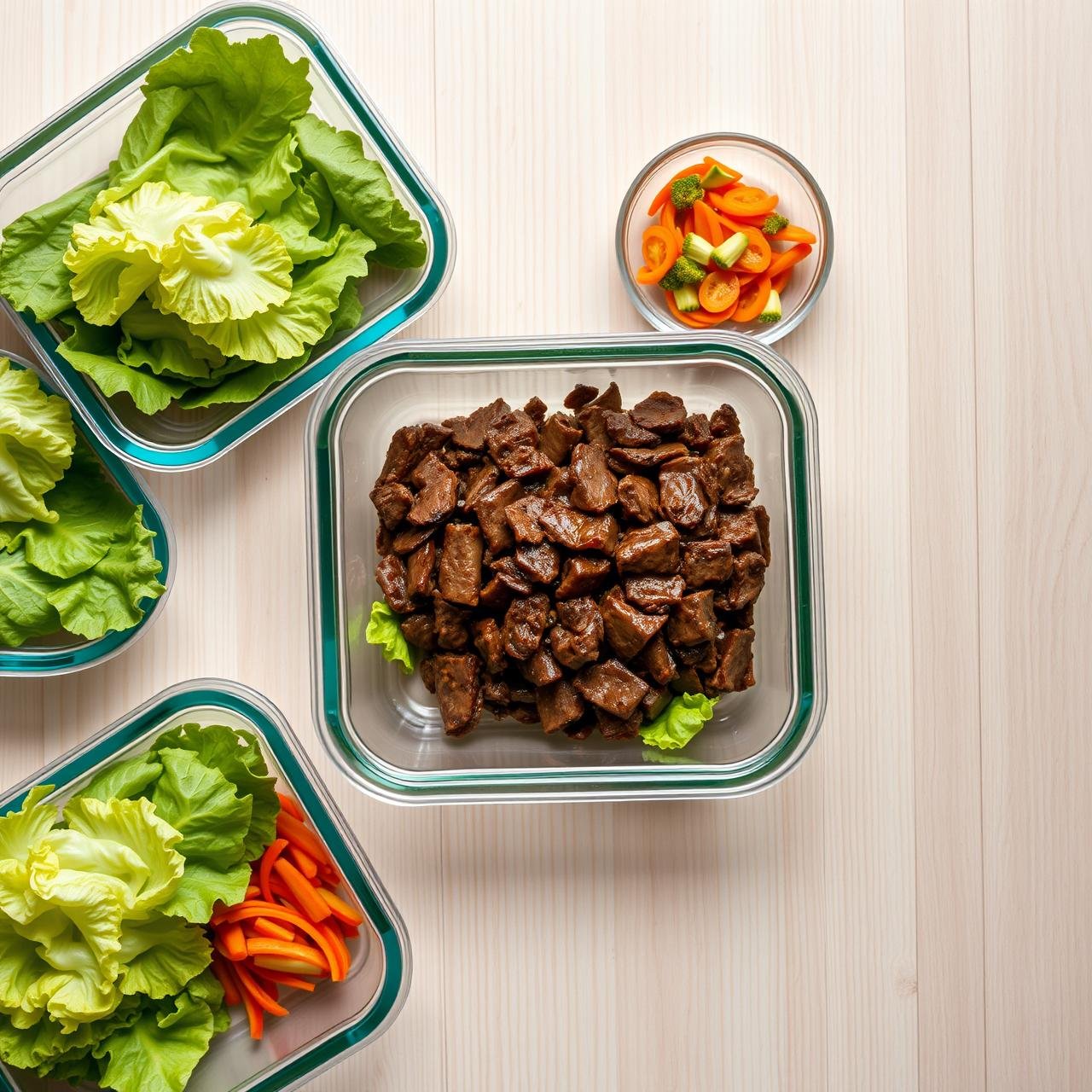
These wraps are a fantastic option for meal prep, ensuring you have a quick and healthy meal ready to go. The key is to store the components separately to maintain their integrity.
For Meal Prepping:
You can make the marinade and combine it with the beef ahead of time. Store the marinating beef in an airtight container in the refrigerator for up to 24 hours. You can also wash and dry your lettuce leaves and chop all your vegetable toppings. Store the lettuce in a container lined with a paper towel to absorb excess moisture, and keep the chopped veggies in a separate airtight container. When you’re ready to eat, all you have to do is cook the beef, which takes less than 10 minutes.
Storing Leftovers:
- Cooked Beef: Store any leftover cooked beef in an airtight container in the refrigerator for up to 3-4 days.
- Vegetables & Lettuce: Store the fresh components separately from the beef to prevent them from becoming wilted and soggy.
Reheating:
The best way to reheat the beef is in a hot skillet for just a minute or two until warmed through. This helps to retain some of its original texture. You can also microwave it in short bursts, but be careful not to overcook it, which can make it tough. Once reheated, assemble your wraps with the fresh, cool lettuce and toppings for a meal that tastes just as good as when it was first made.
Conclusion
There is a unique satisfaction in creating a meal that hits every note—sweet, spicy, savory, fresh, and crunchy—all in one harmonious bite. These Skinny Korean Beef Wraps are a testament to the fact that healthy eating never has to be boring or restrictive. They are proof that you can indulge your most powerful cravings with vibrant, whole foods that leave you feeling energized and content.
This recipe is more than just a set of instructions; it’s a template for a fast, flexible, and utterly delicious meal. Whether you’re a gourmet foodie seeking authentic flavors, a health enthusiast counting macros, a budget cook stretching a steak, or a home cook looking for a new weeknight hero, these wraps deliver. We invite you to bring the exciting flavors of Korean barbecue into your own kitchen, to gather your family around the table, and to enjoy the simple, hands-on pleasure of building your perfect wrap. Enjoy the sizzle, savor the crunch, and celebrate a meal that is truly free of guilt and full of joy.