Restaurant Quality Pistachio Crusted Salmon: A Detailed Recipe Without Fluff
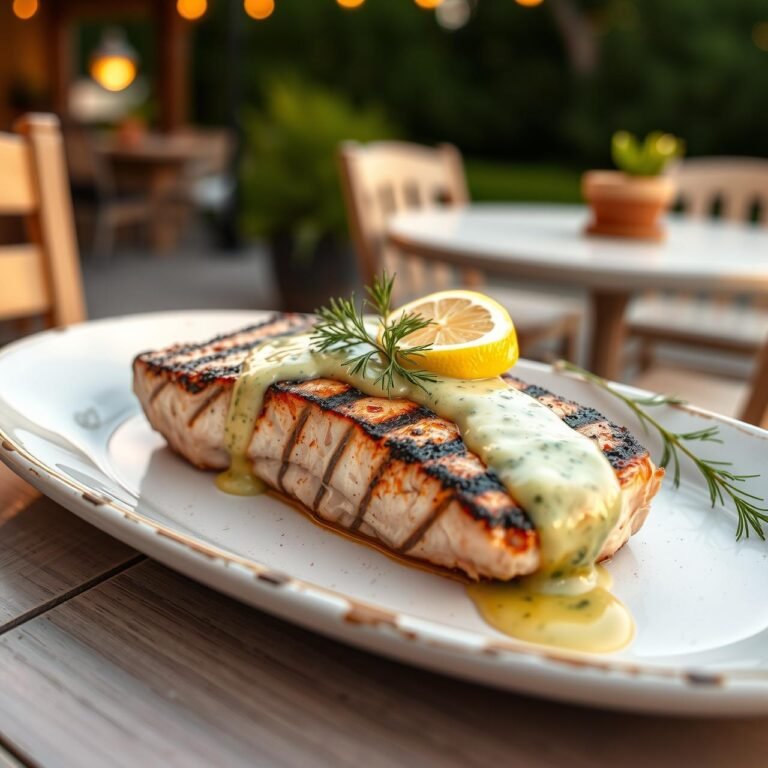
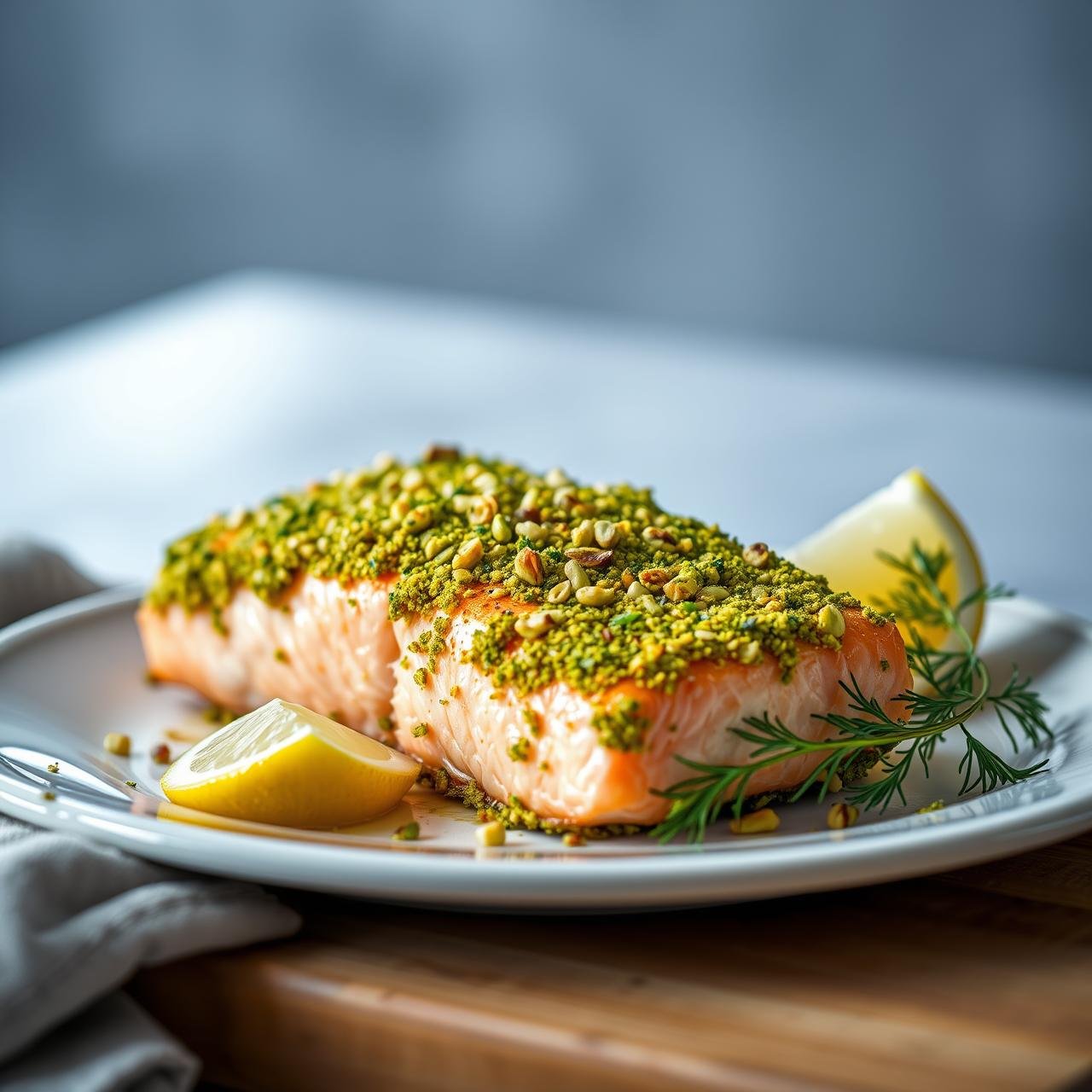
There are certain dishes that feel exclusively reserved for a night out—creations that seem too complex or refined for the home kitchen. Pistachio Crusted Salmon is often one of them. The image it conjures is one of elegance: a perfectly seared fillet with a vibrant, crunchy crust, served on a bed of something artisanal. But what if you could replicate that exact experience, that same depth of flavor and texture, right at your own dinner table? This guide is designed to do just that. We’re stripping away the culinary jargon and complicated steps to deliver a straightforward, no-fluff recipe for creating a truly restaurant-quality Pistachio Crusted Salmon. This dish is a celebration of contrasts: the rich, buttery salmon against the bright, nutty crunch of the pistachio crust, all balanced with a hint of zesty lemon and savory Dijon. It’s not only a feast for the palate but also a powerhouse of nutrition, packed with omega-3s and healthy fats. Prepare to impress yourself, your family, and any guest lucky enough to be at your table.
The Allure of Pistachio and Salmon: A Perfect Pairing
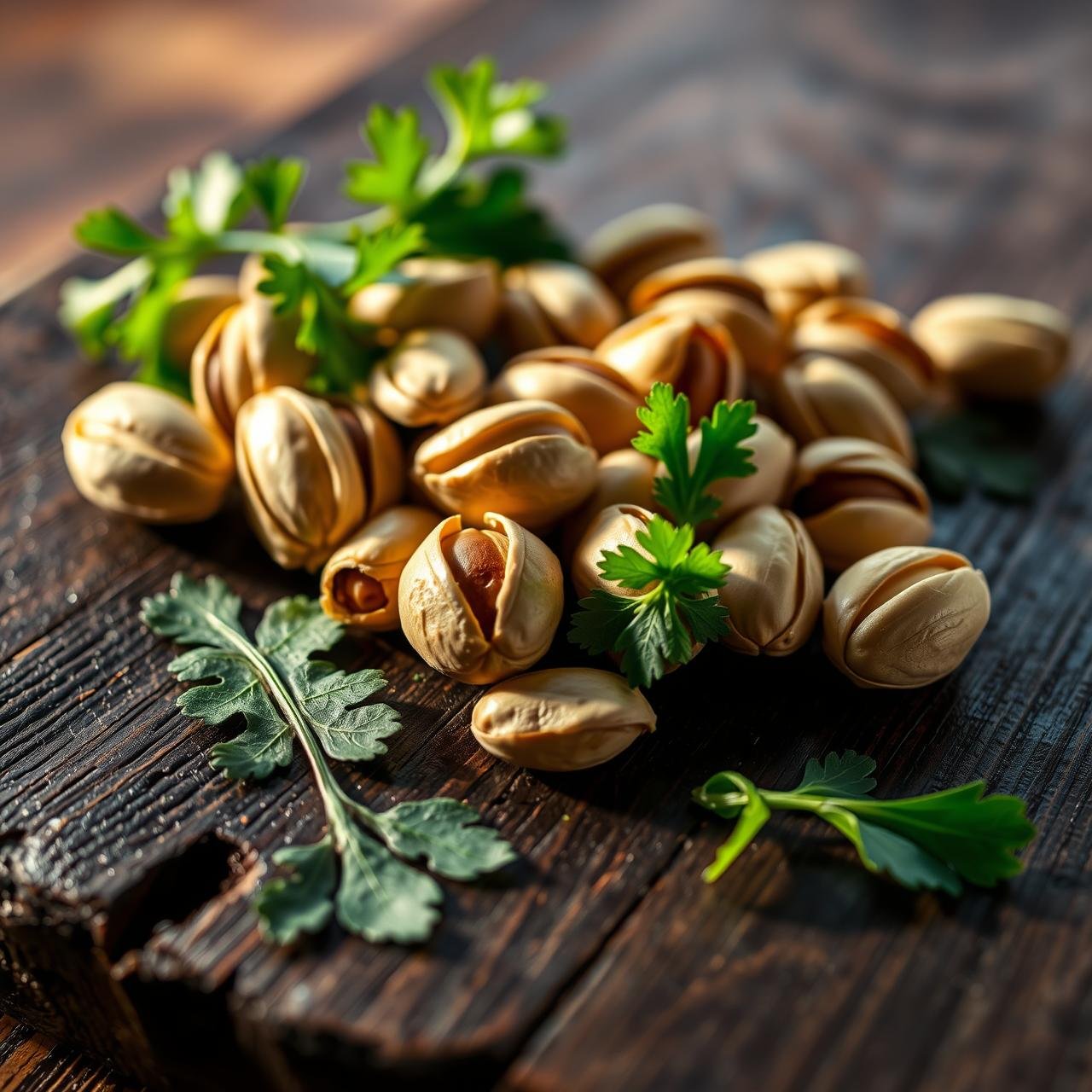
Before we dive into the method, let’s appreciate why this combination is so celebrated in the culinary world. Salmon, with its rich, oily flesh and delicate flavor, needs a companion that can complement it without overpowering it. Pistachios are the ideal candidate. Their naturally sweet, subtly earthy flavor and satisfying crunch provide a much-needed textural counterpoint to the soft, flaky fish. When toasted, their flavor intensifies, releasing aromatic oils that meld beautifully with the salmon. We’ll enhance this crust with fresh parsley for color and brightness, garlic for a savory depth, and a touch of lemon zest to cut through the richness. A thin layer of Dijon mustard acts as the perfect adhesive, its tangy notes binding the crust to the fillet while tenderizing the fish as it bakes. The result is a harmonious dish where every single ingredient plays a crucial, delicious role.
Essential Equipment for a Flawless Dish
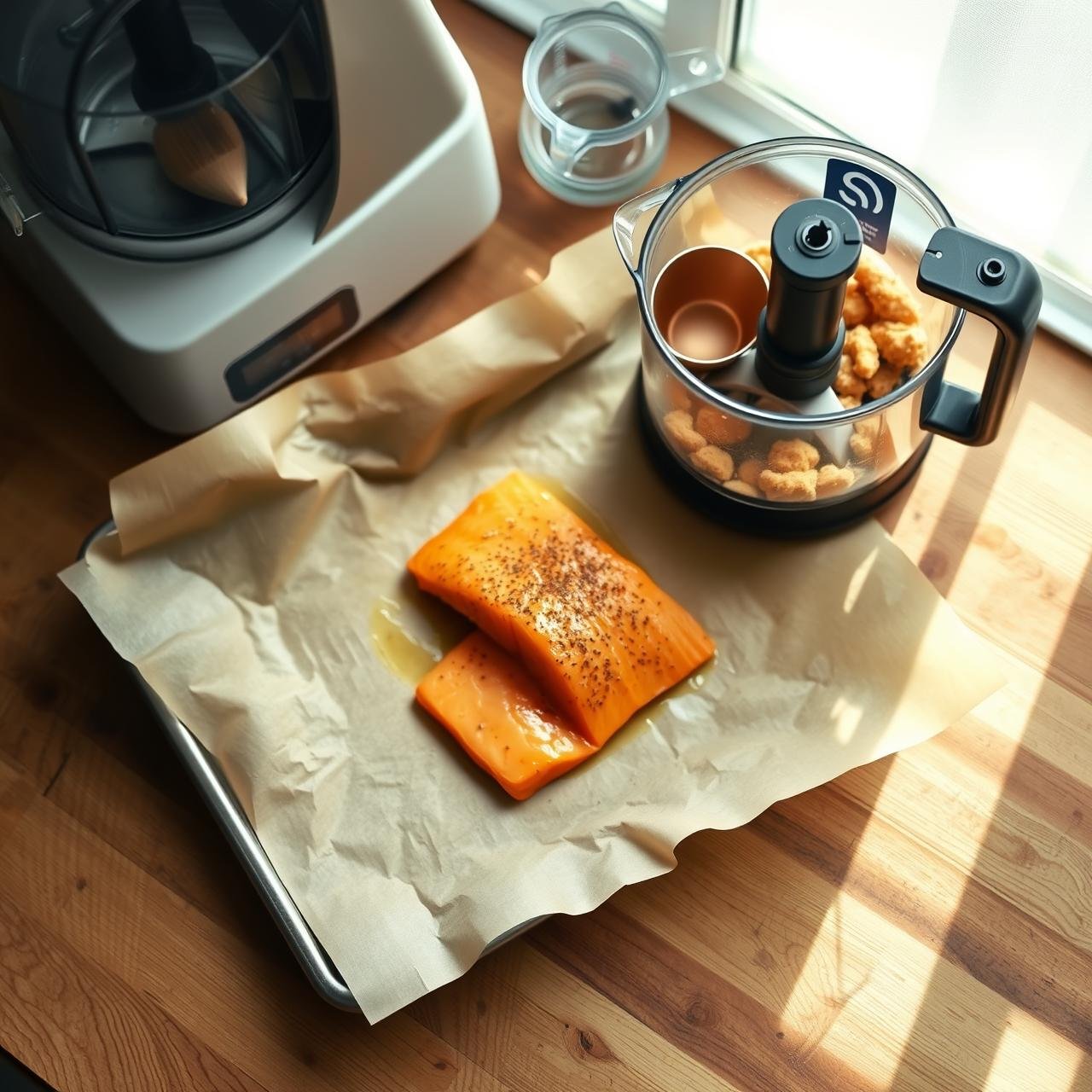
Great cooking often starts with having the right tools. While this recipe doesn’t require any highly specialized gadgets, a few key items will ensure a smooth process and perfect results. Having these ready will make you feel like a seasoned chef in your own kitchen.
| Equipment | Purpose |
|---|---|
| Food Processor or High-Powered Blender | Crucial for achieving the perfect, uniform texture for the pistachio crust. A coarse, breadcrumb-like consistency is what we’re aiming for. |
| Rimmed Baking Sheet | Prevents any juices from spilling into your oven. A heavy-duty sheet promotes even heat distribution. |
| Parchment Paper | An absolute must for non-stick cooking. It ensures the salmon skin (if you leave it on) doesn’t stick and makes cleanup incredibly easy. |
| Fish Spatula (Offset Spatula) | Its thin, flexible design is perfect for gently lifting the delicate salmon fillets from the baking sheet without breaking them. |
| Measuring Cups and Spoons | For accurate measurement of crust ingredients, ensuring a balanced flavor profile. |
| Small Bowl and Pastry Brush | For mixing the Dijon mustard mixture and applying it evenly over the salmon fillets. |
Gathering Your Premium Ingredients
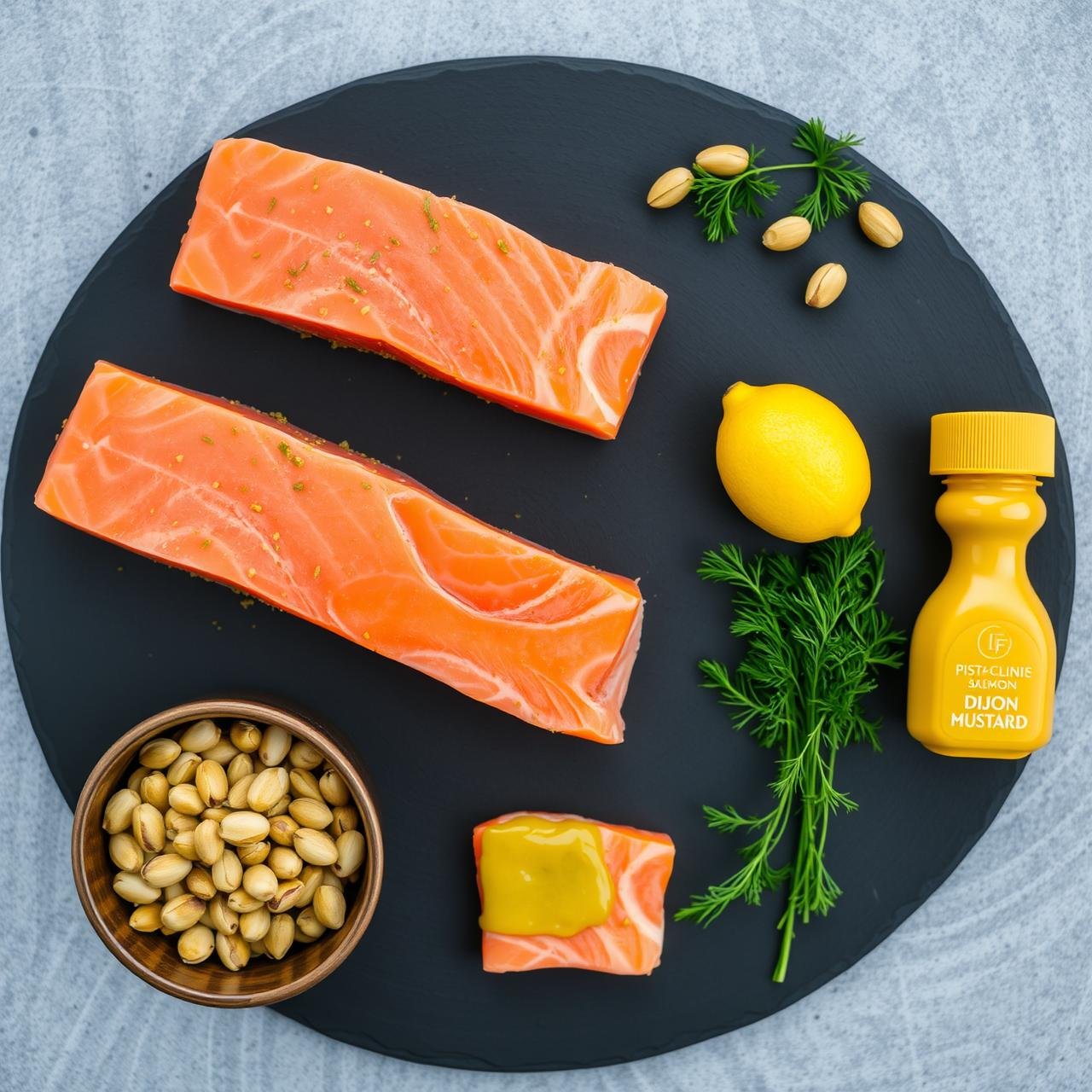
The quality of your final dish is a direct reflection of the ingredients you start with. For a recipe this simple, each component must shine. We recommend sourcing the freshest ingredients possible for the most vibrant flavor.
For the Salmon:
- 4 (6-ounce) skin-on or skinless salmon fillets, about 1-inch thick
- 2 tablespoons Dijon mustard
- 1 tablespoon honey or pure maple syrup
- 1 tablespoon olive oil
- 1/2 teaspoon sea salt
- 1/4 teaspoon black pepper, freshly ground
For the Pistachio Crust:
- 1 cup raw, shelled pistachios (unsalted is best to control the sodium)
- 1/2 cup panko breadcrumbs (or gluten-free breadcrumbs)
- 1/4 cup fresh parsley, loosely packed
- 2 cloves garlic, minced
- 1 teaspoon lemon zest (from about 1 lemon)
- 2 tablespoons olive oil
The Step-by-Step Method to Perfection
Follow these detailed steps carefully to build flavor and texture, ensuring your salmon is cooked to perfection—moist and flaky on the inside with a golden, crunchy crust on top.
-
Prepare Your Workstation:
Preheat your oven to 400°F (200°C). Line a large, rimmed baking sheet with parchment paper. Pat the salmon fillets completely dry with paper towels. This step is critical; a dry surface helps the mustard mixture adhere and allows the skin to get crisp if you’re using skin-on fillets.
-
Create the Pistachio Crust:
In the bowl of a food processor, combine the shelled pistachios, panko breadcrumbs, fresh parsley, minced garlic, and lemon zest. Pulse in 1-second bursts for about 8-10 times, or until the mixture resembles coarse breadcrumbs. Be careful not to over-process, or you’ll end up with pistachio butter. Transfer the mixture to a shallow dish or plate and drizzle with the 2 tablespoons of olive oil. Use a fork to toss everything together until the oil is evenly distributed. This helps the crust to brown and become extra crispy in the oven.
-
Prepare the Salmon Fillets:
In a small bowl, whisk together the Dijon mustard, honey (or maple syrup), and 1 tablespoon of olive oil. Season the salmon fillets on all sides with sea salt and freshly ground black pepper. Place the fillets on the prepared baking sheet, spacing them a few inches apart. Using a pastry brush or the back of a spoon, spread a thin, even layer of the Dijon mixture over the top and sides of each fillet. This is your flavorful ‘glue’ for the crust.
-
Apply the Crust:
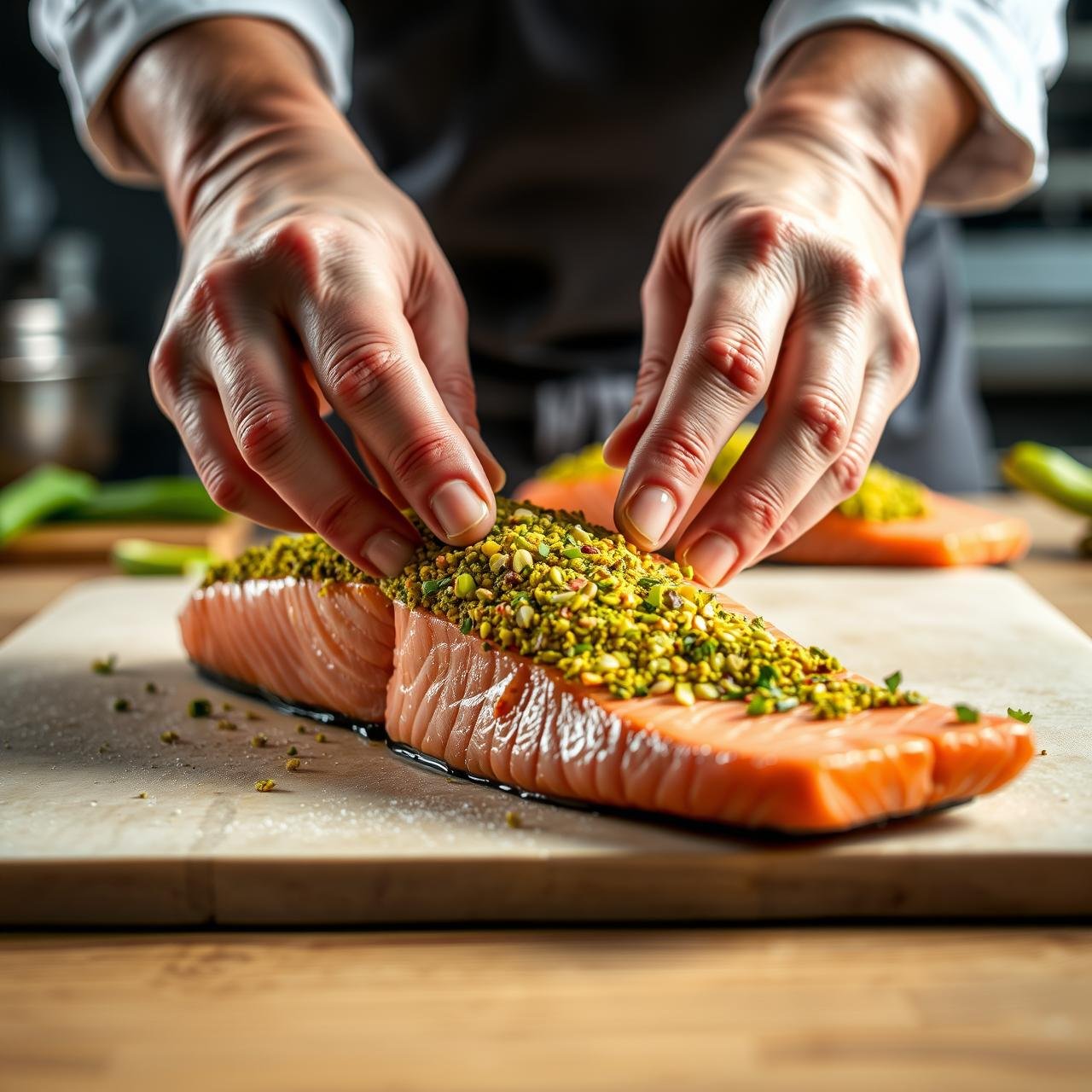
Gently press the pistachio mixture onto the top of each mustard-coated fillet. Be generous here, creating a thick, even layer. Pat it down firmly with your fingers to ensure it adheres well during baking. Any mixture that falls onto the parchment paper can be scooped back up or left to toast alongside the fish for a crunchy garnish.
-
Bake to Flaky Perfection:
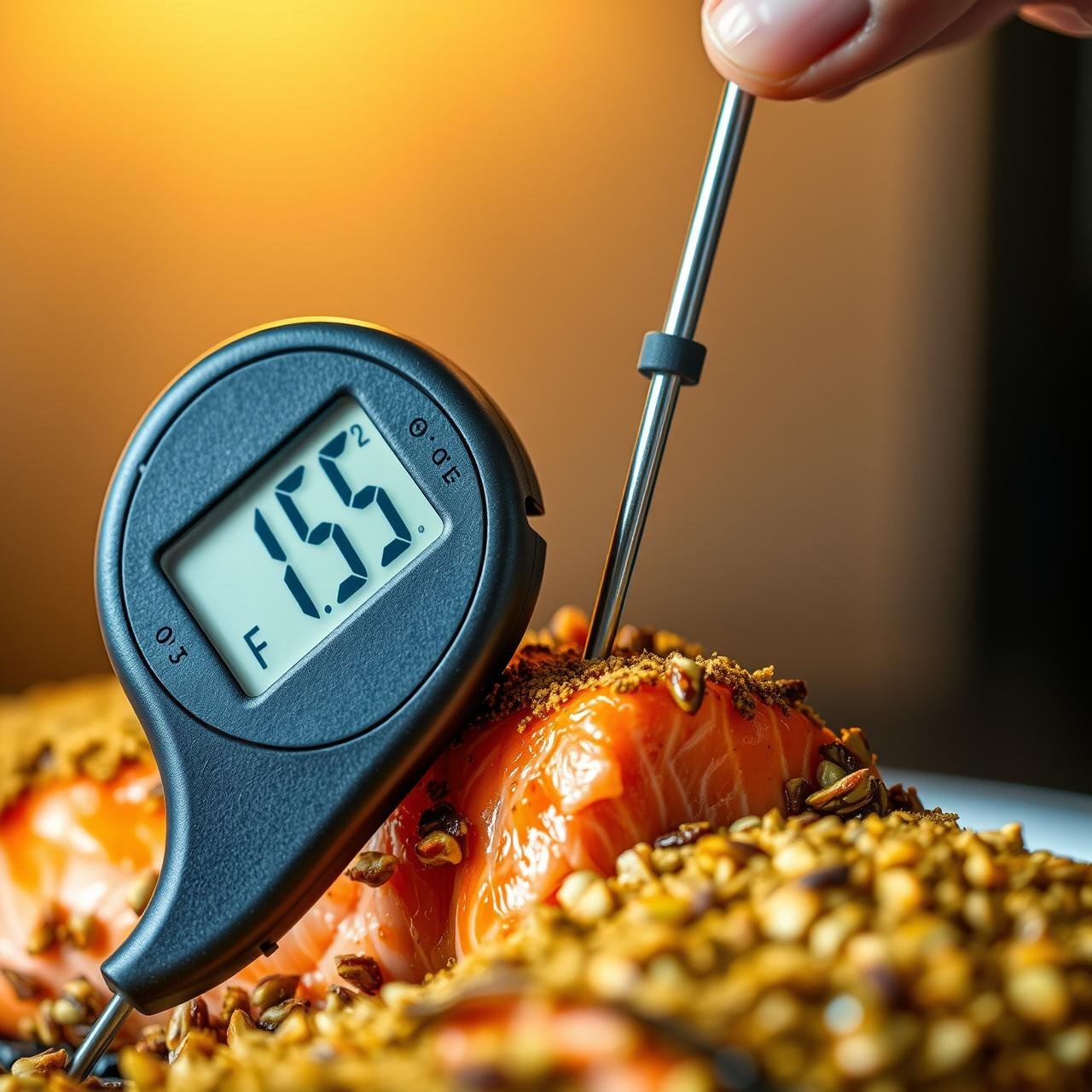
Place the baking sheet in the preheated oven. Bake for 12-15 minutes. The exact time will depend on the thickness of your fillets. The salmon is done when it flakes easily with a fork at its thickest part, or when an instant-read thermometer inserted into the center reads 135-140°F (57-60°C) for medium. The pistachio crust should be a beautiful golden-brown and fragrant.
-
Rest and Serve:
Remove the salmon from the oven and let it rest on the baking sheet for 2-3 minutes before serving. This allows the juices to redistribute throughout the fillet, ensuring a moist result. Serve immediately with fresh lemon wedges on the side for squeezing.
Chef’s Secrets for a Five-Star Result
Choosing Your Salmon:
Opt for center-cut fillets whenever possible, as they are more uniform in thickness, which promotes even cooking. Wild-caught varieties like Coho or Sockeye will offer a deeper flavor and firmer texture, while farm-raised Atlantic salmon will be milder and more buttery. Freshness is key—look for vibrant, moist flesh without any discoloration.
The Perfect Crust Consistency:
The enemy of a good crust is moisture and over-processing. Ensure your parsley is patted dry before adding it to the food processor. Pulsing, rather than running the processor continuously, is the secret to preventing the nuts from releasing too much oil and turning into a paste. You want distinct, crumbly pieces for that signature crunch.
Don’t Fear the Skin:
Cooking salmon with the skin on provides a protective barrier against the hot pan, preventing the delicate flesh from overcooking. When baked on parchment at a high temperature, the skin becomes wonderfully crispy and delicious. If you prefer skinless, that’s perfectly fine—the recipe works beautifully either way.
How to Tell When Salmon is Perfectly Cooked:
The most reliable method is an instant-read thermometer. For a moist, tender result, pull the salmon from the oven when it reaches 135°F. The residual heat will continue to cook it to a perfect medium (around 140-145°F) as it rests. Visually, the flesh should transition from translucent to opaque and flake easily with a gentle press of a fork.
Nutritional Profile: A Healthy Indulgence
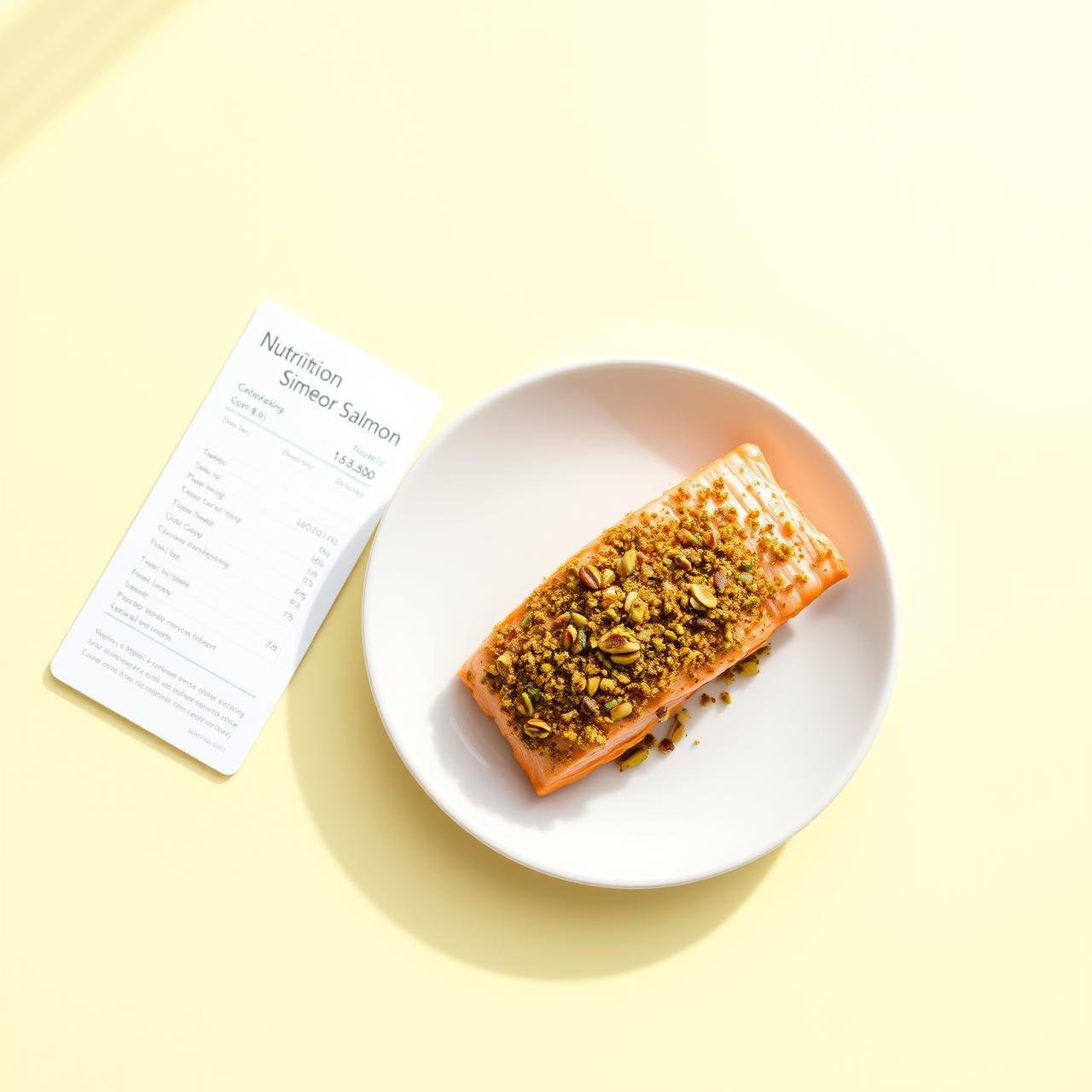
This dish is as nourishing as it is delicious. It’s a fantastic source of high-quality protein, heart-healthy omega-3 fatty acids, and beneficial nutrients from the pistachios and olive oil. Here is an estimated nutritional breakdown per serving.
| Nutrient | Amount per Serving (Approx.) |
|---|---|
| Calories | 580 kcal |
| Protein | 42 g |
| Fat | 40 g |
| Saturated Fat | 6 g |
| Carbohydrates | 15 g |
| Fiber | 4 g |
| Sugars | 6 g |
| Sodium | 550 mg |
Disclaimer: These values are estimates and can vary based on the specific ingredients and portion sizes used.
Perfect Pairings & Serving Suggestions
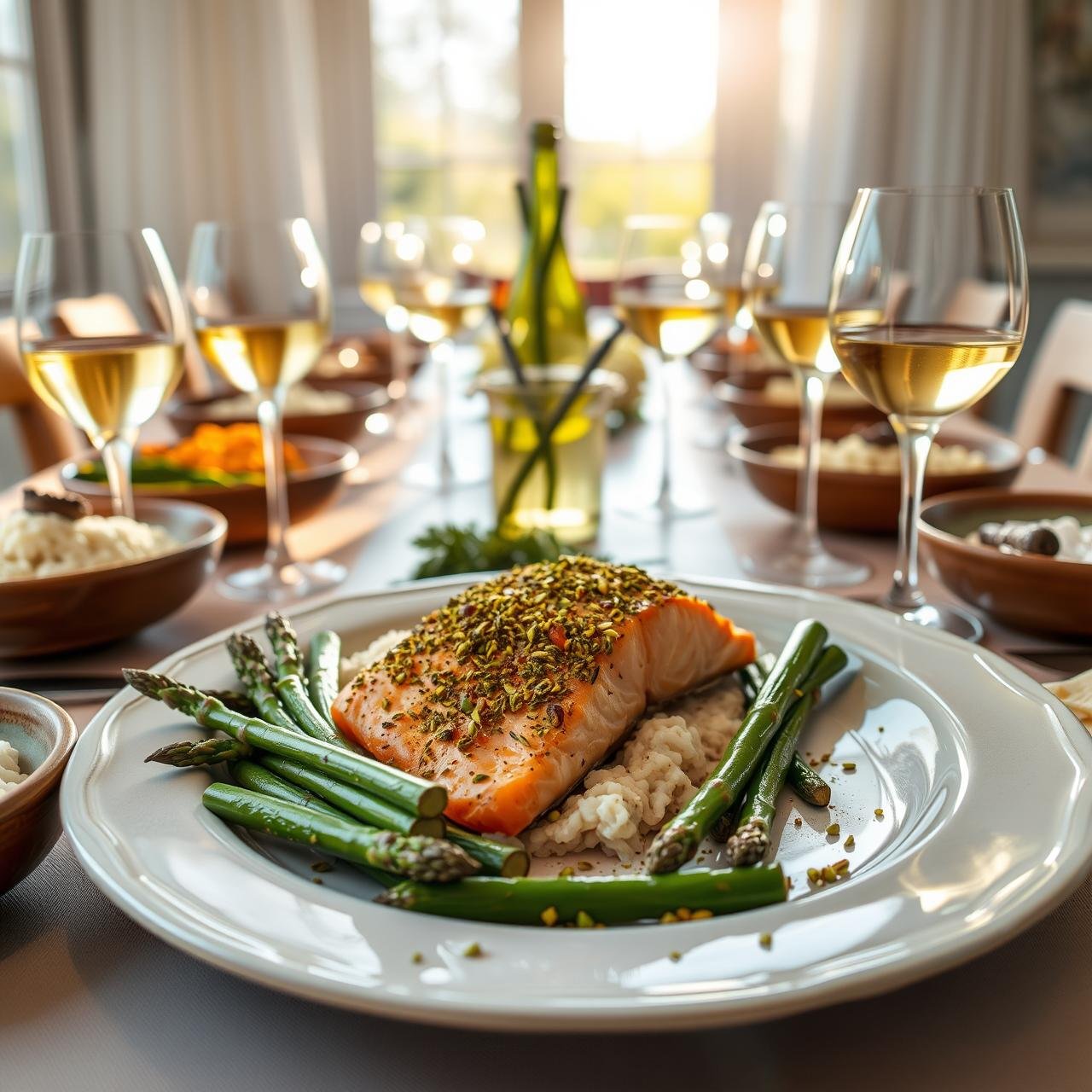
To elevate this dish into a complete, restaurant-worthy meal, consider these complementary pairings:
- Roasted Vegetables: Asparagus spears, broccolini, or green beans tossed in olive oil and roasted alongside the salmon make for an easy and elegant side. Their earthy flavors are a wonderful match.
- Creamy Grains: Serve the salmon over a bed of creamy Parmesan risotto, herbed couscous, or a simple quinoa pilaf. The soft texture of the grains contrasts beautifully with the crispy crust.
- Fresh Salads: A simple arugula salad with a lemon vinaigrette can cut through the richness of the fish, cleansing the palate with each bite.
- Wine Pairing: A crisp, dry white wine is the perfect companion. Consider a Sauvignon Blanc with its citrusy notes, a dry Riesling, or an unoaked Chardonnay to complement the buttery texture of the salmon.
Storing and Reheating with Grace
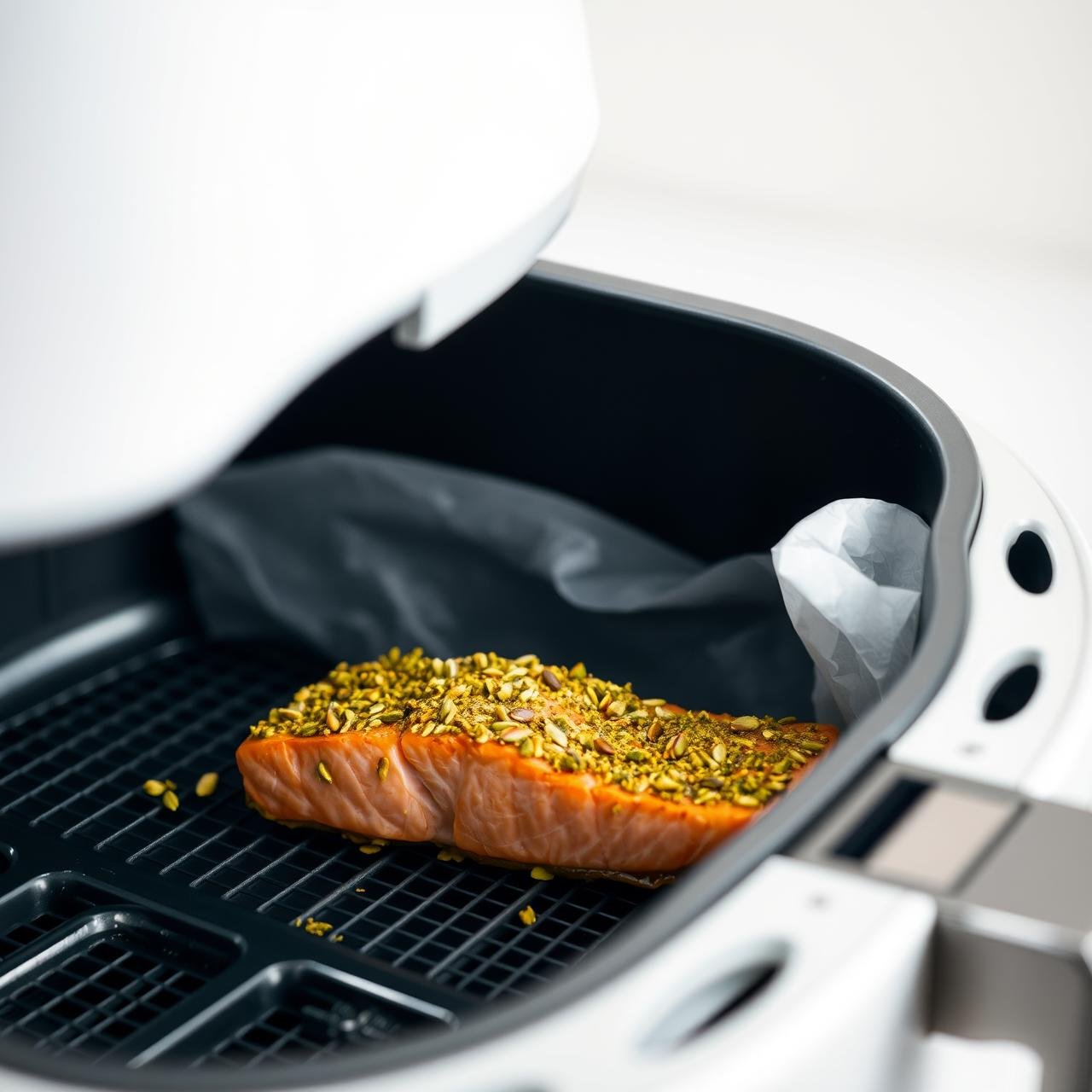
While this dish is best enjoyed fresh from the oven, leftovers can still be delicious if handled properly. The key is to preserve the texture of the crust as much as possible.
Storage:
Allow the salmon to cool completely to room temperature. Store it in an airtight container in the refrigerator for up to 2 days. Storing it while still warm will create steam and condensation, which will make the crust soggy.
Reheating:
Avoid the microwave at all costs, as it will steam the fish and ruin the crispy topping. The best methods are:
- Oven/Toaster Oven: Preheat to 350°F (175°C). Place the salmon on a baking sheet and heat for 5-8 minutes, or until warmed through. This will help re-crisp the crust.
- Air Fryer: Reheat at 350°F (175°C) for 3-4 minutes. The circulating hot air is excellent for reviving the crunchy texture of the pistachio topping.
Conclusion
Mastering a dish like Pistachio Crusted Salmon is a rewarding experience that bridges the gap between everyday home cooking and gourmet dining. With this detailed, fluff-free guide, you are now equipped with the techniques and confidence to execute it flawlessly. It’s a testament to the idea that elegant food doesn’t have to be complicated—it simply requires quality ingredients and a solid method. Whether you’re making a healthy weeknight dinner or impressing guests at a dinner party, this recipe is a reliable showstopper that delivers on every level: flavor, texture, and visual appeal. We encourage you to step into your kitchen, embrace the process, and enjoy the delicious results of your new culinary skill.