Old Fashioned Cucumber Onion Vinegar Salad: Zero Oil (No Fluff)
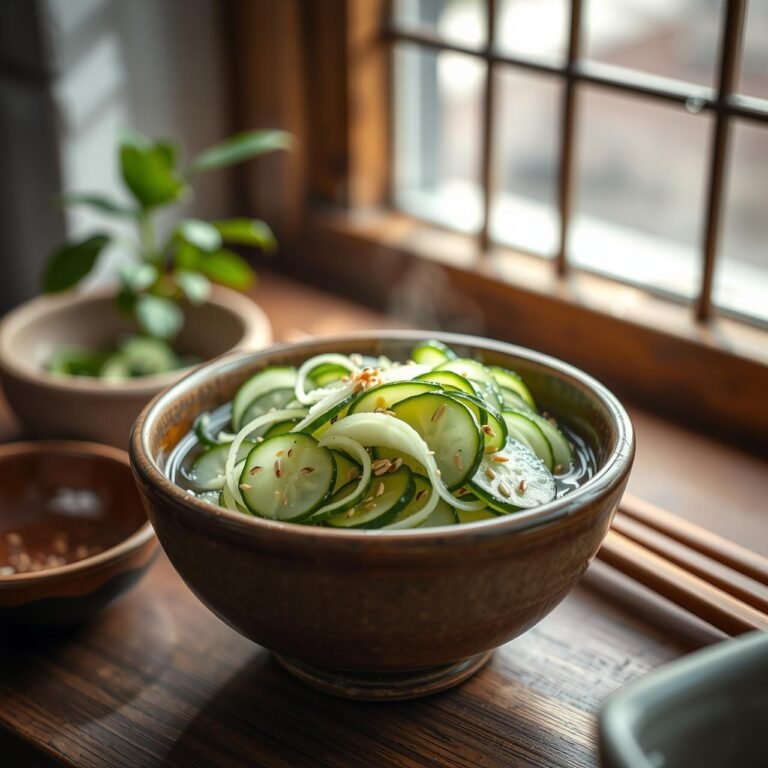
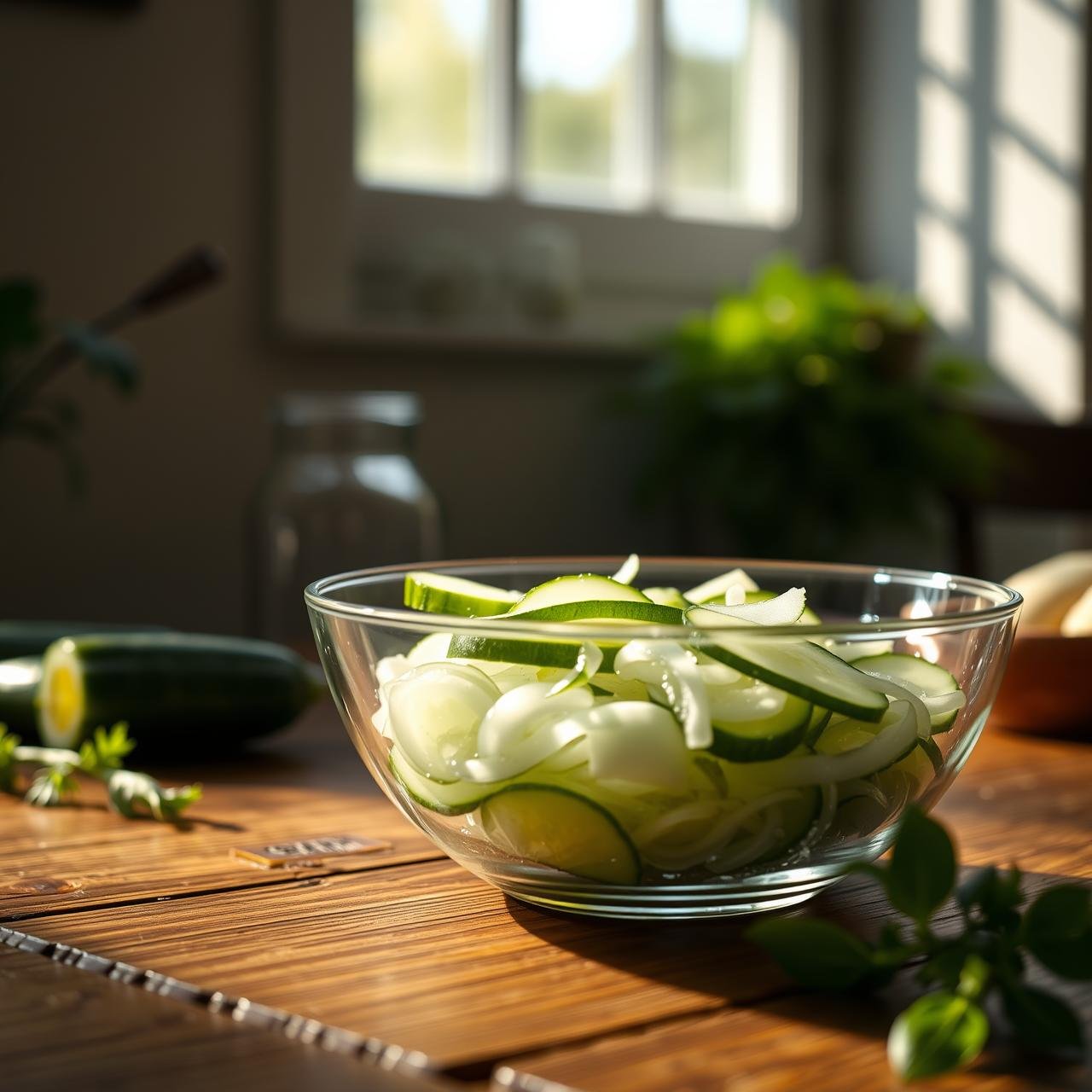
In a world of complex recipes and fleeting food trends, there is profound comfort in returning to the classics. This Old Fashioned Cucumber and Onion Vinegar Salad is a testament to that truth—a dish built on simplicity, purity, and the unadulterated flavors of the garden. True to its ‘no fluff’ promise, this guide is a direct, chef-like approach to mastering a recipe that has graced family dinner tables for generations. We strip away the unnecessary, focusing entirely on the technique that yields an impeccably crisp, tangy, and refreshingly clean salad. The most remarkable feature? It contains absolutely zero oil, making it an exceptionally light and healthy accompaniment to any meal. Prepare to embrace a taste of heritage, where a few humble ingredients are transformed into a side dish that is both timeless and invigorating.
The Philosophy of Purity: Why This Salad Endures
The enduring appeal of this salad lies in its minimalist philosophy. It harkens back to a time of root cellars and farmhouse kitchens, where resourcefulness was paramount. Without the need for refrigeration, vinegar served as a natural preservative, allowing summer’s bounty to be enjoyed for longer. This recipe is, in essence, a ‘quick pickle.’ The acidic brine not only imparts a signature tang but also tenderizes the vegetables just enough while allowing them to retain a satisfying crunch.
By omitting oil, we allow the core components to express their true character. You taste the clean, green notes of the cucumber and the sharp, sweet bite of the onion, all harmonized by the bright acidity of the vinegar. An oil-based dressing, while delicious in other contexts, can coat the palate and mute these delicate flavors. Here, the experience is direct and vibrant. This salad is a celebration of texture and fundamental tastes—a culinary lesson in how less can truly be more.
Essential Equipment: The Tools for Perfection
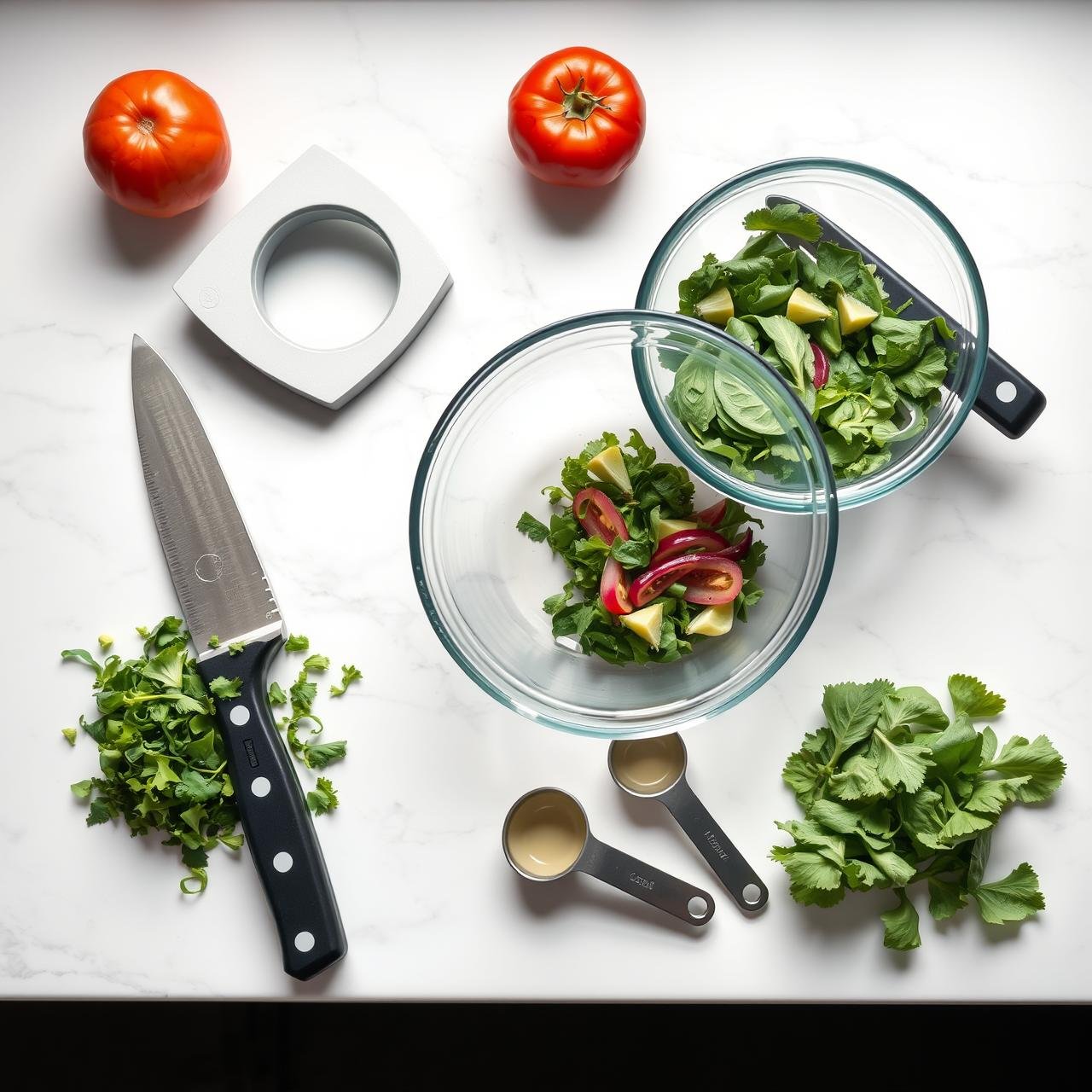
While this recipe is simple, using the right tools is non-negotiable for achieving a professional-grade result. The proper equipment ensures consistency, which is the secret to this salad’s perfect texture.
| Tool | Chef’s Recommendation |
|---|---|
| Mandoline Slicer | This is the most critical tool. A mandoline produces consistently paper-thin slices that a knife simply cannot replicate. This uniformity is key to the salad’s delicate texture and ability to absorb the brine evenly. |
| Sharp Chef’s Knife | For trimming the ends of the cucumber and for thinly slicing the onion if a mandoline is unavailable. A sharp knife prevents bruising of the vegetables. |
| Large Non-Reactive Bowl | Use a glass, ceramic, or stainless steel bowl. Reactive materials like aluminum or copper can interact with the vinegar, imparting a metallic taste to the salad. |
| Colander | Essential for the maceration step, allowing the excess water to drain away from the cucumbers and onions effectively. |
| Measuring Cups & Spoons | Precision is important for creating a balanced brine. The ratio of vinegar, sugar, and salt must be correct for the perfect flavor profile. |
| Airtight Storage Container | A glass jar or container with a tight-fitting lid is ideal for marinating and storing the salad, keeping it fresh and crisp in the refrigerator. |
Ingredient Deep Dive: Selecting the Best Components
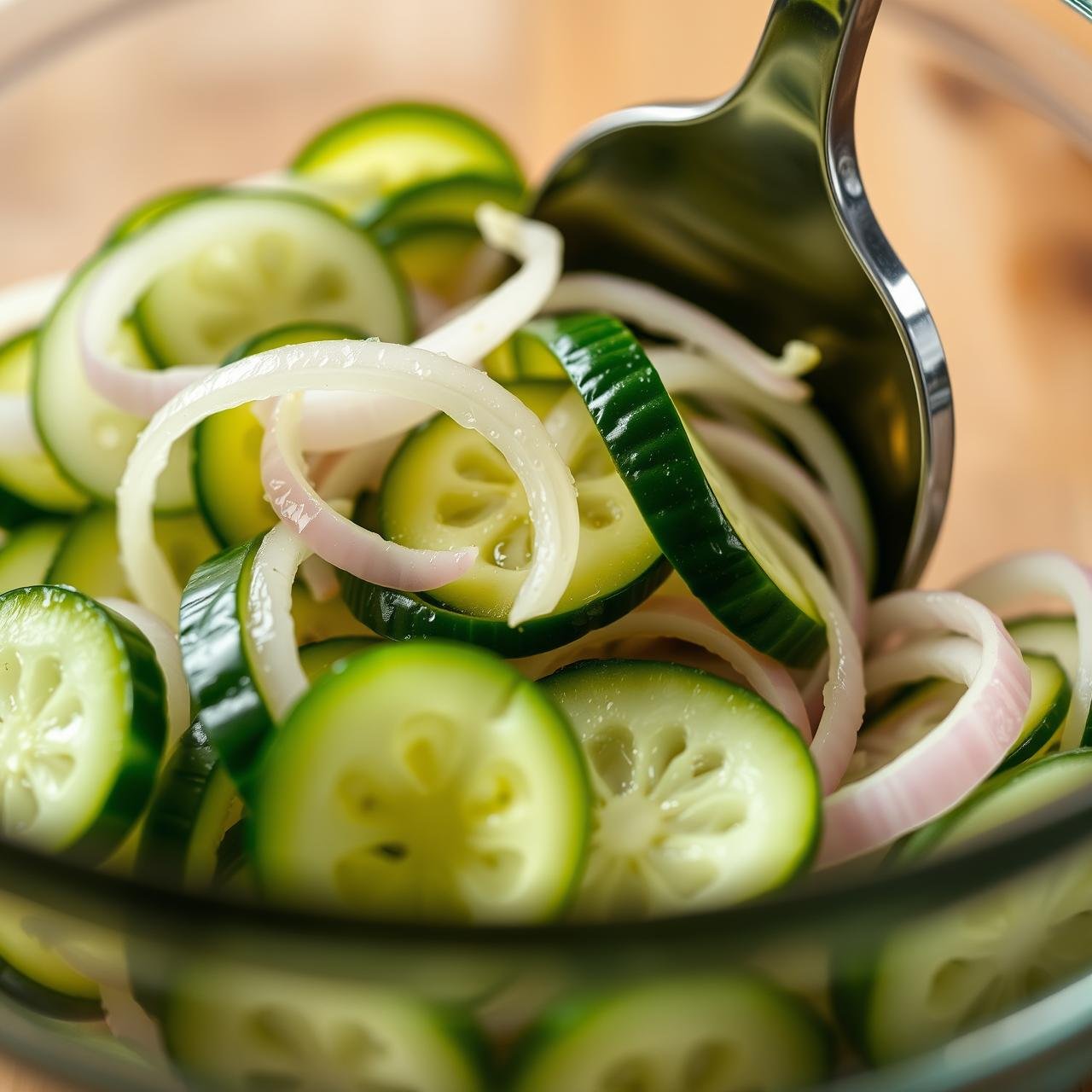
The quality of a simple dish is entirely dependent on the quality of its ingredients. Each component plays a vital role in the final flavor and texture.
The Cucumber: Crispness is Key
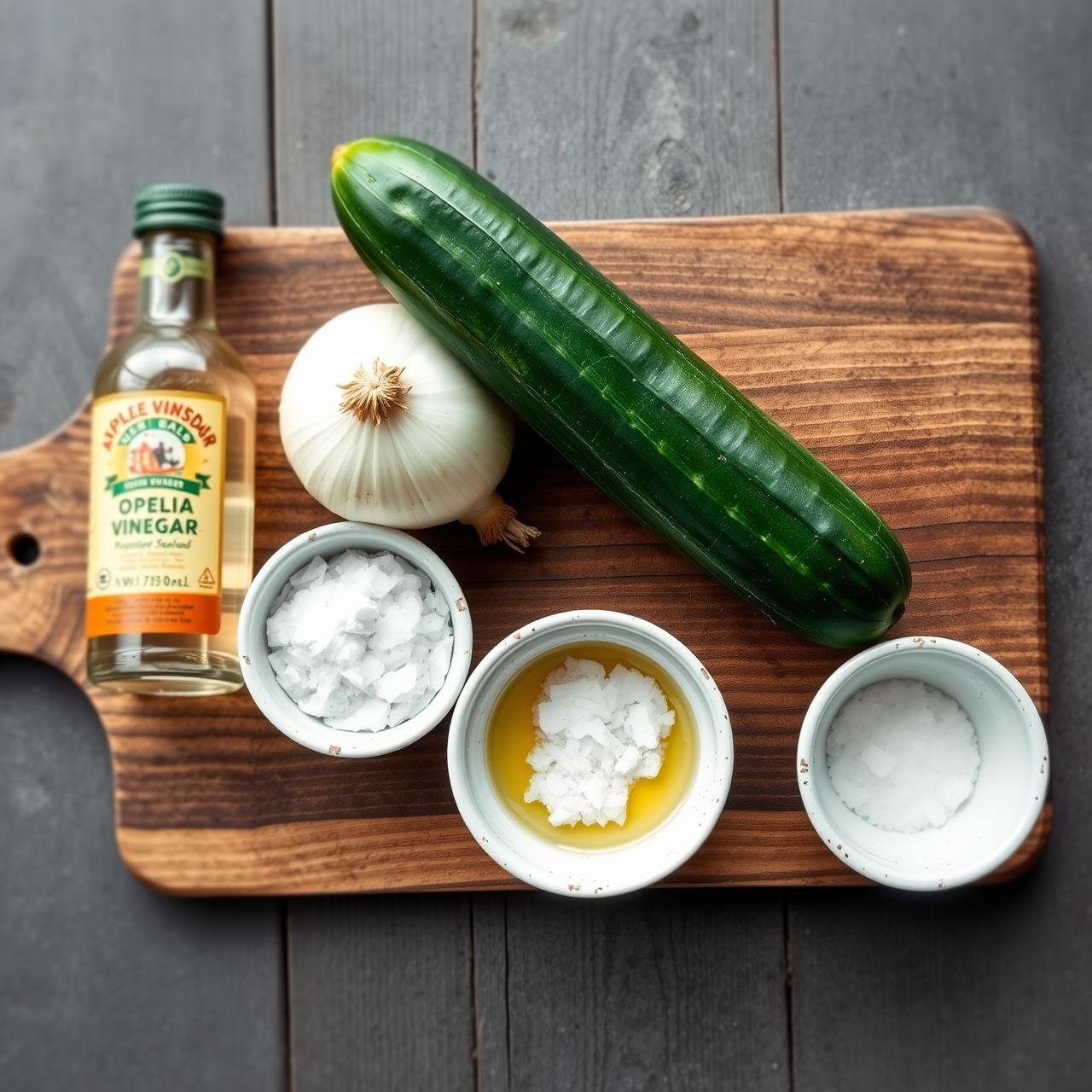
The star of the show must be chosen with care. For this salad, an English cucumber is the superior choice. Its skin is thin and tender, eliminating the need for peeling, which adds a lovely color and texture. They also contain fewer and smaller seeds, resulting in a less watery final product. Look for a firm cucumber with a vibrant, dark green color, free from soft spots or blemishes.
The Onion: A Balance of Sweet and Pungent
The type of onion you select will define the salad’s character. For a classic, balanced flavor, a sweet onion like a Vidalia or Walla Walla is ideal. Their lower sulfur content provides a sweet, mild flavor that complements the vinegar without overwhelming the palate. A red onion can also be used for a sharper bite and a beautiful visual contrast. Slice the onion as thinly as possible to match the delicacy of the cucumbers.
The Brine: Soul of the Salad
- Vinegar: The choice of vinegar sets the tone. Apple cider vinegar offers a rustic, slightly fruity complexity that works beautifully. For a cleaner, sharper flavor, use distilled white vinegar. Rice wine vinegar can be used for a milder, more delicate acidity.
- Sweetener: Standard granulated white sugar is the traditional choice, dissolving easily and providing a clean sweetness to balance the vinegar’s acidity.
- Salt: Use a clean-tasting salt like fine sea salt or kosher salt. The salt’s primary role is to draw water out of the cucumbers in a process called maceration, which is critical for a crisp salad.
The Master Method: Step-by-Step Instructions
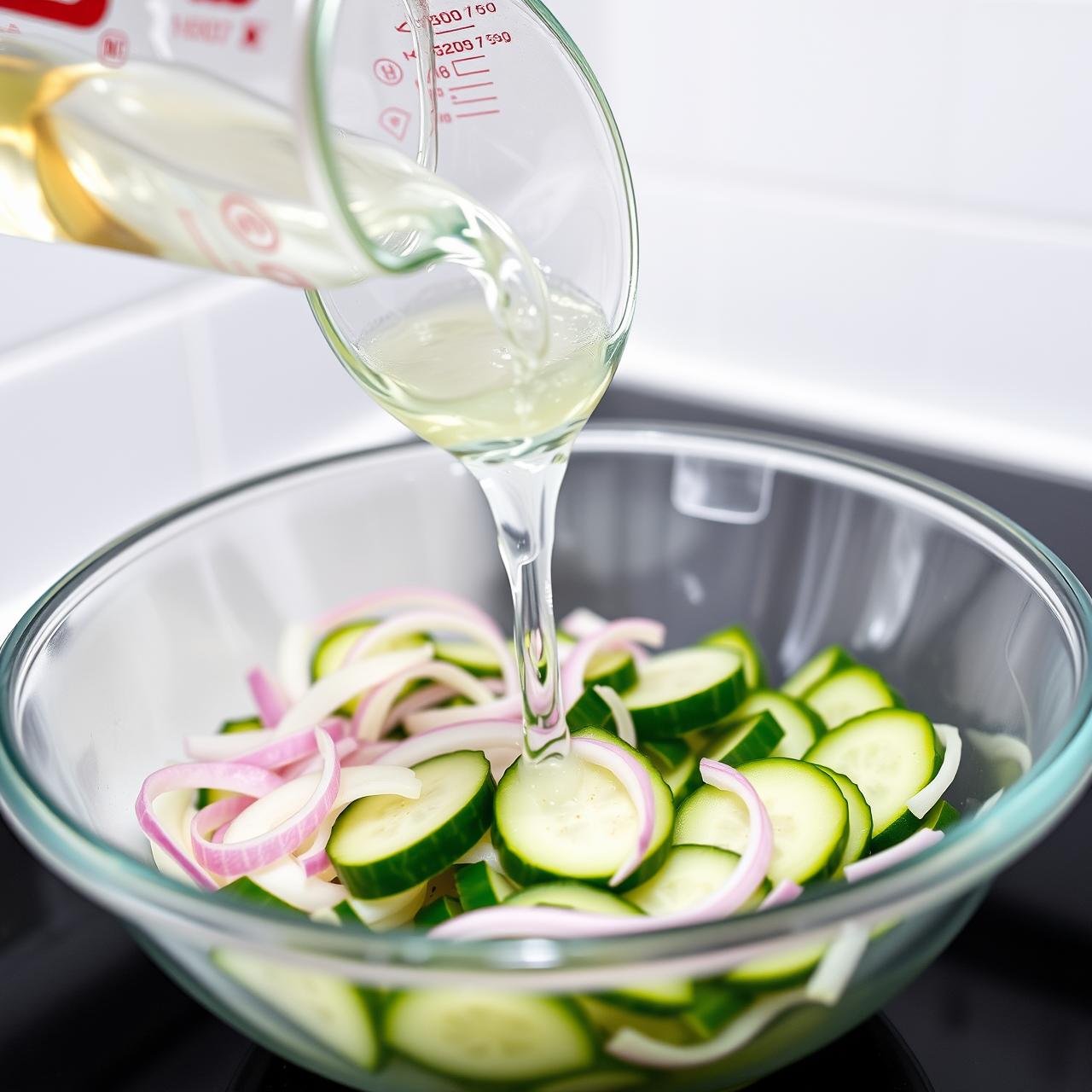
Follow these precise steps to achieve the perfect balance of crisp, tangy, and sweet. Do not rush the process; patience is a key ingredient.
-
Prepare the Vegetables
Wash the 1 large English cucumber and 1 medium sweet onion thoroughly. Trim the ends of the cucumber. Using a mandoline set to a 1/8-inch setting, slice the cucumber and onion into paper-thin rounds. Place the slices into a large, non-reactive bowl.
-
The Crucial Maceration Step
Sprinkle 1.5 teaspoons of fine sea salt over the sliced cucumbers and onions. Gently toss with your hands to distribute the salt evenly. Let the mixture sit at room temperature for at least 60 minutes, or up to 90 minutes. You will see a significant amount of water pool at the bottom of the bowl. This step is non-negotiable for ensuring a crisp, not watery, salad.
-
Rinse and Dry Thoroughly
Transfer the salted vegetables to a colander and rinse them thoroughly under cold running water to remove the excess salt. Afterwards, it is critical to dry the vegetables completely. Gently squeeze them to remove most of the water, then spread them on a clean kitchen towel or paper towels and pat them dry. The drier the vegetables, the crisper your salad will be.
-
Craft the Vinegar Brine
In a separate small bowl or liquid measuring cup, combine 1 cup of apple cider vinegar and 1/2 cup of granulated sugar. Whisk vigorously until the sugar is completely dissolved. There should be no grainy texture remaining. For a slightly different flavor profile, you can add 1/2 teaspoon of black pepper or celery seed at this stage.
-
Combine and Marinate
Return the thoroughly dried cucumbers and onions to your large, clean bowl. Pour the prepared vinegar brine over the top. Stir gently to ensure all the slices are coated. Cover the bowl tightly with plastic wrap or transfer the salad to an airtight container.
-
Chill and Develop Flavors
For the best flavor and texture, refrigerate the salad for at least 4 hours before serving. Overnight is even better. This chilling period allows the vegetables to absorb the brine and the flavors to meld into a cohesive, delicious whole. The salad should be served ice-cold for maximum refreshment.
Chef’s Notes & Pro-Tips for Success
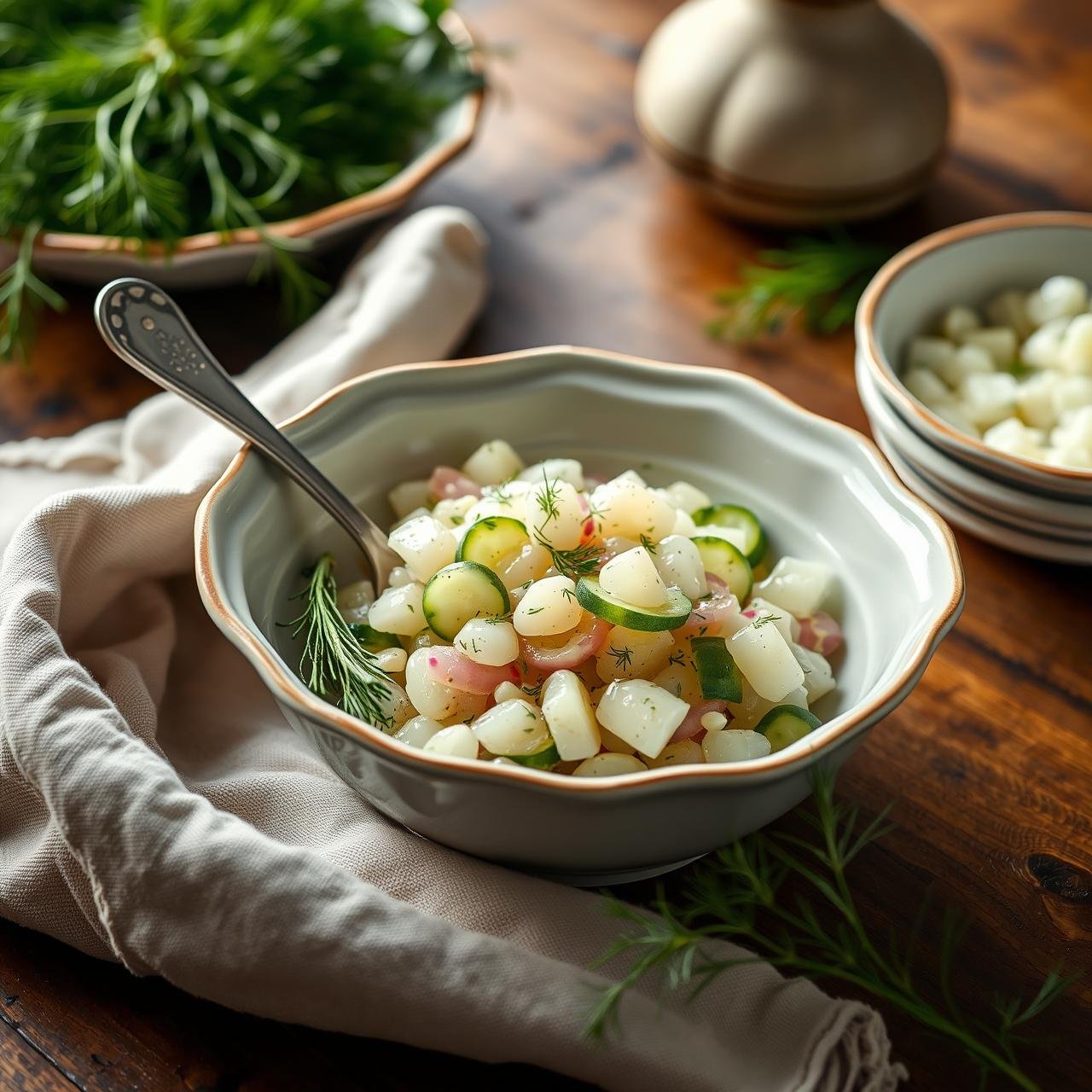
- Uniformity is Everything: The importance of using a mandoline cannot be overstated. The uniform thickness ensures that every single bite has the same perfect texture.
- Don’t Fear the Salt: Some cooks are hesitant to use the amount of salt called for in the maceration step, fearing a salty salad. Trust the process. Rinsing thoroughly removes the excess salt, leaving behind perfectly seasoned and crisp vegetables.
- Taste and Adjust the Brine: Before you pour the brine over the vegetables, give it a taste. If you prefer a sweeter salad, add a bit more sugar. If you like it tangier, you can slightly reduce the sugar. Customizing the brine is the key to making this recipe your own.
- The Chill Factor: Serving this salad ice-cold is essential. The cold temperature enhances the crispness of the cucumbers and makes the tangy flavor even more refreshing, especially on a warm day.
- Herbaceous Variations: While the classic recipe is perfect as is, adding fresh herbs right before serving can introduce a new layer of flavor. Fresh dill is a traditional and highly recommended addition. Finely chopped chives or fresh parsley also work wonderfully.
- A Touch of Heat: For those who enjoy a bit of spice, add a few thin slices of jalapeño to the mix or a pinch of red pepper flakes to the brine.
Nutritional Information
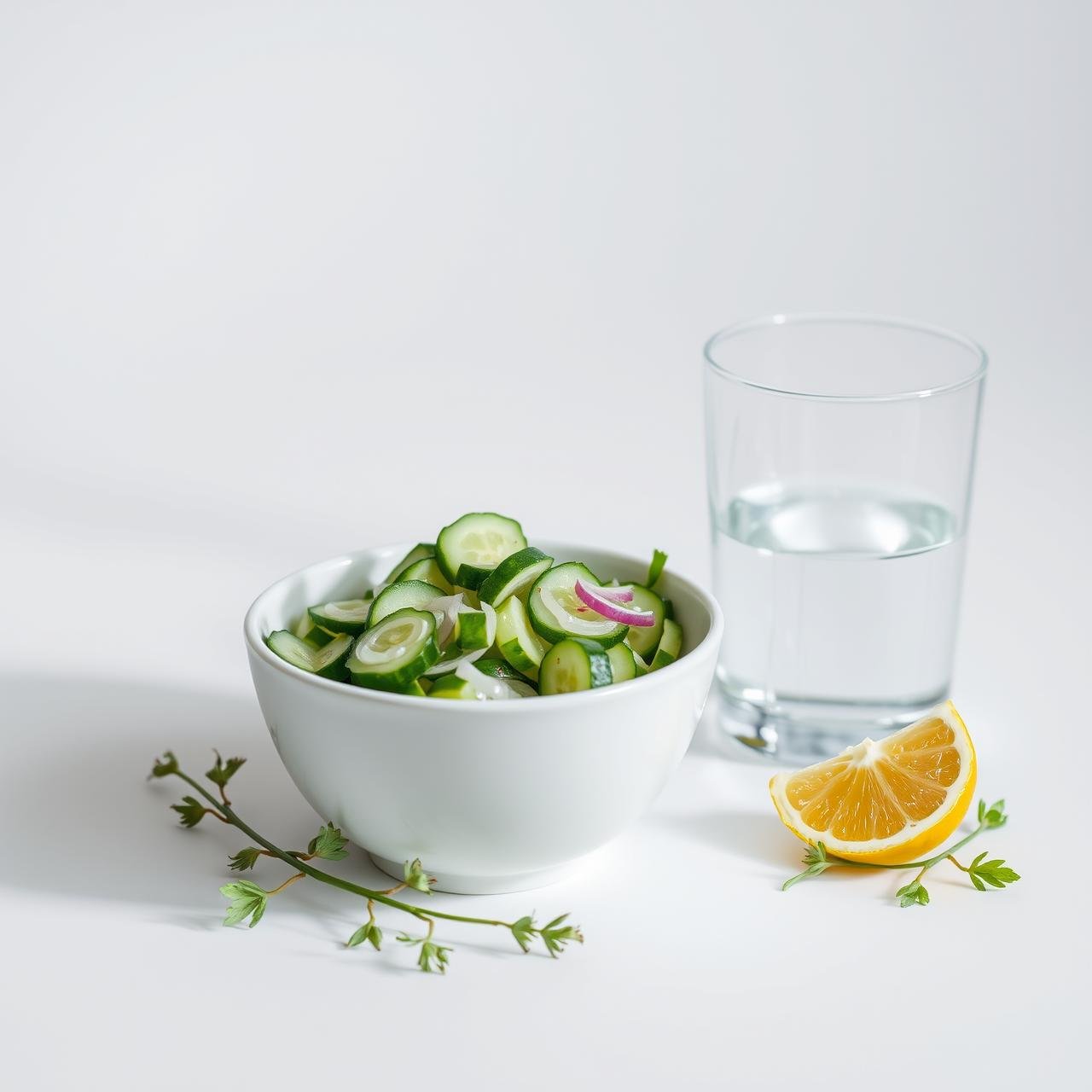
This salad is a fantastic choice for a healthy, clean-eating lifestyle. The absence of oil makes it remarkably low in fat and calories. The following is an approximation based on the recipe yielding 6 servings.
| Nutrient | Amount Per Serving |
|---|---|
| Serving Size | Approx. 3/4 cup |
| Calories | ~65 kcal |
| Carbohydrates | ~16g |
| Sugar | ~15g |
| Sodium | ~590mg (can vary based on rinsing) |
| Protein | <1g |
| Fat | 0g |
| Fiber | ~1g |
Storage and Longevity: Keeping it Crisp
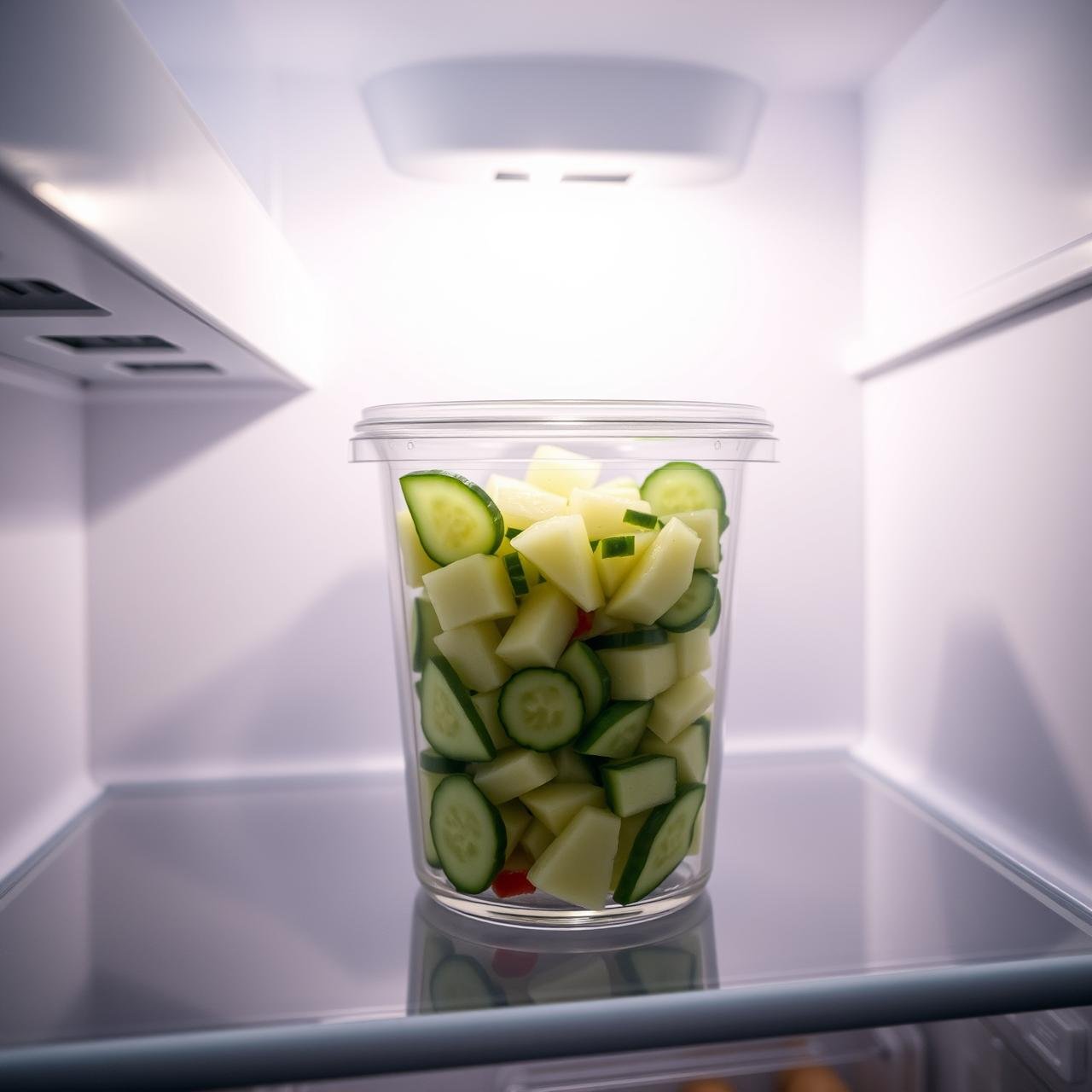
Proper storage is key to enjoying this salad for days. Once prepared, transfer the salad and all of its brine into an airtight glass container. Plastic can sometimes retain odors, so glass is preferred.
Stored correctly in the refrigerator, the salad will last for up to 7 days. It’s important to note how the salad evolves. For the first 24-48 hours, it will be at its peak crispness. As the days go on, the cucumbers will soften slightly as they continue to pickle in the brine, and the flavor will become tangier and more pronounced. Many people enjoy this more intensely pickled flavor. Always use a clean utensil to serve the salad to prevent contamination and prolong its freshness.
Conclusion
You have now mastered the art of the Old Fashioned Cucumber Onion Vinegar Salad—a dish that proves simplicity is the ultimate sophistication. By focusing on quality ingredients and proper technique, you’ve created a side dish that is clean, healthy, and bursting with timeless flavor. This versatile salad is the perfect counterpoint to rich, savory dishes like grilled meats, barbecue, or fried chicken, cutting through the richness with its bright, acidic crunch. Embrace this ‘no fluff’ recipe as a staple in your culinary repertoire, and share a taste of wholesome, rustic tradition with your family and friends.