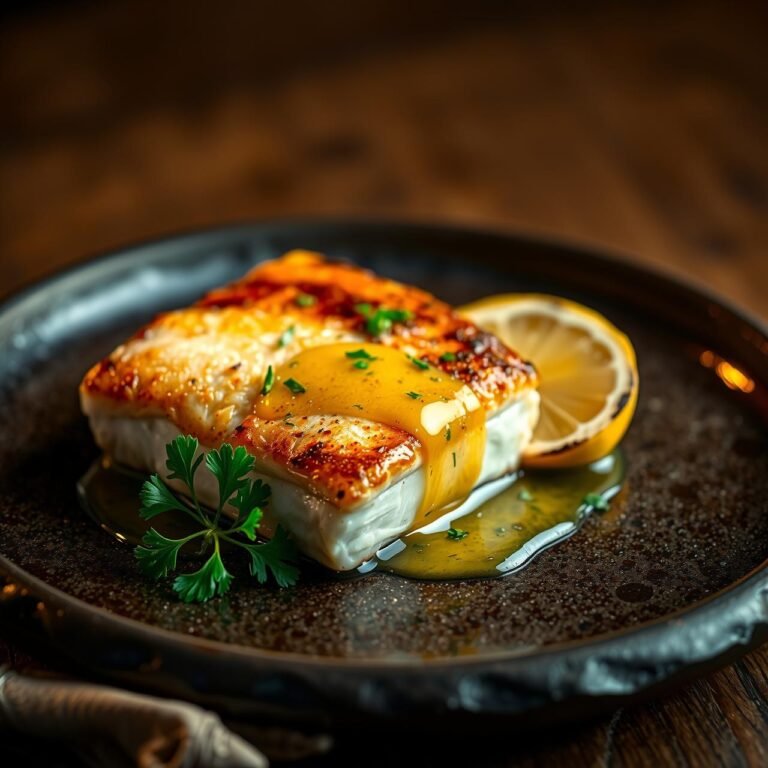
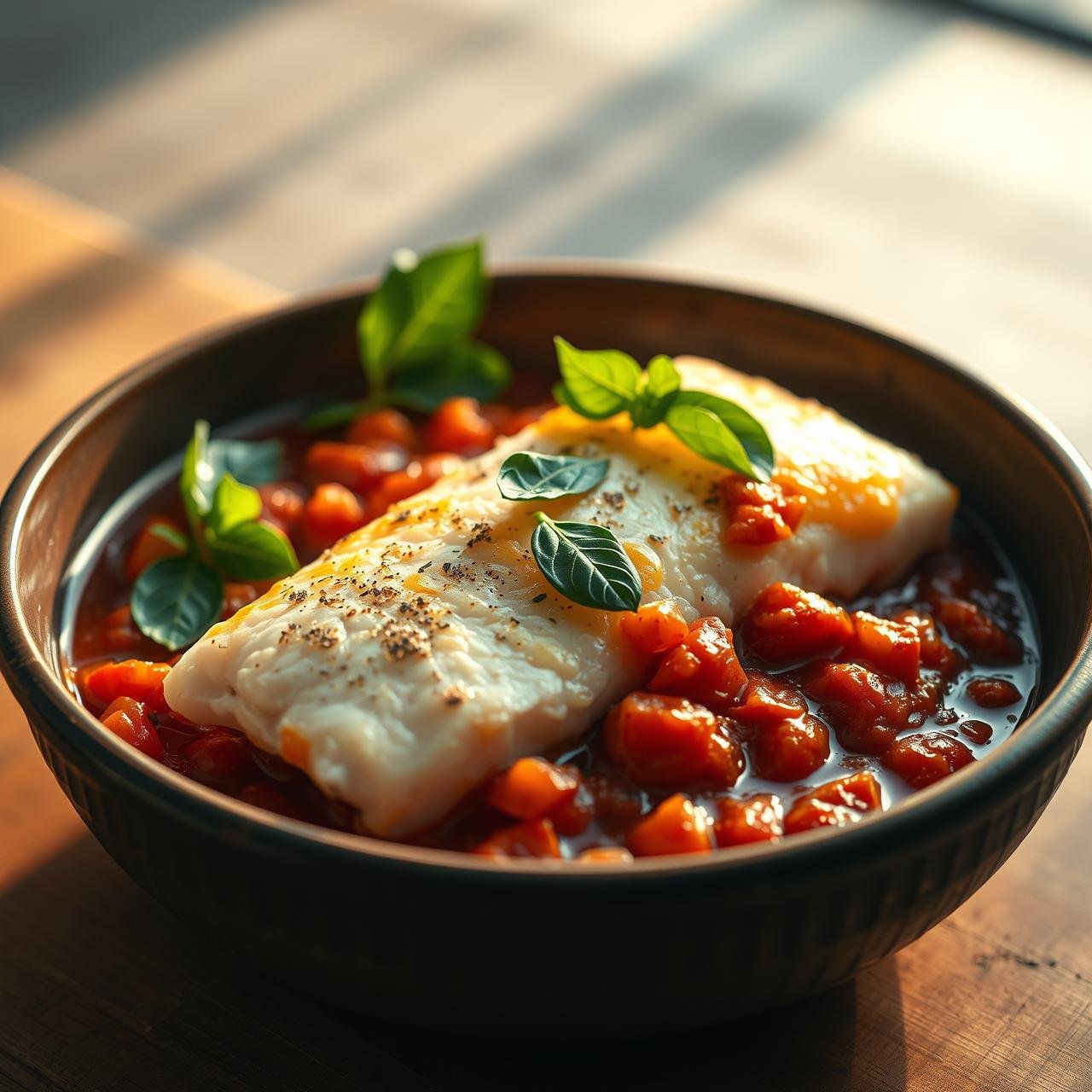
Melt in Your Mouth Poached Cod in Tomato Basil Sauce
There is a certain kind of magic that happens when you poach fish. It’s a gentle, respectful cooking method that transforms a humble fillet into something sublime—impossibly moist, tender, and infused with the flavors of its simmering bath. Forget dry, overcooked fish forever. Today, we’re embracing this classic culinary technique to create a dish that is both profoundly comforting and elegantly simple: Melt in Your Mouth Poached Cod in a Rustic Tomato Basil Sauce.
This isn’t just a recipe; it’s a feeling. It’s the feeling of a sun-drenched Mediterranean kitchen, the aroma of garlic and fresh basil filling the air. It’s the satisfaction of creating a deeply flavorful, nourishing meal in a single pan, using wholesome ingredients that speak for themselves. The cod becomes velvety, flaking apart at the mere suggestion of a fork, while the sauce—a simple but powerful combination of sweet tomatoes, pungent garlic, and herbaceous basil—clings to every piece. Whether you’re a seasoned home cook looking for a new favorite, a health enthusiast seeking a delicious, protein-packed meal, or a budget-conscious foodie wanting to make the most of simple ingredients, this dish will captivate your senses and become a staple in your culinary repertoire.
Why You’ll Adore This Poached Cod Recipe
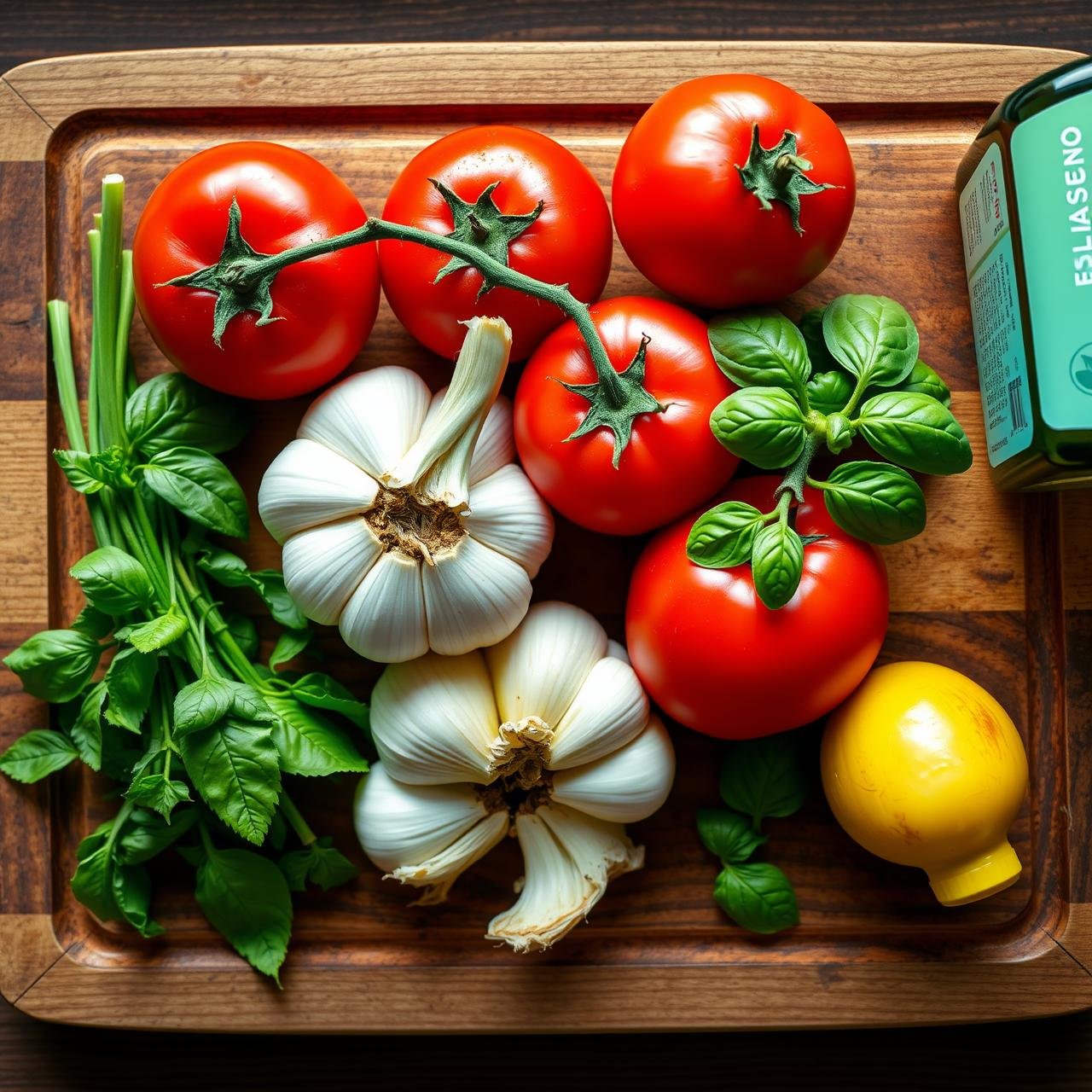
Before we dive into the heart of the recipe, let’s talk about why this dish is destined to become a favorite on your dinner table. It’s more than just delicious; it’s a powerhouse of convenience, health, and flavor.
- Unbelievably Tender & Moist: Poaching is a gentle, wet-heat cooking method. By simmering the cod in the sauce, we lock in moisture, ensuring the fish is succulent and tender every single time. It’s virtually impossible to dry out!
- A Symphony of Flavor: The fish doesn’t just cook in the sauce; it becomes one with it. The delicate flavor of the cod is the perfect canvas for the bright, acidic tomatoes, the sweet perfume of basil, and the savory depth of garlic and onions.
- Healthy & Nourishing: Cod is a fantastic source of lean protein and omega-3 fatty acids. This recipe is naturally gluten-free, low-carb, and packed with nutrients from the fresh vegetables and olive oil, making it a meal you can feel wonderful about eating.
- One-Pan Wonder: From sautéing the aromatics to simmering the sauce and poaching the fish, everything happens in a single skillet or Dutch oven. This means minimal cleanup and maximum flavor, as all the delicious layers build upon each other in the same pan.
- Quick & Easy: Despite its gourmet appearance and taste, this dish comes together in about 30 minutes, making it a perfect solution for busy weeknights when you crave something special without the fuss.
The Heart of the Dish: Essential Ingredients
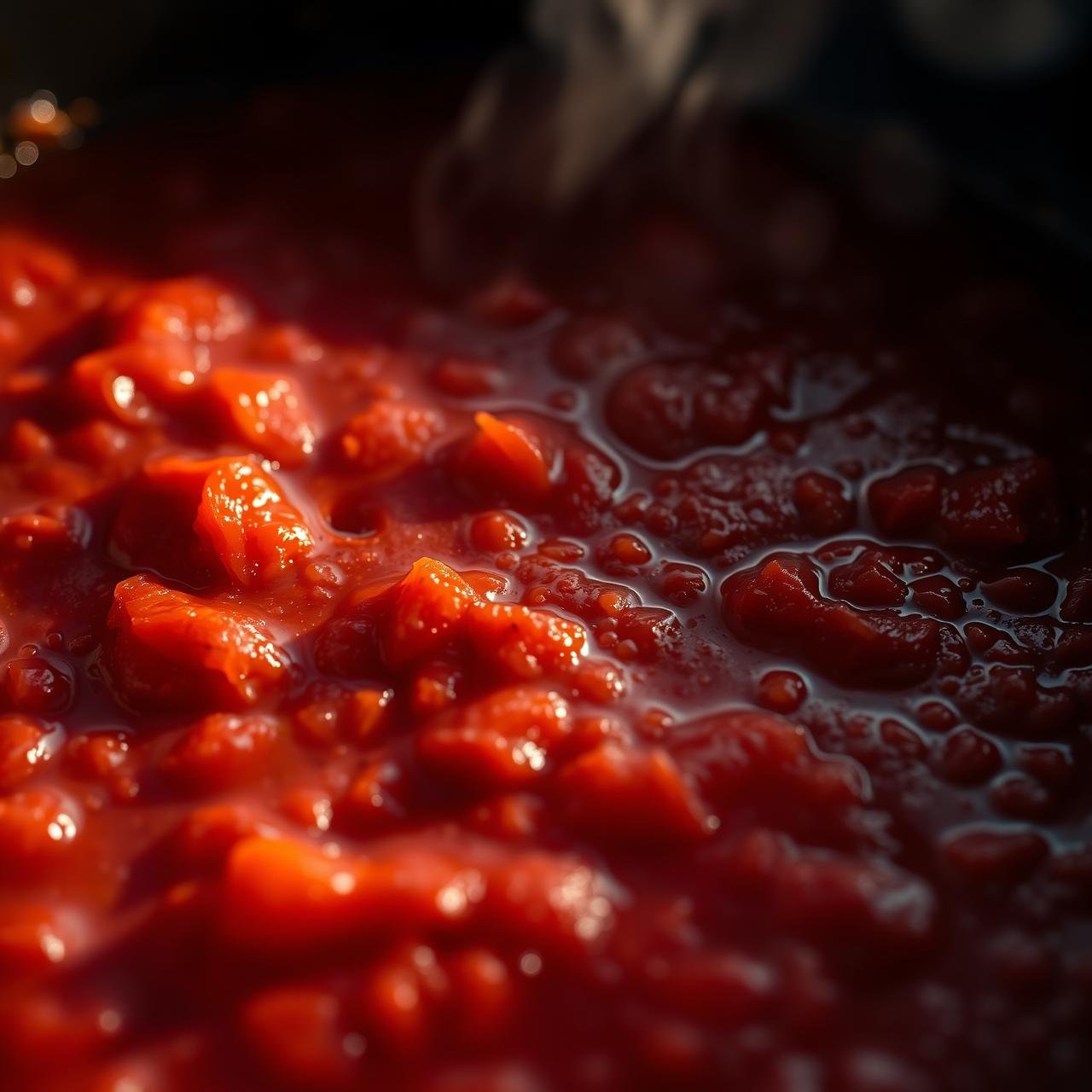
The beauty of this recipe lies in its simplicity and the quality of its components. Here’s what you’ll need to create this rustic masterpiece.
For the Rustic Tomato Basil Sauce:
- Olive Oil: 2 tablespoons of good quality extra-virgin olive oil forms the flavorful base.
- Yellow Onion: 1 medium, finely chopped, to build a sweet and savory foundation.
- Garlic: 4-5 cloves, thinly sliced or minced. Don’t be shy; its pungent aroma is key.
- Crushed Tomatoes: 1 (28-ounce) can of high-quality crushed tomatoes, like San Marzano, for a rich, authentic flavor.
- Vegetable or Chicken Broth: 1/2 cup to thin the sauce to the perfect consistency for poaching.
- Dried Oregano: 1 teaspoon for a touch of earthy, Mediterranean warmth.
- Red Pepper Flakes: 1/4 teaspoon (or more, to taste) for a gentle background heat.
- Fresh Basil: 1 large handful (about 1 cup, loosely packed), torn or roughly chopped. This is the soul of the sauce!
- Salt and Black Pepper: To taste, to season and elevate all the other flavors.
For the Poached Cod:
- Cod Fillets: 4 (6-ounce) fillets, about 1-inch thick. You can use fresh or frozen (and thawed) cod. Pat them thoroughly dry before cooking.
- Salt and Black Pepper: For seasoning the fish directly.
Essential Kitchen Tools
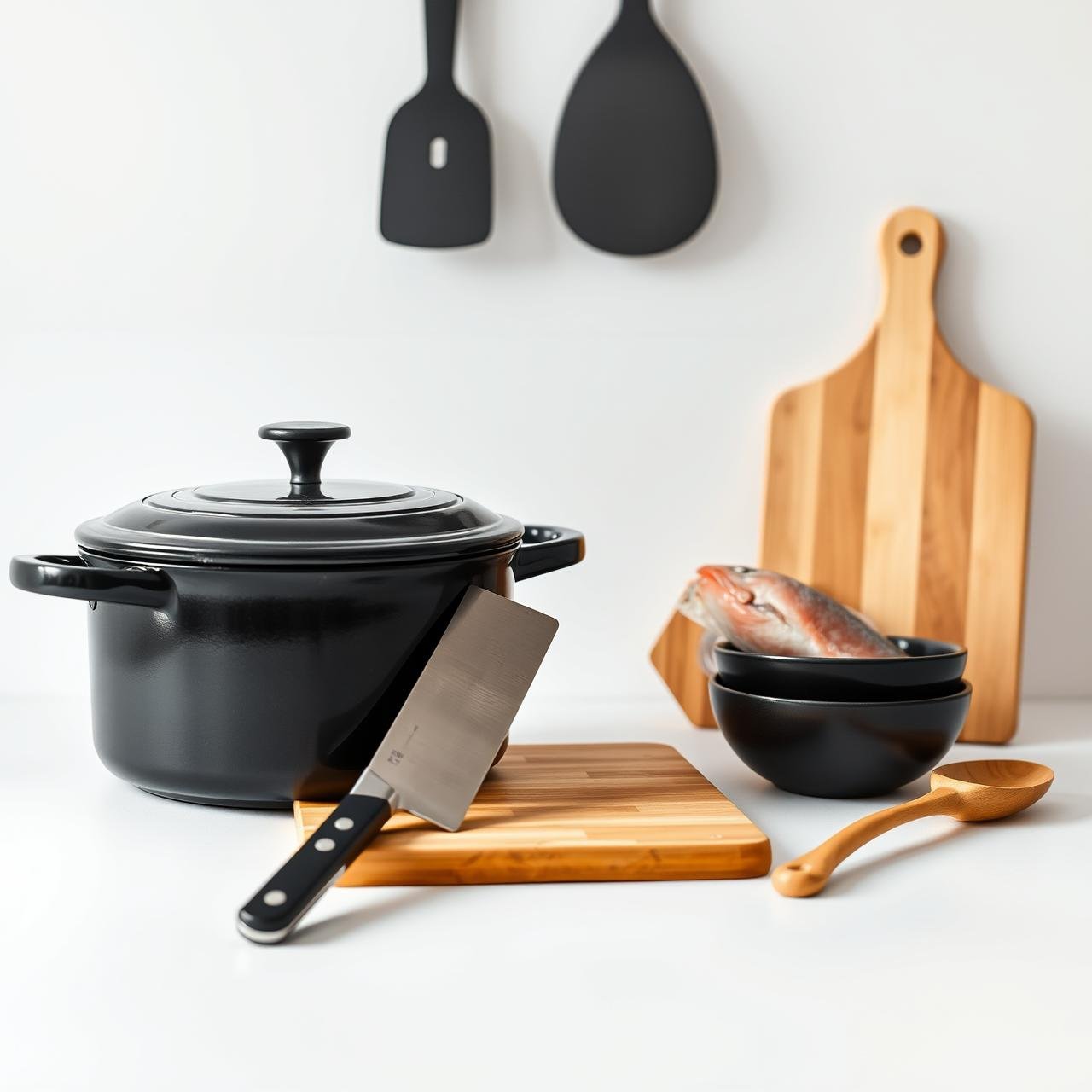
You don’t need any fancy gadgets for this recipe, just a few kitchen staples that will help you achieve perfect results.
- Large Skillet or Dutch Oven: A 12-inch skillet with a tight-fitting lid is ideal. It needs to be wide enough to hold the fish fillets in a single layer without overcrowding.
- Cutting Board & Chef’s Knife: For prepping your onion, garlic, and basil.
- Wooden Spoon or Spatula: For sautéing the aromatics and stirring the sauce.
- Fish Spatula: A thin, flexible spatula is incredibly helpful for gently lifting the delicate poached fish from the pan without breaking it.
Crafting the Perfect Poached Cod: A Step-by-Step Guide
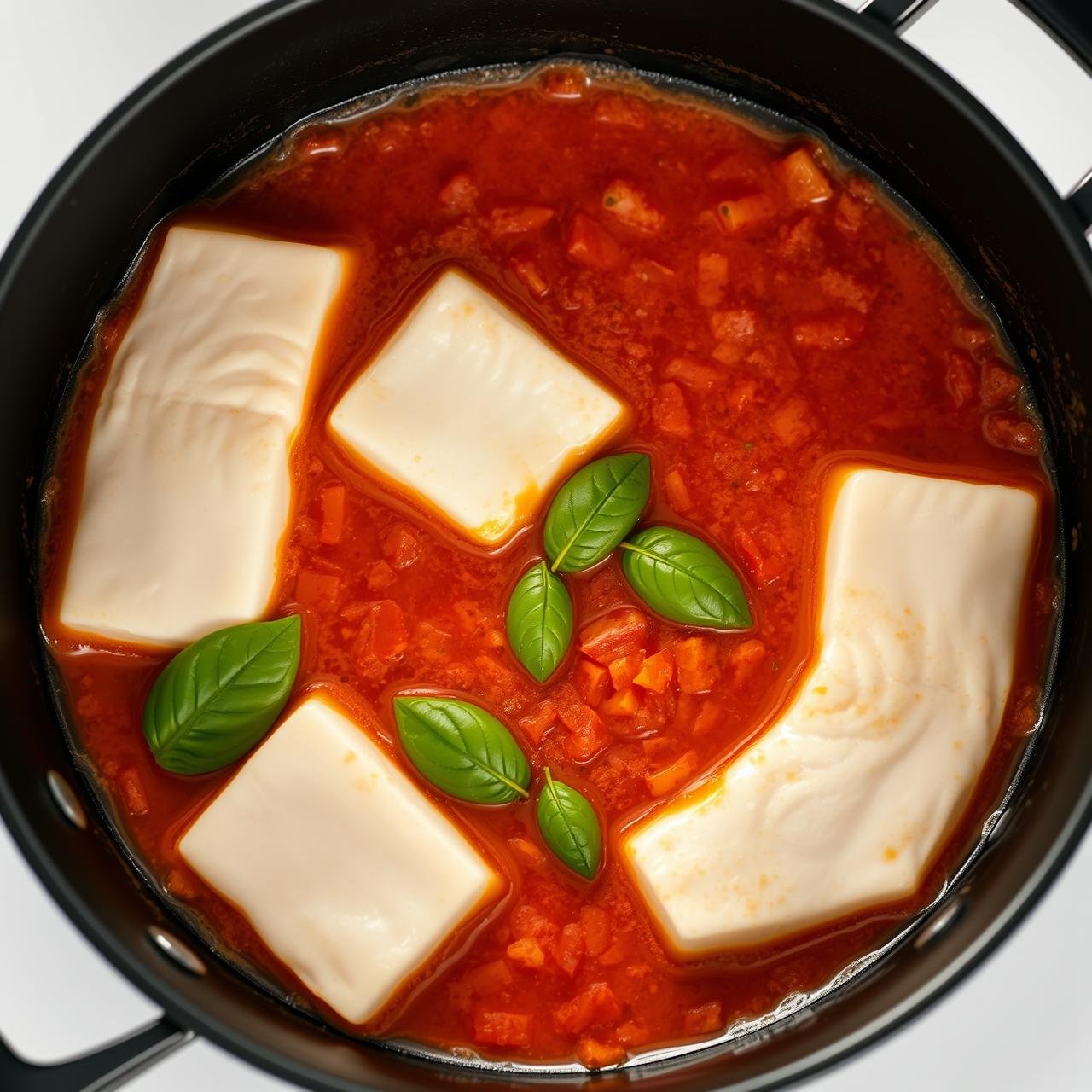
Follow these simple steps, and you’ll be rewarded with a restaurant-quality meal made in your own kitchen. We’ll build the sauce first, creating a perfect poaching liquid for our delicate cod.
Part 1: Building the Aromatic Sauce
- Sauté the Aromatics: Place your large skillet or Dutch oven over medium heat and add the 2 tablespoons of olive oil. Once it shimmers, add the chopped onion and a pinch of salt. Cook, stirring occasionally, for 5-7 minutes, until the onion is soft, translucent, and sweet.
- Bloom the Garlic and Spices: Add the sliced garlic, 1 teaspoon of dried oregano, and 1/4 teaspoon of red pepper flakes to the pan. Stir constantly for about 1 minute until the garlic is fragrant. Be careful not to let it brown, as it can become bitter.
- Simmer the Sauce: Pour in the 28-ounce can of crushed tomatoes and the 1/2 cup of broth. Stir everything together to combine. Bring the sauce to a gentle simmer, then reduce the heat to low. Let it cook, uncovered, for about 10 minutes, allowing the flavors to meld and the sauce to thicken slightly.
- Finish with Basil: Stir in the fresh basil, reserving a few leaves for garnish. Season the sauce generously with salt and freshly ground black pepper to your taste.
Part 2: Poaching the Cod to Perfection
- Prepare the Fish: While the sauce simmers, prepare your cod. Pat the fillets completely dry with paper towels—this is crucial for a clean texture. Season both sides of each fillet with salt and pepper.
- Gently Nestle the Cod: Carefully place the seasoned cod fillets into the simmering tomato sauce. They should be in a single layer and about halfway submerged. If needed, spoon a little of the sauce over the tops of the fillets.
- Cover and Poach: Cover the skillet with its lid and let the fish gently poach over low heat. The cooking time will depend on the thickness of your fillets, but it typically takes 8-12 minutes.
- Check for Doneness: The cod is perfectly cooked when it is opaque all the way through and flakes easily when gently prodded with a fork. Be careful not to overcook it, as it will continue to cook slightly from the residual heat of the sauce.
- Serve Immediately: Use a fish spatula to carefully lift the fillets from the sauce and place them in shallow bowls. Spoon a generous amount of the tomato basil sauce over and around the fish. Garnish with the reserved fresh basil and an optional drizzle of extra-virgin olive oil.
A Chef’s Secrets for Flawless Poached Fish

Choosing Your Cod
While any cod will work, look for thicker, center-cut fillets. They hold up better during poaching and result in more substantial, satisfying portions. Both Atlantic and Pacific cod are excellent choices. If using frozen, ensure it’s fully thawed in the refrigerator overnight and patted very dry.
Sauce Consistency is Key
Your poaching liquid should be the consistency of a hearty soup, not a thick paste. It needs to be fluid enough to circulate and gently cook the fish. If your sauce gets too thick during the initial simmer, don’t hesitate to add another splash of broth or even water to thin it to the right consistency before adding the fish.
Don’t Boil, Gently Simmer
The key to poaching is gentle heat. The sauce should be at a bare simmer, with just a few lazy bubbles breaking the surface. A rapid boil will agitate the delicate fish, causing it to break apart and become tough. Keep the heat on low throughout the poaching process.
Serving Suggestions
This dish is wonderfully versatile. Serve it with a piece of crusty sourdough or ciabatta to sop up every last drop of the incredible sauce. For a more substantial meal, it’s fantastic over creamy polenta, orzo, or even zucchini noodles for a low-carb option. A simple side salad with a lemon vinaigrette provides a fresh, crisp contrast.
Nutritional Information
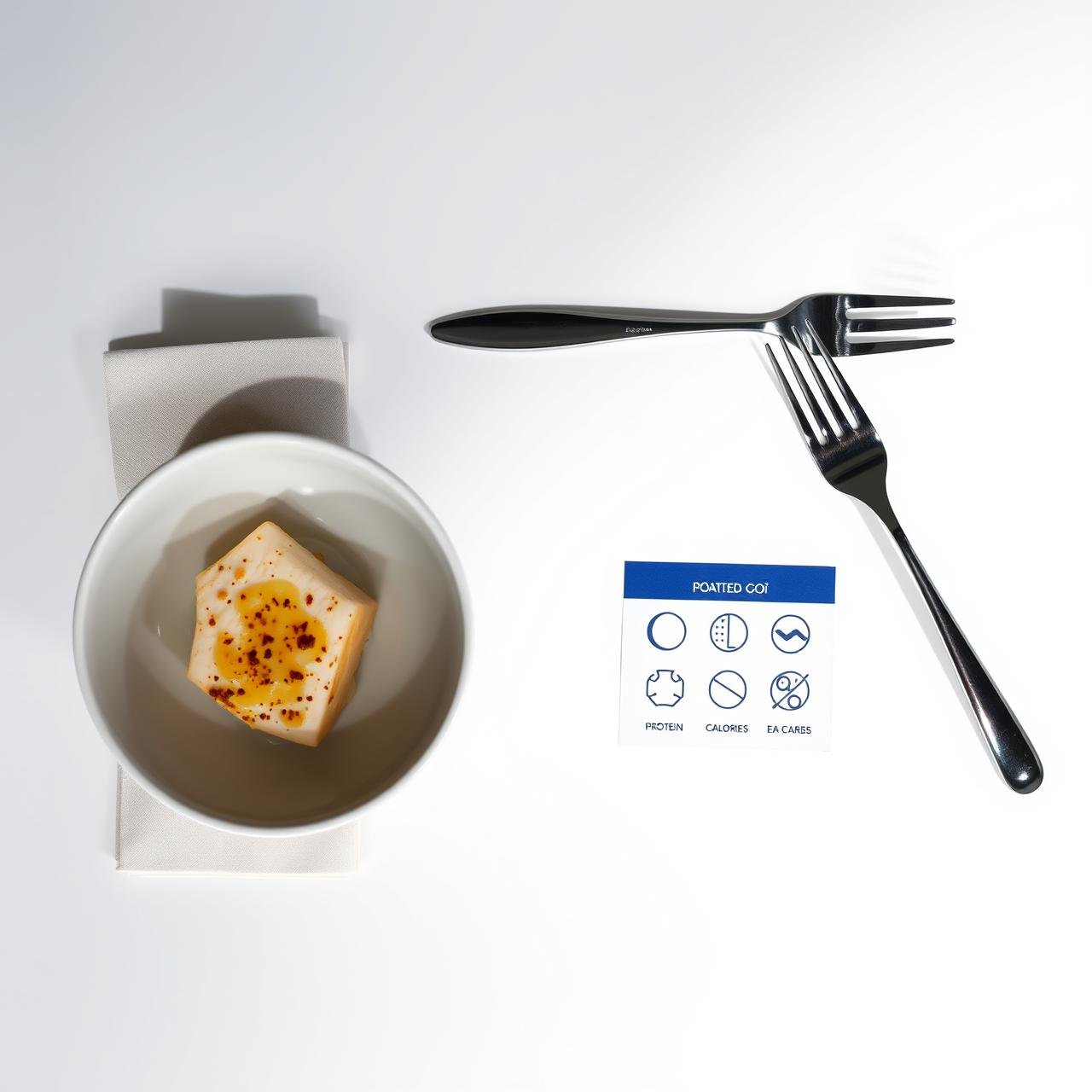
Here is an estimated nutritional breakdown per serving, assuming the recipe serves four. Please note that these values are approximate and can vary based on the specific ingredients used.
| Nutrient | Amount per Serving |
|---|---|
| Calories | 365 kcal |
| Protein | 38g |
| Fat | 15g |
| Saturated Fat | 2g |
| Carbohydrates | 18g |
| Fiber | 5g |
| Sugar | 10g |
| Sodium | 750mg |
Storing and Reheating Your Poached Cod

While this dish is best enjoyed fresh, leftovers can be stored and savored. The key is to reheat it gently to preserve the cod’s delicate texture.
- Storage: Allow the dish to cool completely. Store the cod and sauce together in an airtight container in the refrigerator for up to 2 days. The flavors will continue to meld and can be even more delicious the next day.
- Reheating: The best way to reheat is gently on the stovetop. Place the leftovers in a small saucepan or skillet over low heat. Cover and warm slowly until the fish is heated through, about 5-7 minutes. Avoid the microwave if possible, as its intense heat can make the fish rubbery and dry.
Conclusion
This Melt in Your Mouth Poached Cod is more than just a recipe—it’s a testament to the power of simple, high-quality ingredients and gentle cooking. It’s proof that a meal can be incredibly quick, healthy, and bursting with rustic, sophisticated flavor all at once. The velvety fish and the rich, aromatic sauce create a truly memorable dish that will nourish your body and soothe your soul. I encourage you to bring this taste of the Mediterranean into your kitchen. It’s a perfect weeknight rescue, a lovely dish for a casual dinner party, and a delicious way to fall in love with fish all over again.
Have you tried this recipe? Do you have your own favorite way to poach fish? Share your thoughts and experiences in the comments below—I’d love to hear from you!