Homemade Salmon Poke Bowl: Save Calories and Money (Step-by-Step)
Homemade Salmon Poke Bowl: Save Calories And Money (Step-By-Step)
Welcome to the ultimate guide to creating a restaurant-quality salmon poke bowl right in your own kitchen. Poke (pronounced poh-keh), a traditional Hawaiian dish of diced raw fish, has surged in popularity worldwide for its fresh flavors, vibrant colors, and healthy profile. While readily available at cafes and specialty restaurants, the cost can add up, and you don’t always have control over the ingredients. This step-by-step recipe empowers you to craft a delicious, nutritious, and affordable poke bowl tailored exactly to your liking. By making it at home, you not only save money but also control the sodium, sugar, and portion sizes, making it a significantly healthier alternative to takeout. Get ready to master this simple yet sophisticated dish that’s perfect for a quick lunch or a light, satisfying dinner.
20 minutes
20 minutes
40 minutes
2 large bowls
Main Course
Assembling
Hawaiian-inspired
Dairy-Free
Why You’ll Love This Recipe
- Healthier & Lower Calorie: Full control over sauces and ingredients.
- Budget-Friendly: Significantly cheaper than buying from a restaurant.
- Highly Customizable: Easily swap proteins, veggies, and toppings.
- Quick & Easy: Ready in under 30 minutes, perfect for a weeknight meal.
- Fresh & Flavorful: Packed with vibrant ingredients and a delicious umami-rich marinade.
Equipment You’ll Need
- Rice cooker or medium saucepan with a lid
- Sharp chef’s knife
- Cutting board
- 2 Medium mixing bowls
- Small bowl or jar for sauce
- Whisk
- Measuring cups and spoons
Ingredients
- For the Sushi Rice:
- 1 cup sushi rice (short-grain rice)
- 1 ¼ cups water
- 2 tbsp rice vinegar
- 1 tbsp granulated sugar
- ½ tsp salt
- For the Marinated Salmon:
- 1 lb sushi-grade or sashimi-grade salmon fillet, skin removed
- ¼ cup low-sodium soy sauce or tamari
- 1 tbsp sesame oil
- 1 tbsp rice vinegar
- 1 tsp freshly grated ginger
- 1 clove garlic, minced
- 2 scallions, thinly sliced (greens and whites separated)
- For the Toppings & Assembly:
- 1 large avocado, sliced or cubed
- 1 cup shelled edamame, cooked
- 1 Persian cucumber, thinly sliced
- ½ cup shredded carrots
- Optional: Spicy mayo (see FAQ), furikake seasoning, toasted sesame seeds, crispy onions, pickled ginger, seaweed salad, mango cubes
Instructions
- Step 1: Cook the Sushi Rice. Rinse the sushi rice under cold water in a fine-mesh sieve until the water runs clear. Combine the rinsed rice and 1 ¼ cups of water in your rice cooker or saucepan. If using a saucepan, bring to a boil, then reduce heat to the lowest setting, cover, and simmer for 15-20 minutes, or until all water is absorbed. Do not lift the lid during this time. Once cooked, remove from heat and let it stand, covered, for 10 minutes.
- Step 2: Season the Rice. While the rice is standing, prepare the seasoning. In a small bowl, whisk together the rice vinegar, sugar, and salt until the sugar and salt are fully dissolved. You can gently heat this mixture for 30 seconds in the microwave to help it dissolve. Once the rice has rested, transfer it to a large, non-metallic bowl. Gently drizzle the vinegar mixture over the rice and use a rice paddle or spatula to ‘cut’ and fold it in, being careful not to mash the grains. Let the rice cool to room temperature.
- Step 3: Prepare the Salmon and Marinade. While the rice cools, prepare the salmon. Pat the salmon fillet dry with a paper towel. Using a very sharp knife, cut the salmon into uniform ¾-inch cubes. In a medium bowl, whisk together the soy sauce (or tamari), sesame oil, rice vinegar, grated ginger, minced garlic, and the white parts of the sliced scallions. Gently add the salmon cubes to the marinade and toss to coat. Set aside to marinate for at least 15 minutes in the refrigerator (but no longer than 1 hour).
- Step 4: Prepare the Toppings. While the salmon marinates, wash and chop all your fresh toppings. Slice the avocado and cucumber, shred the carrots, and ensure your edamame is ready to use.
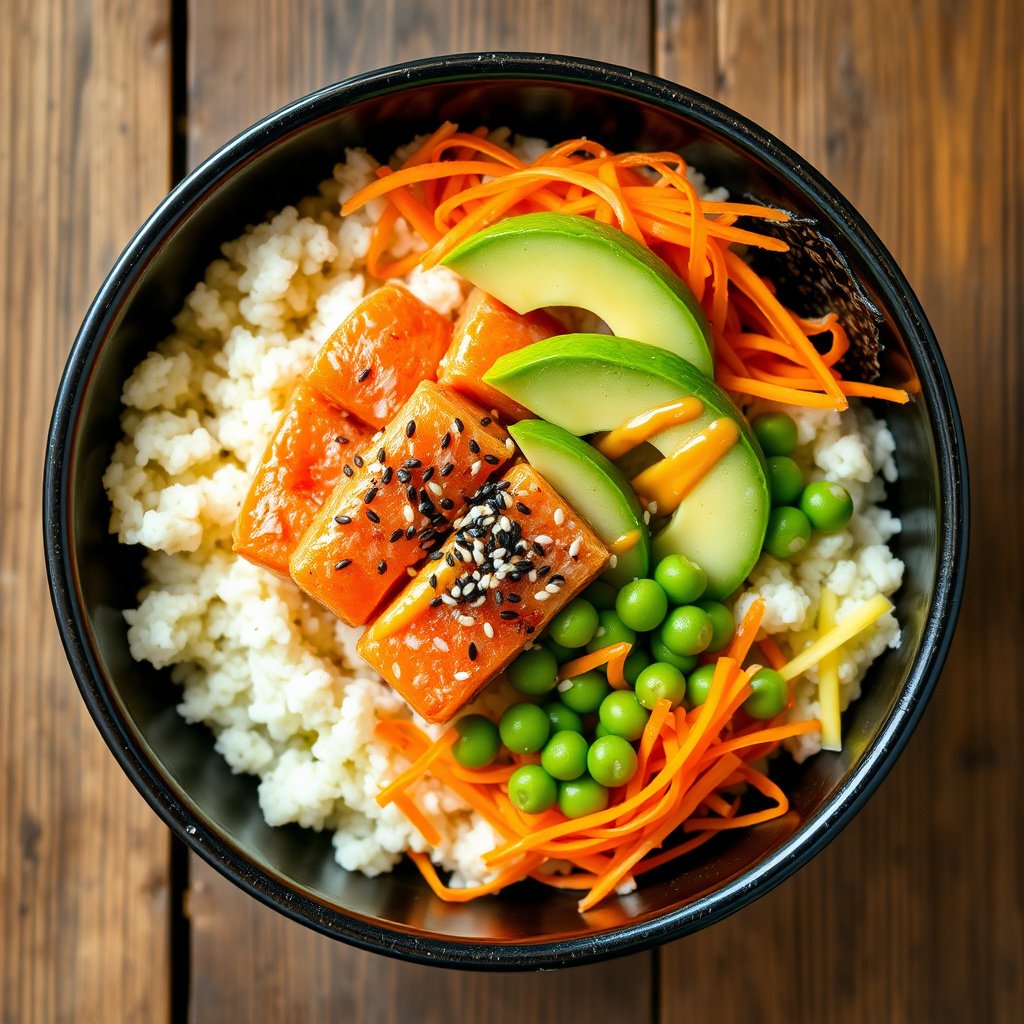
- Step 5: Assemble Your Poke Bowls. Divide the seasoned sushi rice evenly between two bowls, creating a base. Using a slotted spoon to leave excess marinade behind, arrange the marinated salmon cubes over one side of the rice.
- Step 6: Add Toppings and Garnish. Artfully arrange your prepared toppings—avocado, edamame, cucumber, and carrots—around the salmon. Garnish generously with the green parts of the scallions and toasted sesame seeds. If desired, add a drizzle of spicy mayo or a sprinkle of furikake. Serve immediately.
Expert Cooking Tips
- Source High-Quality Fish: The success of this dish hinges on the quality of the salmon. Always purchase ‘sushi-grade’ or ‘sashimi-grade’ fish from a reputable fishmonger. This indicates it is safe for raw consumption.
- Don’t Skip Rinsing the Rice: Rinsing the rice removes excess starch, which is crucial for achieving the perfect fluffy, non-gummy texture of sushi rice.
- Chill Your Ingredients: For the best experience, ensure your salmon and toppings are cold and your rice is at room temperature or slightly warm. This temperature contrast is key to a great poke bowl.
- Uniform Cuts: Try to cut your salmon and vegetables into similarly sized pieces. This ensures a balanced bite and a professional presentation.
Substitutions and Variations
Don’t have salmon? No problem. You can substitute with sushi-grade ahi tuna. For a cooked option, try cooked shrimp or crab meat. For a vegetarian or vegan bowl, use firm tofu (cubed and pan-fried) or chickpeas, and marinate them in the same sauce. The sushi rice can be swapped for brown rice, quinoa, or a bed of mixed greens for a low-carb option. Use tamari or coconut aminos in place of soy sauce for a gluten-free marinade.
Common Mistakes to Avoid
The most common mistake is using salmon that is not designated as sushi-grade, which can be unsafe. Another error is over-marinating the fish; the acid in the marinade can begin to ‘cook’ the salmon (like in ceviche), changing its texture if left for more than an hour. Also, don’t forget to season the rice—plain rice will make the entire bowl taste flat. Finally, avoid over-piling toppings; while it’s tempting, too many competing flavors can overwhelm the delicate taste of the fish.
Serving Suggestions
Serve your homemade poke bowl immediately after assembly for the best texture and temperature contrast. It’s a complete meal on its own, but pairs wonderfully with a side of miso soup or some seaweed salad. For beverages, a crisp Japanese lager, a glass of chilled sake, or a simple iced green tea complements the flavors perfectly.
Storage and Reheating Tips
Poke bowls are best enjoyed fresh and are not ideal for storage once assembled. If you have leftovers, store the components separately in airtight containers in the refrigerator. The rice and toppings will last for up to 2 days, but the marinated salmon should be consumed within 24 hours for optimal safety and freshness. Do not freeze the assembled bowl.
Nutrition Facts (Estimated)
| Serving Size | 1 bowl (approx. 550g) |
| Calories | 620 kcal |
| Fat | 28g |
| Saturated Fat | 5g |
| Unsaturated Fat | 21g |
| Trans Fat | 0g |
| Cholesterol | 80mg |
| Sodium | 950mg |
| Carbohydrates | 55g |
| Fiber | 10g |
| Sugar | 8g |
| Protein | 35g |
Frequently Asked Questions
What does ‘sushi-grade’ or ‘sashimi-grade’ fish actually mean?
These are marketing terms, not official regulations in most places. They imply that the fish is of high quality and has been handled and frozen in a way that kills potential parasites, making it safe to eat raw. Always buy from a trusted fish market that can confirm the fish’s suitability for raw consumption.
Can I use frozen salmon from the grocery store?
You can, but only if the packaging explicitly states it is ‘sushi-grade’ or ‘safe for raw consumption.’ Many high-quality fish are flash-frozen on the boat to preserve freshness and kill parasites. Thaw it completely in the refrigerator before using.
How do I make a simple spicy mayo?
It’s easy! Simply mix ½ cup of Japanese mayonnaise (like Kewpie) with 1-2 tablespoons of sriracha, depending on your heat preference. For extra flavor, you can add a teaspoon of lime juice or a dash of sesame oil.
Conclusion
You’ve now unlocked the secret to creating a stunning, delicious, and healthy salmon poke bowl at home. This recipe is not just about following steps; it’s a template for your creativity. Feel free to experiment with different toppings, sauces, and bases to discover your perfect combination. By bringing this Hawaiian classic into your kitchen, you gain a go-to meal that’s as impressive as it is simple, proving that wholesome, gourmet food can be both accessible and affordable.