Healing Chicken Ginger Congee: The Ultimate Comfort Weight Loss Meal
Healing Chicken Ginger Congee: The Ultimate Comfort Weight Loss Meal
Welcome to the ultimate guide for a dish that is equal parts comforting, healing, and surprisingly effective for weight management: Chicken Ginger Congee. Known across Asia by many names—jook in Cantonese, bubur ayam in Indonesia, cháo gà in Vietnamese—congee is a savory rice porridge that has nourished generations. Its magic lies in its simplicity. By slow-simmering rice with a large volume of liquid, the grains break down into a creamy, luscious consistency that is incredibly easy to digest. This makes it the perfect meal when you’re feeling under the weather, recovering from an illness, or simply seeking a culinary hug in a bowl. But its benefits don’t stop there. This particular recipe, infused with the warmth of ginger and the lean protein of chicken, is a low-calorie, high-volume food. It keeps you feeling full and satisfied for hours, preventing overeating and supporting your weight loss goals without sacrificing flavor or comfort. It’s a testament to the idea that healthy eating can and should be a deeply enjoyable and restorative experience.
15 minutes
1 hour 30 minutes
1 hour 45 minutes
6-8 servings
Main Course
Stovetop Simmering
Asian
Gluten-Free
Why You’ll Love This Recipe
- Low-Calorie & High-Volume: Helps you feel full and satisfied, aiding in weight management.
- Easy to Digest: The broken-down rice grains are gentle on the digestive system, perfect for recovery or sensitive stomachs.
- Nutrient-Rich: Packed with lean protein from chicken and anti-inflammatory properties from ginger.
- Incredibly Comforting: A warm, savory porridge that soothes and nourishes the body and soul.
- Highly Customizable: Use the base recipe and get creative with an endless array of toppings and garnishes.
- Meal-Prep Friendly: Makes a large batch that stores and reheats beautifully for easy meals throughout the week.
Equipment You’ll Need
- Large pot or Dutch oven (at least 6-quart)
- Cutting board
- Chef’s knife
- Measuring cups and spoons
- Two forks (for shredding chicken)
- Ladle
Ingredients
- 1 cup uncooked long-grain white rice, such as Jasmine
- 10 cups low-sodium chicken broth (or 5 cups broth and 5 cups water)
- 1.5 lbs boneless, skinless chicken breasts or thighs
- 1 (3-inch) piece of fresh ginger, peeled and thinly sliced into coins
- 4 cloves garlic, smashed
- 1 teaspoon salt (or to taste)
- 1/2 teaspoon white pepper
- Optional Garnishes:
- Thinly sliced scallions
- Julienned fresh ginger
- Fresh cilantro leaves
- Low-sodium soy sauce or tamari
- Toasted sesame oil
- Crispy fried shallots or garlic
- Chili oil or Sriracha
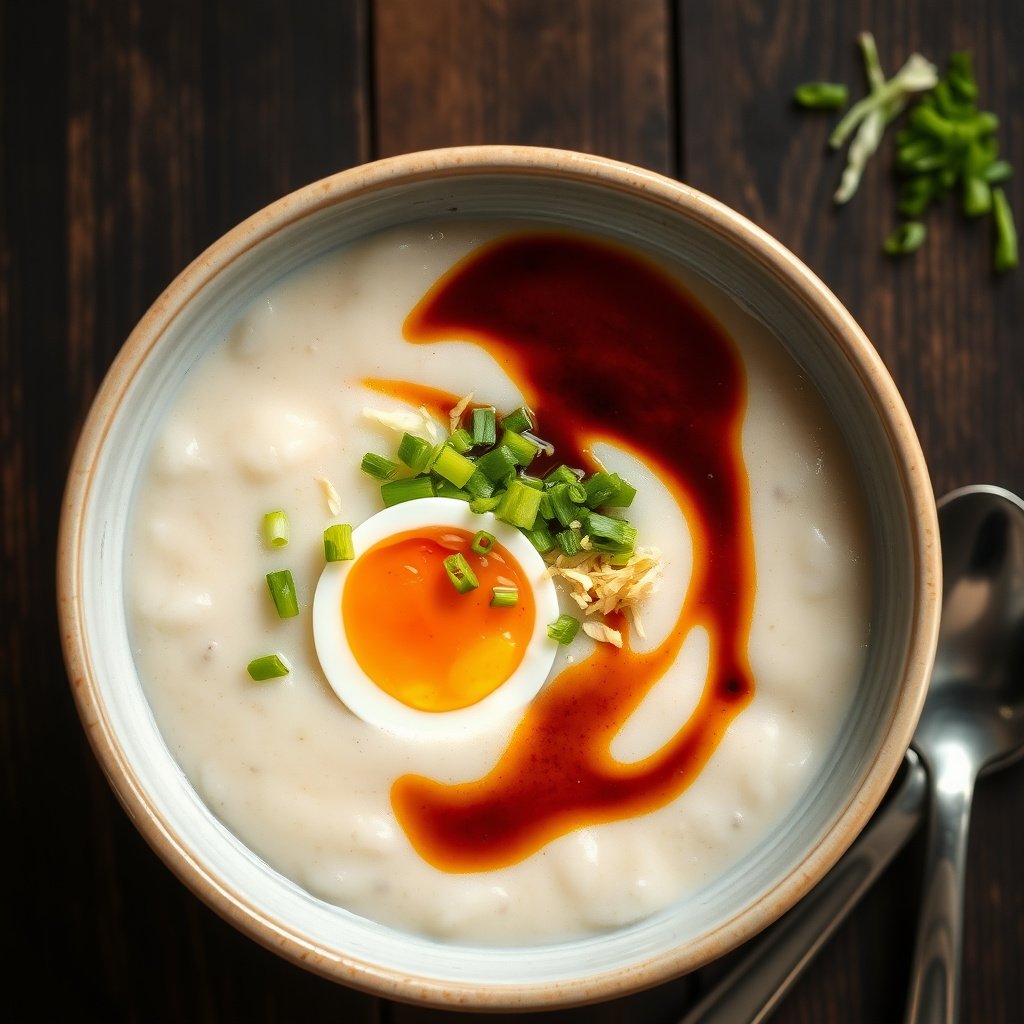
- Soft-boiled or jammy eggs
Instructions
- Rinse the Rice: Place the rice in a fine-mesh sieve and rinse under cold running water until the water runs clear. This removes excess starch and helps prevent the congee from becoming gluey.
- Combine Ingredients: In a large pot or Dutch oven, combine the rinsed rice, chicken broth (and water, if using), whole chicken pieces, sliced ginger coins, and smashed garlic.
- Bring to a Boil: Place the pot over high heat and bring the mixture to a rolling boil.
- Simmer Gently: Once boiling, immediately reduce the heat to low, cover the pot, and let it simmer gently. It’s important to maintain a very gentle simmer to prevent the bottom from scorching.
- Cook and Stir: Let the congee simmer for at least 1 to 1.5 hours. Stir every 15-20 minutes, scraping the bottom of the pot to ensure the rice doesn’t stick. The congee is ready when the rice grains have broken down and the mixture has a thick, creamy, porridge-like consistency. If it becomes too thick for your liking, you can stir in another cup of water or broth.
- Shred the Chicken: About 10 minutes before the congee is done, carefully remove the cooked chicken pieces from the pot and transfer them to a bowl. Using two forks, shred the chicken into bite-sized pieces. The chicken should be very tender and fall apart easily.
- Return Chicken and Season: Return the shredded chicken to the pot of congee. Stir in the salt and white pepper. Taste and adjust seasoning as needed. You may want more salt depending on the sodium content of your broth.
- Serve and Garnish: Ladle the hot congee into bowls. Set up a toppings bar and let everyone customize their bowl with scallions, fresh ginger, cilantro, a drizzle of soy sauce and sesame oil, and any other desired garnishes.
Expert Cooking Tips
- Don’t Rush the Simmer: The key to creamy congee is a long, slow cooking time. Don’t be tempted to crank up the heat to speed up the process, as this can lead to a scorched bottom and uneven texture.
- Stir, Stir, Stir: While you don’t need to stand over it constantly, periodic stirring is crucial to prevent the rice from sticking to the bottom of the pot and burning.
- Use Quality Broth: Since the broth is the primary liquid, its flavor is paramount. A high-quality, flavorful chicken broth will make a significant difference. Homemade is best, but a good store-bought low-sodium version works well.
- The Magic of White Pepper: White pepper provides a distinct, earthy heat that is traditional in congee and pairs beautifully with the ginger. If you don’t have it, black pepper can be used, but the flavor profile will be different.
Substitutions and Variations
For a vegetarian or vegan version, omit the chicken and use a flavorful vegetable broth. Add cubed firm tofu, mushrooms, or chickpeas in the last 20 minutes of cooking. For a different grain, you can use brown rice, but you will need to increase the cooking time by about 30-45 minutes and may need to add more liquid.
Common Mistakes to Avoid
The most common mistake is not using enough liquid. The standard ratio is about 1 part rice to 8-10 parts liquid. The congee should look very watery at the beginning; the rice will absorb the liquid and break down over time. Another mistake is cooking at too high a heat, which causes scorching. Keep the simmer very low and gentle. Finally, don’t under-season. The base congee is a blank canvas; salt, white pepper, and especially the final garnishes are what bring it to life.
Serving Suggestions
Serve piping hot in deep, comforting bowls. The best way to enjoy congee is with a variety of toppings that add texture and flavor. Create a ‘toppings bar’ with small bowls of sliced scallions, cilantro, julienned ginger, crispy fried shallots, soy sauce, and sesame oil. For a more substantial meal, add a soft-boiled egg on top. It also pairs wonderfully with Chinese crullers (youtiao) for dipping.
Storage and Reheating Tips
Congee stores exceptionally well. Allow it to cool completely before transferring to an airtight container. It can be refrigerated for up to 5 days. Note that the congee will thicken considerably when chilled. To reheat, place a portion in a saucepan over medium-low heat and add a splash of water or broth, stirring until it reaches your desired consistency and is heated through. You can also microwave it, stirring halfway through.
Nutrition Facts (Estimated)
| Serving Size | 1 bowl (approx. 1.5 cups) |
| Calories | 285 kcal |
| Fat | 6 g |
| Saturated Fat | 1.5 g |
| Unsaturated Fat | 4 g |
| Trans Fat | 0 g |
| Cholesterol | 60 mg |
| Sodium | 450 mg |
| Carbohydrates | 35 g |
| Fiber | 2 g |
| Sugar | 1 g |
| Protein | 22 g |
Frequently Asked Questions
Can I make this in a slow cooker or Instant Pot?
Yes! For a slow cooker, combine all ingredients and cook on low for 6-8 hours or on high for 3-4 hours. For an Instant Pot, combine ingredients, seal, and cook on the ‘Porridge’ setting or on High Pressure for 25 minutes, followed by a natural pressure release.
Why is congee considered a ‘healing’ food?
Congee is easy to digest, hydrating, and warming. The long cooking process breaks down the rice into a form that is very gentle on the stomach, allowing the body to absorb nutrients with minimal effort. The addition of ginger adds anti-inflammatory and nausea-reducing properties, making it a go-to food during times of illness or recovery.
How does congee help with weight loss?
Congee is a high-volume, low-calorie food. A small amount of rice expands to create a large, filling portion. This high water and fiber content helps you feel full and satisfied on fewer calories, which can reduce overall calorie intake and support weight loss goals without leaving you feeling hungry.
Conclusion
This Healing Chicken Ginger Congee is more than just a recipe; it’s a practice in self-care. It’s the meal you turn to when you need warmth, comfort, and gentle nourishment. Whether you’re aiming to lose a few pounds, recovering from a cold, or simply craving a simple and satisfying meal, this congee delivers on all fronts. Embrace the slow simmer, get creative with your toppings, and enjoy a dish that truly feeds the body and soothes the soul.