Eat This Huge Pot of Mille Feuille Nabe for Only 300 Calories
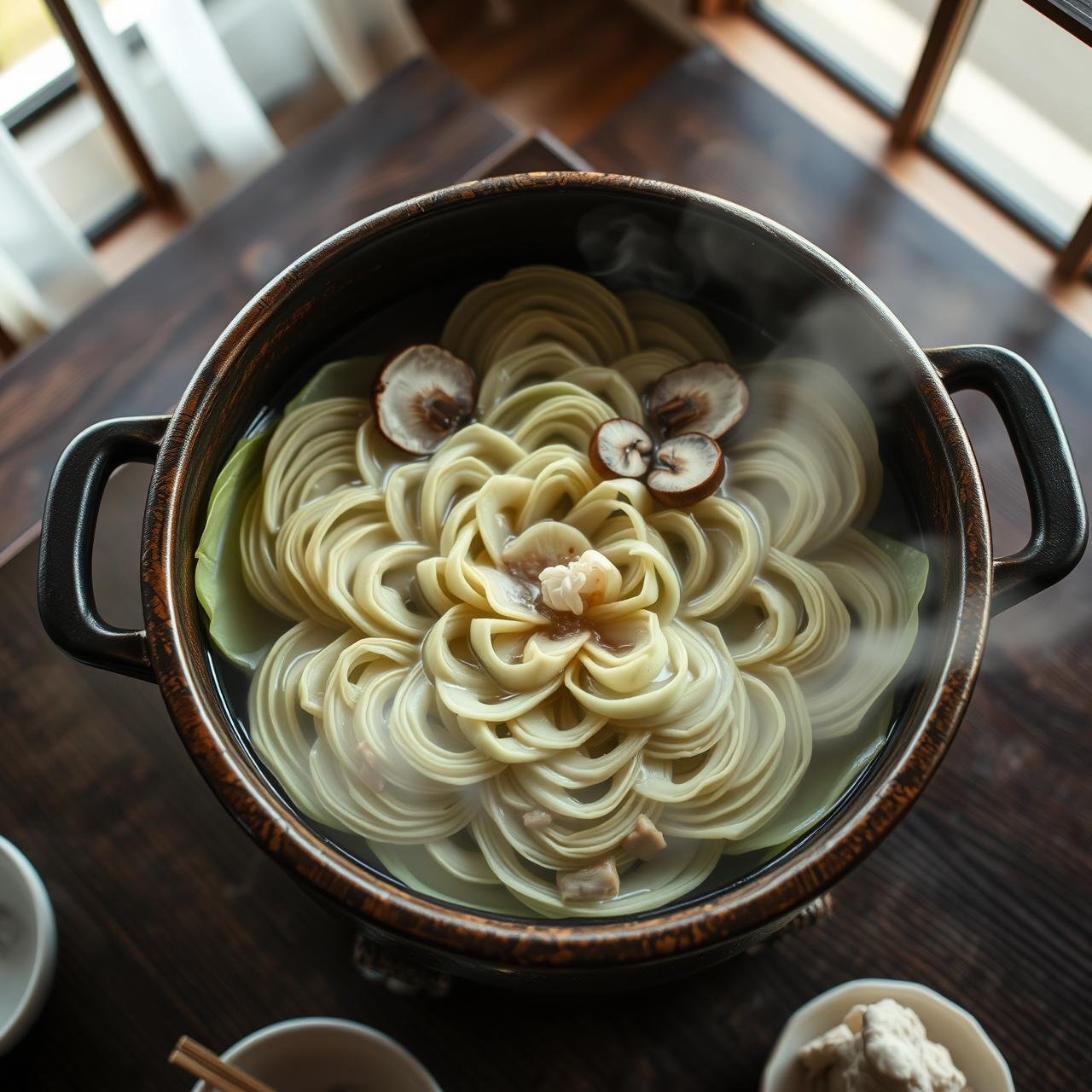
Imagine a dish that is as breathtakingly beautiful as it is deeply comforting. A dish that fills a huge pot, promises a soul-satisfying meal, yet barely makes a dent in your daily calorie count. Welcome to the world of Mille Feuille Nabe, the elegant Japanese hot pot that translates to ‘thousand leaves’. This name perfectly captures its essence: delicate, paper-thin slices of savory pork belly nestled between layers of sweet, crisp napa cabbage, all arranged to look like a blooming flower. It’s a culinary masterpiece that dances between rustic homestyle cooking and gourmet presentation.
But the true magic lies in its incredible balance. For the health enthusiast, it’s a dream come true—a hearty, steaming bowl of goodness for around 300 calories. For the budget cook, it’s a testament to how humble ingredients like cabbage can be transformed into something extraordinary. And for the home cook and gourmet foodie, it’s an exploration of pure, clean flavors and simple, elegant technique. In this guide, we will walk you through every step, transforming your kitchen into a cozy Japanese eatery and proving that healthy, budget-friendly food can be the most delicious food of all.
The Soul-Warming Magic of Mille Feuille Nabe
At its heart, Mille Feuille Nabe is a celebration of simplicity. It doesn’t rely on heavy sauces or complex spice blends. Instead, its profound flavor comes from the quality of its three core components, which create a synergy in the pot that is greater than the sum of its parts.
The Key Players:
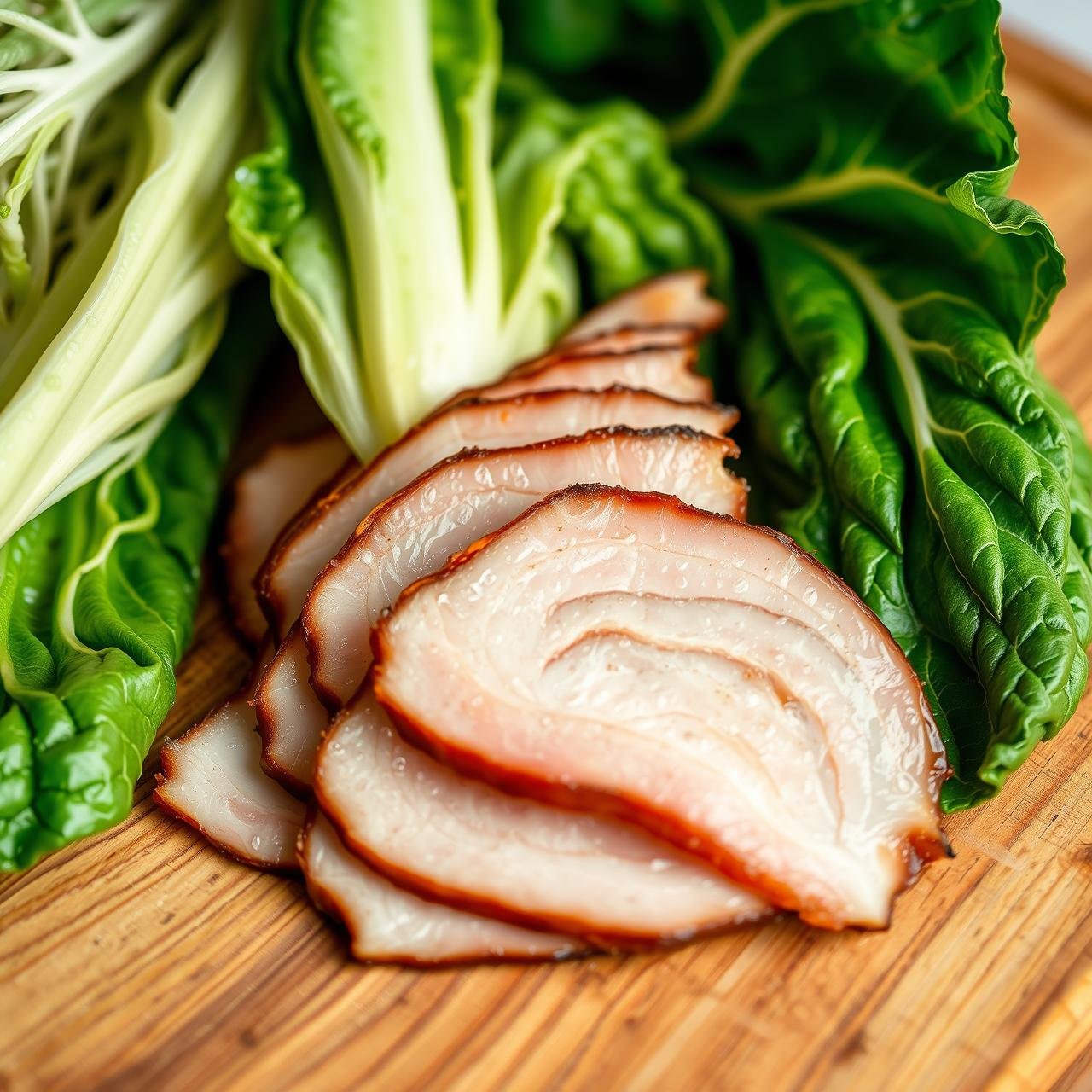
- Napa Cabbage: Unlike its dense, peppery Western cousins, napa cabbage is tender, mild, and wonderfully sweet, especially when cooked. As it simmers in the broth, it releases its natural sugars and becomes meltingly soft, absorbing all the savory flavors around it.
- Thinly Sliced Pork: Traditionally, fatty pork belly is used. Its richness renders into the broth, adding incredible depth and a silky mouthfeel. The fat marbles through the meat, ensuring every bite is succulent and tender. However, for an even leaner version, thinly sliced pork loin is a fantastic substitute that still delivers on flavor.
- The Dashi Broth: This is the soul of the dish. Dashi is a classic Japanese soup stock, traditionally made from kombu (dried kelp) and katsuobushi (dried, smoked bonito flakes). It provides a deep, savory, and oceanic foundation of umami that elevates the simple pork and cabbage into something truly special. It’s a clean, clear broth that enhances, rather than overpowers, the main ingredients.
When these three elements simmer together, a beautiful transformation occurs. The pork gently cooks, the cabbage wilts into sweet tenderness, and the broth becomes infused with the essence of both. It’s a gentle culinary alchemy that results in a light yet deeply satisfying meal.
Gather Your Tools: Equipment for the Perfect Nabe
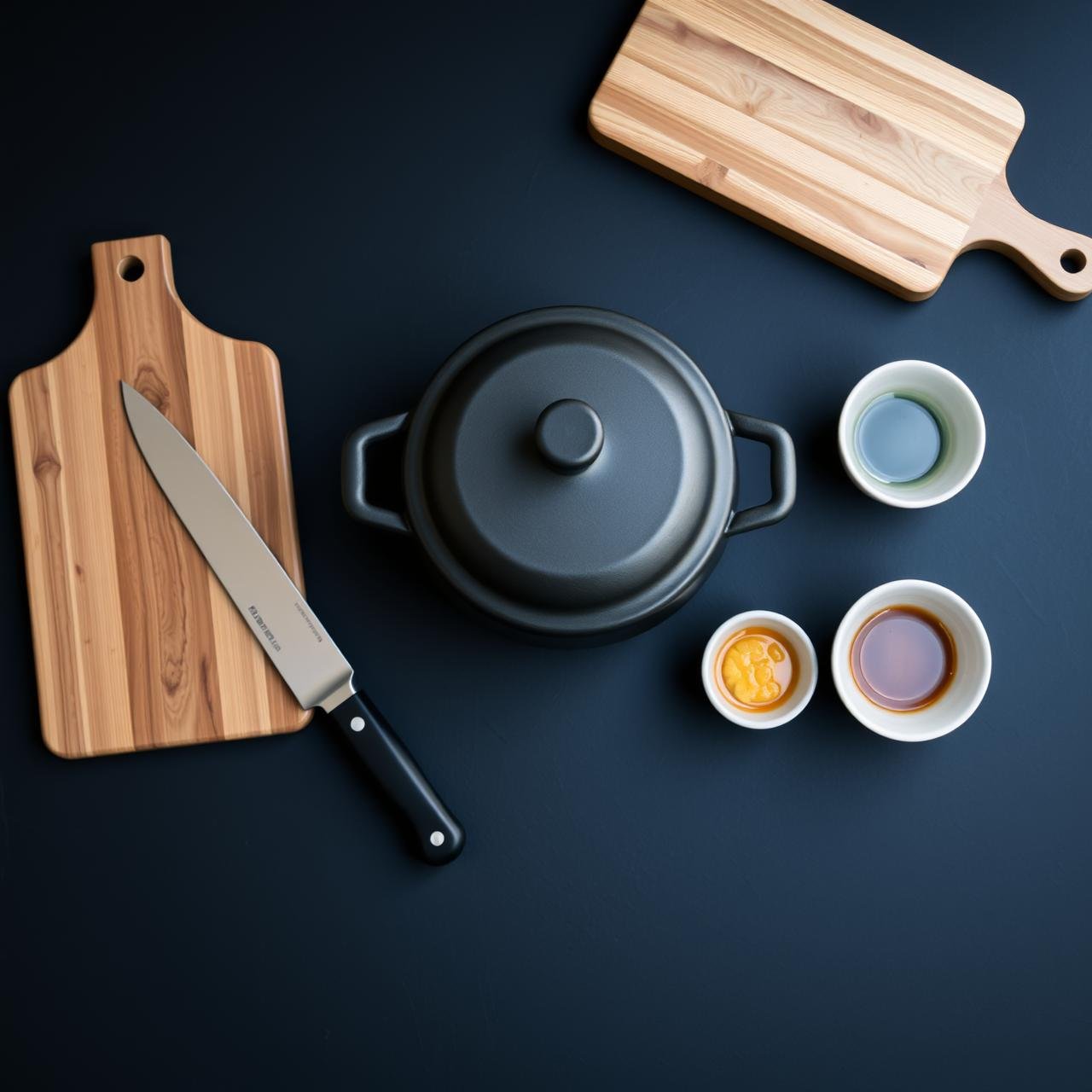
You don’t need a professional kitchen to create this masterpiece, but having the right pot can enhance the experience. The ideal vessel is wide and relatively shallow, allowing the ‘flower’ to be showcased beautifully.
| Equipment | Description |
|---|---|
| Donabe or Shallow Pot | A traditional Japanese earthenware pot (donabe) is perfect as it retains heat evenly. However, a 5-quart (or larger) Dutch oven, cast-iron pot, or even a sturdy stockpot will work wonderfully. |
| Sharp Chef’s Knife | Essential for cleanly slicing through the layered stacks of cabbage and pork without disturbing the layers. |
| Large Cutting Board | You’ll need ample space to lay out the cabbage leaves and create your layered stacks. |
| Ladle and Tongs | For serving the delicate contents and the flavorful broth without disturbing the beautiful arrangement. |
| Small Bowls | Individual bowls for serving, plus smaller ones if you plan to offer dipping sauces. |
A Symphony of Simplicity: The Ingredient List
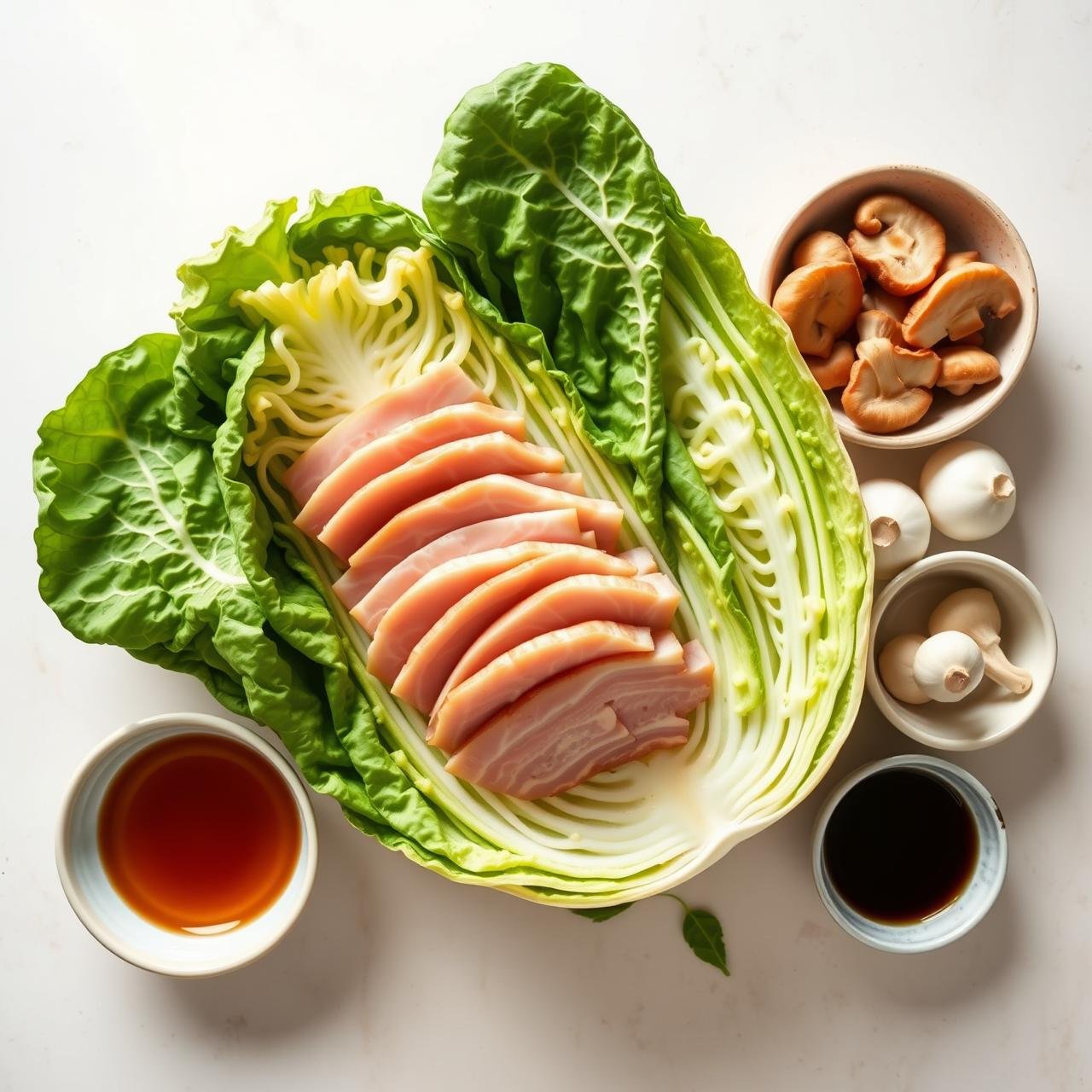
The beauty of this recipe is its short and accessible ingredient list. Focus on finding the freshest produce you can, as their natural flavors are the star of the show. This recipe serves 4 generously.
For the Nabe:
- 1 large head of Napa Cabbage (about 2.5 – 3 lbs)
- 1 lb (450g) of very thinly sliced pork belly or pork loin (shabu-shabu style cut is perfect)
- 4-5 fresh Shiitake mushrooms, stems removed (and sliced, if large)
- 1 bunch (7 oz / 200g) of Enoki mushrooms, root end trimmed
- 2-3 stalks of green onions, thinly sliced for garnish
For the Dashi Broth:
- 4 cups of Dashi stock (use high-quality instant dashi powder mixed with water, or make your own)
- 2 tablespoons of Sake
- 1 tablespoon of Mirin (Japanese sweet rice wine)
- 1 tablespoon of light soy sauce (or to taste)
Optional Dipping Sauces:
- Ponzu (citrus-based soy sauce)
- Goma Dare (creamy sesame sauce)
- Yuzu Kosho (spicy citrus paste)
The Culinary Dance: Crafting Your Masterpiece
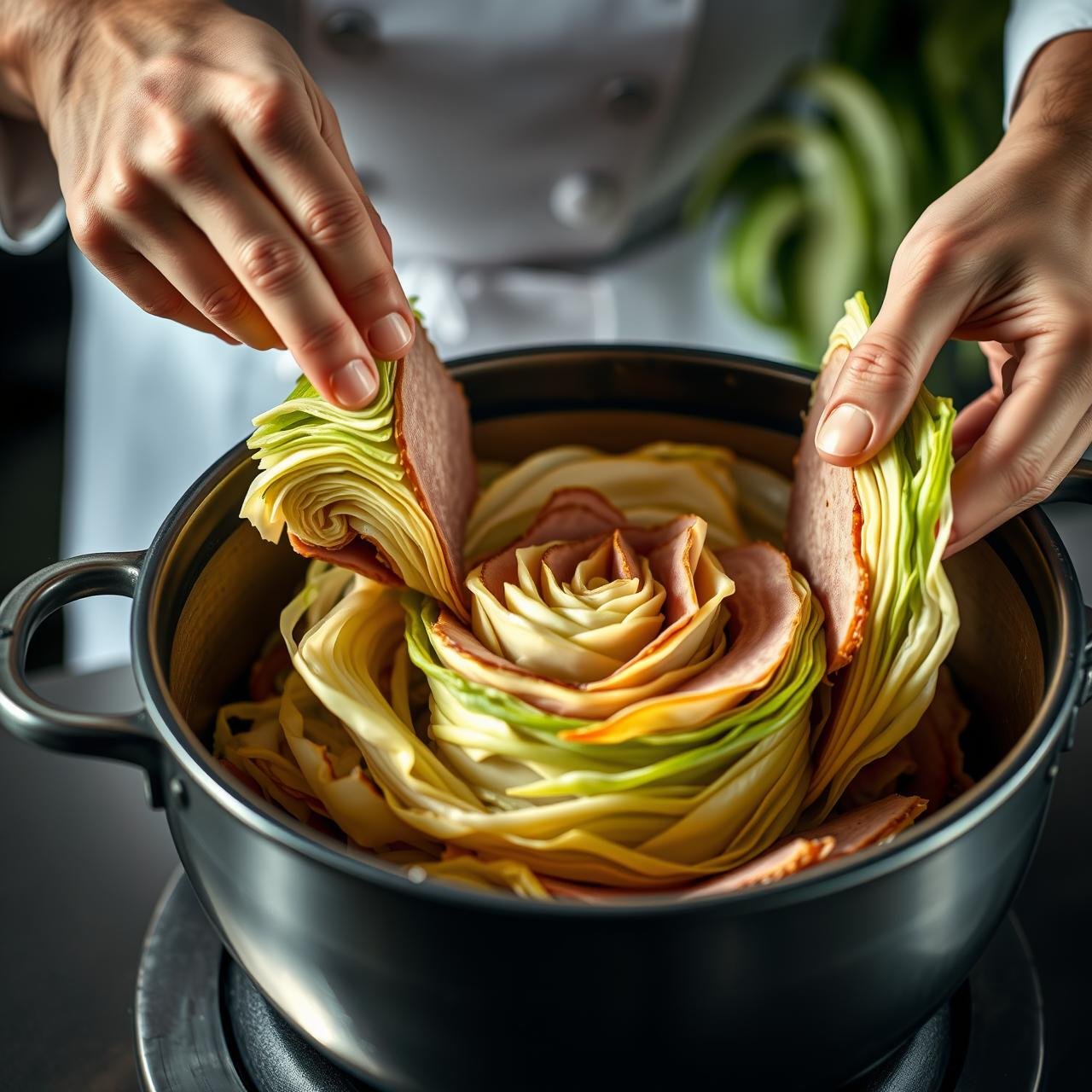
Here is where the art begins. Follow these steps carefully to build your beautiful and delicious hot pot. The process is meditative and surprisingly simple.
- Prepare the Cabbage: Gently peel off each leaf from the head of napa cabbage, trying to keep them whole. Wash and pat them dry. Set aside.
- The Layering Technique: On your large cutting board, lay down a single large cabbage leaf. Place a layer of the thinly sliced pork on top, covering the leaf evenly. Place another cabbage leaf on top of the pork. Add another layer of pork. Repeat this process, creating a stack of 3-4 layers of cabbage and 2-3 layers of pork. Create several of these stacks until you’ve used up most of your ingredients.
- Cut the Stacks: Take one of your layered stacks and carefully slice it crosswise into 2-3 inch wide sections. The width should roughly match the depth of your pot.
- Arrange in the Pot: This is the most crucial step for the visual ‘wow’ factor. Begin placing the cut sections into your pot, cut-side up. Start from the outer edge and work your way in, packing them in tightly against each other to form a spiral or flower pattern. The tight packing is key—it helps the layers hold their shape during cooking. Continue until the pot is snugly filled.
- Add Mushrooms and Broth: Tuck the shiitake and enoki mushrooms into any gaps or arrange them decoratively in the center. In a separate bowl, whisk together the 4 cups of dashi stock, 2 tablespoons of sake, 1 tablespoon of mirin, and 1 tablespoon of soy sauce. Gently pour this broth mixture into the pot. The liquid should come about halfway up the ingredients.
- Simmer to Perfection: Place the pot on the stove over medium-high heat and bring to a simmer. Once it begins to bubble, reduce the heat to medium-low, cover the pot with a lid, and let it gently cook for 15-20 minutes. The nabe is ready when the cabbage is tender and translucent and the pork is fully cooked.
- Garnish and Serve: Turn off the heat. Sprinkle the thinly sliced green onions over the top. Bring the entire pot to the table for a stunning presentation. Serve in individual bowls, making sure to ladle plenty of the delicious broth over each serving.
From My Kitchen to Yours: Chef’s Tips & Variations
Once you’ve mastered the basic technique, feel free to experiment. This dish is wonderfully adaptable.
Tips for Success
- Slice it Thin: If you can’t find pre-sliced shabu-shabu meat, place your pork belly or loin in the freezer for 20-30 minutes. This firms up the meat, making it much easier to slice paper-thin with a sharp knife.
- Don’t Drown It: Resist the urge to submerge the ingredients in broth. The cabbage will release a significant amount of water as it cooks, creating more liquid. Starting with the broth halfway up is the perfect amount.
- Pack it Tight: I can’t stress this enough. A tightly packed pot ensures the beautiful layers don’t fall apart into a simple stew. They should support each other.
Flavor Variations
- Aromatic Broth: Add a few slices of fresh ginger or a couple of lightly smashed garlic cloves to the broth for an extra layer of warmth.
- Protein Swaps: Thinly sliced beef ribeye or sirloin is a classic alternative. For a vegetarian version, use layers of fried tofu (aburaage) or firm tofu and add a variety of mushrooms like shimeji or maitake.
- Add a Kick: A teaspoon of miso paste whisked into the broth adds a savory, fermented depth. For spice, add a pinch of gochugaru (Korean chili flakes) or serve with a side of chili oil.
Dipping Sauce Deep Dive
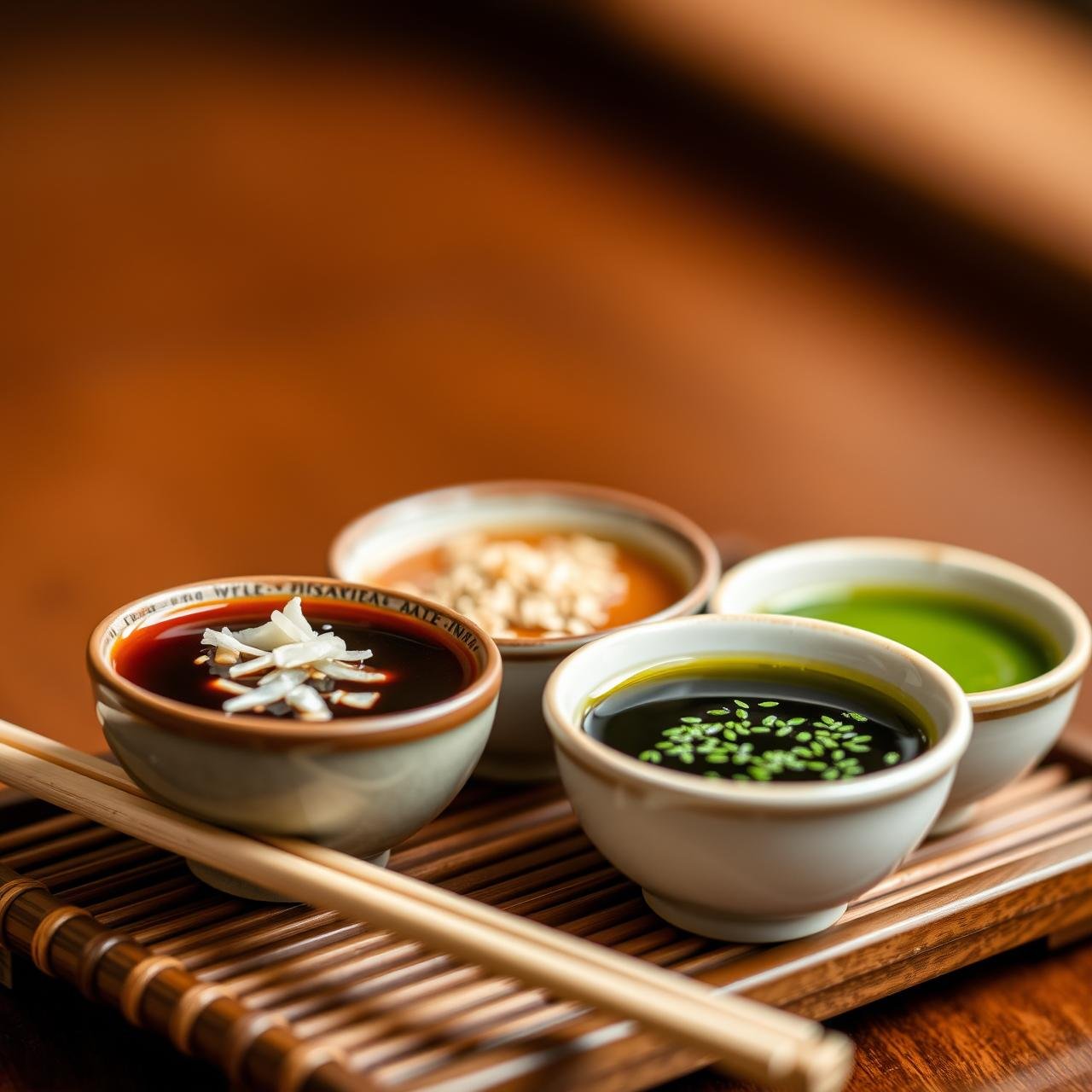
While delicious on its own, dipping sauces can elevate the experience. A simple homemade ponzu can be made by mixing equal parts soy sauce and fresh citrus juice (like lemon or yuzu) with a splash of mirin. For a creamy option, mix Japanese sesame paste (nerigoma) with a bit of soy sauce, rice vinegar, and a touch of sugar until you reach your desired consistency.
Nourish Your Body: The Nutritional Profile
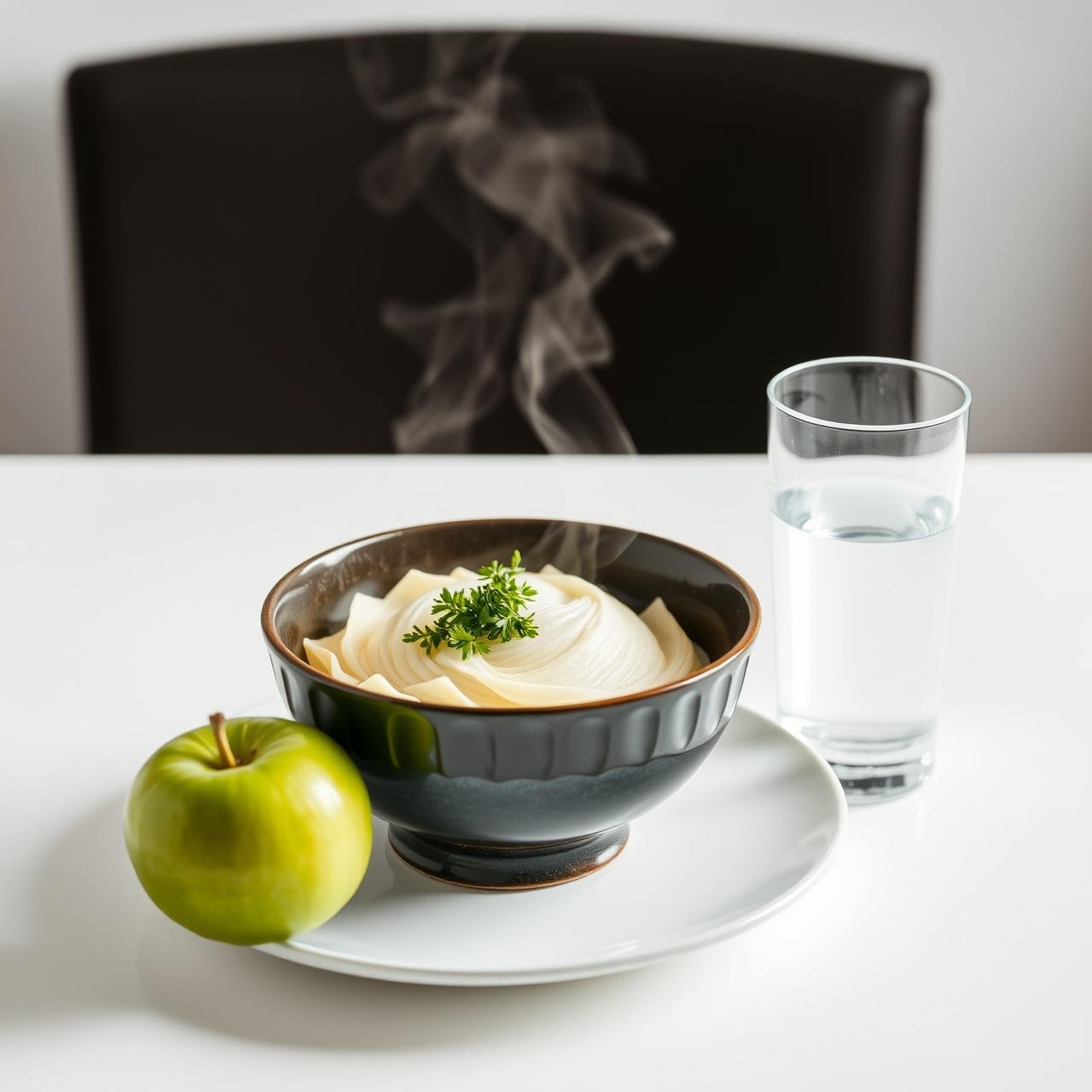
This is where this dish truly shines for the health-conscious. It’s packed with vegetables and lean protein, all gently simmered in a light broth. The result is a meal that is incredibly filling and satisfying for a remarkably low calorie count.
| Nutrient | Amount per Serving (Approx.) |
|---|---|
| Calories | 305 kcal |
| Protein | 22g |
| Fat | 20g (less if using pork loin) |
| Carbohydrates | 9g |
| Fiber | 4g |
| Sodium | 550mg (can be reduced by using low-sodium soy sauce) |
Disclaimer: Nutritional information is an estimate and can vary based on the specific ingredients and portion sizes used. This calculation is based on the recipe serving four people, using pork belly.
Savoring Later: Storage & The Joy of ‘Shime’
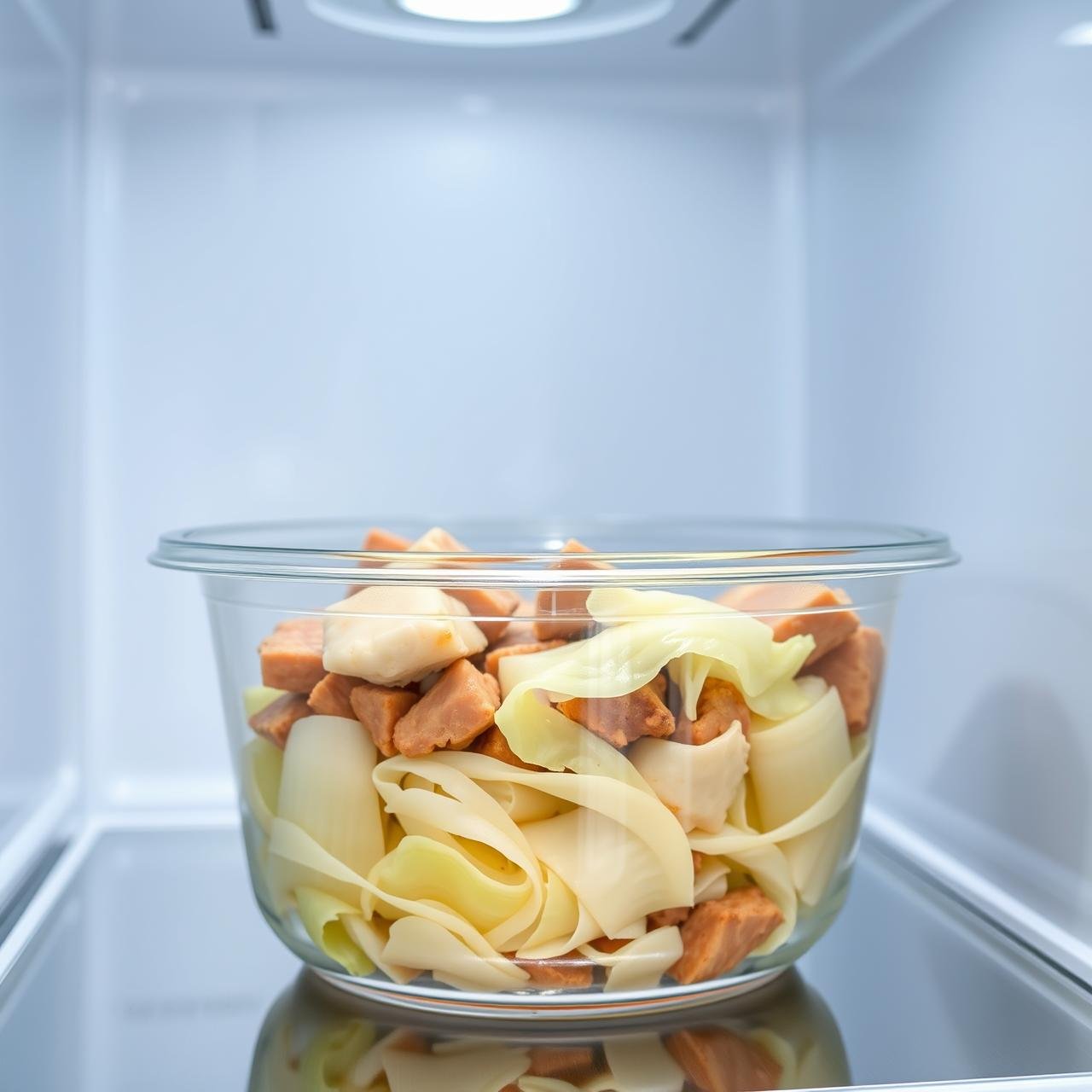
Mille Feuille Nabe is best enjoyed fresh from the pot, with everyone gathered around the table. However, leftovers are still a delicious treat.
Storage & Reheating
Allow the nabe to cool completely before transferring it to an airtight container. It can be stored in the refrigerator for up to 3 days. To reheat, gently warm it in a pot over low heat on the stovetop until heated through. Avoid microwaving, as it can overcook the pork and make the cabbage rubbery.
The ‘Shime’: Finishing the Meal
In Japan, one of the best parts of a hot pot meal is the ‘shime’, or ‘the finish’. This involves using the incredibly flavorful leftover broth to cook a final course. After you’ve enjoyed the pork and cabbage, don’t discard that precious liquid! Add a bowl of cooked short-grain rice to the remaining broth, let it simmer for a few minutes, then swirl in a beaten egg to create a comforting and savory porridge called ‘zosui’. Alternatively, you can add a block of ramen or udon noodles and cook them directly in the broth for a quick and delicious noodle soup. It’s the ultimate expression of ‘no waste’ and a perfect end to a perfect meal.
Conclusion
Mille Feuille Nabe is more than just a recipe; it’s an experience. It’s the quiet satisfaction of layering the ingredients, the communal joy of sharing a meal from a single pot, and the nourishing feeling of eating something that is both wholesome and incredibly flavorful. It proves that you don’t need complicated techniques or expensive ingredients to create a meal that is elegant, healthy, and deeply comforting. It is a testament to the power of simplicity, a dish that will warm you from the inside out, any night of the week. So go ahead, embrace the culinary dance, and create this huge, beautiful pot of wellness. We promise it will become a treasured recipe in your home cooking repertoire.