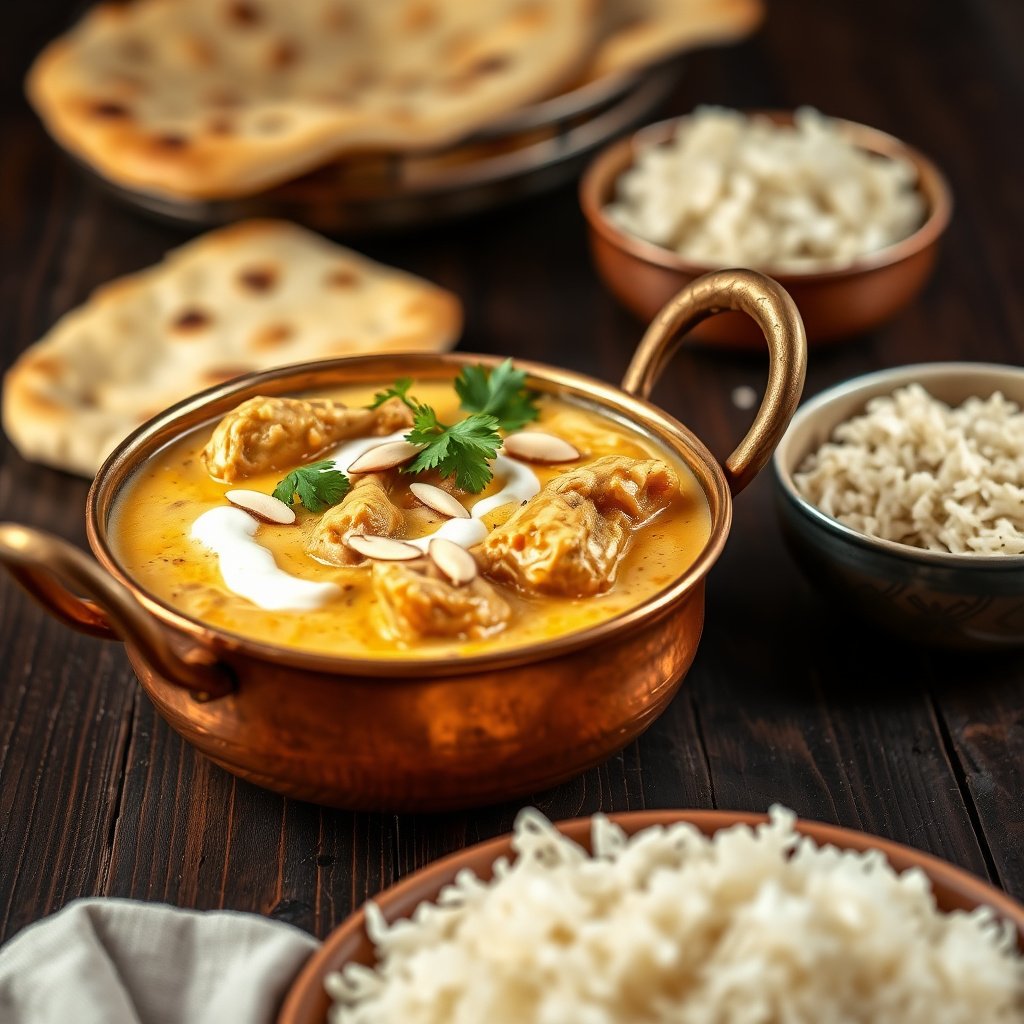
Creamy Yogurt Marinated Chicken Korma (No Heavy Cream)
Creamy Yogurt Marinated Chicken Korma (No Heavy Cream)
Chicken Korma is the epitome of culinary luxury, a dish steeped in the rich history of the Mughal Empire. Traditionally known for its mild spice profile and incredibly rich, creamy gravy, it’s a celebratory dish that speaks of opulence and refined taste. However, many modern recipes rely heavily on cream to achieve that signature texture, which can sometimes feel overly heavy. This recipe pays homage to the classic while offering a lighter, yet equally decadent, alternative. The secret lies in a two-part process: a velvety marinade of full-fat yogurt that tenderizes the chicken to perfection, and a luscious gravy base made from slow-cooked onions and ground nuts. By skillfully using yogurt and a paste of cashews and almonds, we create a sauce so creamy and flavorful, you’ll never miss the heavy cream. This version is bright, aromatic, and allows the delicate spices to shine through, resulting in a sophisticated and deeply satisfying korma that is perfect for both special occasions and weeknight indulgence.
20 minutes
40 minutes
60 minutes (plus 1 to 8 hours for marination)
4-6 servings
Main Course
Braising
Indian (Mughlai)
Gluten-Free
Why You’ll Love This Recipe
- Incredibly tender and juicy chicken thanks to a yogurt-based marinade.
- A rich, velvety, and creamy gravy achieved without any heavy cream.
- Authentic Mughlai flavors with a balanced blend of aromatic spices.
- A healthier, lighter take on a classic Indian curry.
- Perfectly suited for entertaining guests or as a comforting family meal.
Equipment You’ll Need
- Large non-reactive bowl (glass or ceramic)
- High-powered blender or food processor
- Large heavy-bottomed pot or Dutch oven with a lid
- Sharp knife and cutting board
- Measuring cups and spoons
Ingredients
- For the Chicken Marinade:
- 2 lbs (approx. 900g) boneless, skinless chicken thighs or breasts, cut into 1.5-inch pieces
- 1 cup full-fat plain yogurt, whisked until smooth
- 1.5 tablespoons ginger-garlic paste
- 1 teaspoon salt
- 1/2 teaspoon turmeric powder
- 1/2 teaspoon Kashmiri red chili powder (for color, not intense heat)
- For the Korma Gravy:
- 3 tablespoons ghee or neutral oil
- 2 large yellow onions, thinly sliced
- 1/2 cup raw, unsalted cashews
- 1/4 cup blanched almonds
- 1/4 cup water, for blending
- Whole Spices:
- 1 black cardamom pod
- 4-5 green cardamom pods, lightly bruised
- 4 cloves
- 1-inch cinnamon stick
- 1 bay leaf
- Ground Spices:
- 1 tablespoon coriander powder
- 1 teaspoon cumin powder
- 1/2 teaspoon garam masala
- 1/4 teaspoon white pepper powder
- For Finishing:
- 1 cup chicken broth or water, as needed
- 1 teaspoon sugar (optional, to balance flavors)
- Salt to taste
- 1/2 teaspoon kewra water or rose water (optional, for authentic aroma)
- For Garnish:
- Slivered almonds, toasted
- Fresh cilantro or mint leaves, chopped
Instructions
- Step 1: Marinate the Chicken
- In a large non-reactive bowl, combine the whisked yogurt, ginger-garlic paste, salt, turmeric powder, and Kashmiri red chili powder. Mix thoroughly to create a smooth marinade. Add the chicken pieces and toss until every piece is evenly coated. Cover the bowl and refrigerate for at least 1 hour, or preferably for 4-8 hours for maximum tenderness and flavor.
- Step 2: Prepare the Onion and Nut Paste
- While the chicken marinates, heat the ghee or oil in a heavy-bottomed pot over medium-low heat. Add the thinly sliced onions and cook slowly, stirring occasionally, for 15-20 minutes until they are soft, translucent, and just beginning to turn golden brown at the edges. Do not rush this step, as slow-cooked onions provide the korma’s foundational sweetness. Remove the onions from the pot with a slotted spoon, leaving the ghee behind. In a high-powered blender, combine the cooked onions, raw cashews, blanched almonds, and 1/4 cup of water. Blend until you have a completely smooth, thick paste. Set aside.
- Step 3: Temper the Spices and Cook the Paste
- Return the pot with the remaining ghee to medium heat. Add the whole spices (black and green cardamom, cloves, cinnamon stick, bay leaf) and sauté for about 30-45 seconds until they become fragrant. Be careful not to burn them.
- Step 4: Build the Gravy
- Pour the prepared onion-nut paste into the pot. Cook the paste, stirring constantly, for 5-7 minutes. The paste will thicken, and the ghee will start to separate from the sides – this is a crucial step known as ‘bhuna’. Add the ground spices (coriander powder, cumin powder, garam masala, white pepper) and cook for another minute until fragrant.
- Step 5: Cook the Chicken
- Take the marinated chicken out of the refrigerator about 20 minutes before cooking. Add the chicken along with its entire marinade to the pot. Stir well to combine everything. Increase the heat to medium-high and cook for 5-6 minutes, stirring gently, until the chicken is sealed on all sides and the yogurt has integrated into the gravy.
- Step 6: Simmer to Perfection
- Pour in 1 cup of chicken broth or water and add the optional sugar and salt to taste. Stir everything together, bring to a gentle simmer, then reduce the heat to low. Cover the pot with a tight-fitting lid and let it simmer for 15-20 minutes, or until the chicken is cooked through and tender, and the gravy has thickened to your desired consistency. The oil should be visibly separating at the edges of the pot.
- Step 7: Finish and Serve
- Turn off the heat. If using, stir in the kewra or rose water for a final touch of authentic aroma. Let the korma rest for 5-10 minutes for the flavors to meld. Garnish with toasted slivered almonds and fresh cilantro before serving.
Expert Cooking Tips
- Use Full-Fat Yogurt: This is non-negotiable. Low-fat or non-fat yogurt has a higher water content and is much more likely to split or curdle when heated, resulting in a grainy sauce.
- Temper the Yogurt: Before adding the marinated chicken to the hot pot, let it sit at room temperature for 20-30 minutes. This reduces the temperature shock and helps prevent curdling.
- Slow-Cook the Onions: The sweetness of a good korma comes from patiently caramelizing the onions. Don’t brown them too much, as that will create a bitter taste and darken the color of the gravy.
- Achieve a Smooth Paste: Ensure your onion and nut paste is blended to be completely smooth. Any grittiness will affect the final texture of the korma.
- Don’t Skip the ‘Bhuna’: Frying the korma paste until the fat separates is essential for developing a deep, complex flavor profile and cooking out the raw taste of the ingredients.
Substitutions and Variations
For a nut-free version, you can substitute the cashews and almonds with an equal amount of poppy seeds (khus khus) or melon seeds (magaz), soaked in warm water for 30 minutes before blending. Bone-in chicken can be used for a more flavorful gravy; simply increase the simmering time by 10-15 minutes. Ghee provides the most authentic flavor, but a high-quality neutral oil like avocado or grapeseed oil will also work.
Common Mistakes to Avoid
The most common mistake is the yogurt curdling. This happens when cold yogurt is added to a very hot pan or if the heat is too high while it incorporates. Using full-fat yogurt and tempering it helps, as does keeping the heat on a gentle simmer. Another mistake is not cooking the onion-nut paste long enough; if the raw taste isn’t cooked out, the korma will lack depth. Finally, avoid adding too much water at once. It’s better to add it gradually to achieve the perfect gravy consistency.
Serving Suggestions
Chicken Korma is best served hot with traditional Indian breads like butter naan, garlic naan, or soft roti to soak up the luxurious gravy. It also pairs beautifully with fragrant, long-grain basmati rice or a simple pea pulao. For a complete meal, serve alongside a cooling cucumber raita and a simple kachumber salad (diced onion, tomato, cucumber with lemon juice and cilantro) to provide a fresh, crisp contrast to the richness of the curry.
Storage and Reheating Tips
Leftover korma can be stored in an airtight container in the refrigerator for up to 3 days. The flavors often improve and deepen by the next day. To reheat, gently warm it in a saucepan over low heat, adding a splash of water or broth to loosen the gravy if it has thickened. Avoid microwaving, as it can cause the sauce to separate. Korma also freezes well for up to 2 months.
Nutrition Facts (Estimated)
| Serving Size | 1 serving (approx. 1/4 of recipe) |
| Calories | 495 kcal |
| Fat | 30g |
| Saturated Fat | 10g |
| Unsaturated Fat | 18g |
| Trans Fat | 0g |
| Cholesterol | 135mg |
| Sodium | 710mg |
| Carbohydrates | 16g |
| Fiber | 4g |
| Sugar | 9g |
| Protein | 42g |
Frequently Asked Questions
My yogurt curdled in the gravy. How can I fix it?
If your gravy has split slightly, you can sometimes rescue it. Try adding a tablespoon of a smooth nut paste (like the one used in the recipe) or a cornstarch slurry (1 tsp cornstarch mixed with 2 tsp water) and whisking it vigorously over very low heat. This can sometimes help re-emulsify the sauce. The best fix, however, is prevention by using full-fat, room-temperature yogurt.
Is this dish supposed to be spicy?
No, a traditional korma is not a spicy dish. Its flavor profile is aromatic and mildly sweet, focusing on spices like cardamom, cinnamon, and coriander rather than hot chilies. The Kashmiri red chili powder is used primarily for its vibrant color, not its heat. If you prefer more heat, you can add a slit green chili or a pinch of cayenne pepper with the ground spices.
What is kewra water and is it essential?
Kewra water is a fragrant floral extract made from the pandan flower. It is a signature aromatic used in many Mughlai dishes, including biryani and korma, to give a unique, sweet, and floral finish. While not strictly essential for the dish to taste good, a few drops at the end will elevate it to a truly authentic and restaurant-quality level. You can find it in most Indian grocery stores.
Can I make this recipe dairy-free?
Yes, you can make a dairy-free version by substituting the yogurt with a thick, unsweetened plant-based yogurt (like coconut or cashew yogurt) and using oil instead of ghee. The flavor profile will be slightly different, but it will still be a delicious and creamy curry.
Conclusion
This Creamy Yogurt Marinated Chicken Korma is a testament to the fact that you don’t need heavy cream to create a dish of profound richness and elegance. The magic is in the technique—the long marination, the slow-cooked onions, and the creamy nut paste. Each step builds layers of flavor, culminating in a tender, aromatic chicken curry that is both comforting and sophisticated. We invite you to try this recipe and discover the luxurious, creamy potential of yogurt in classic Indian cooking.