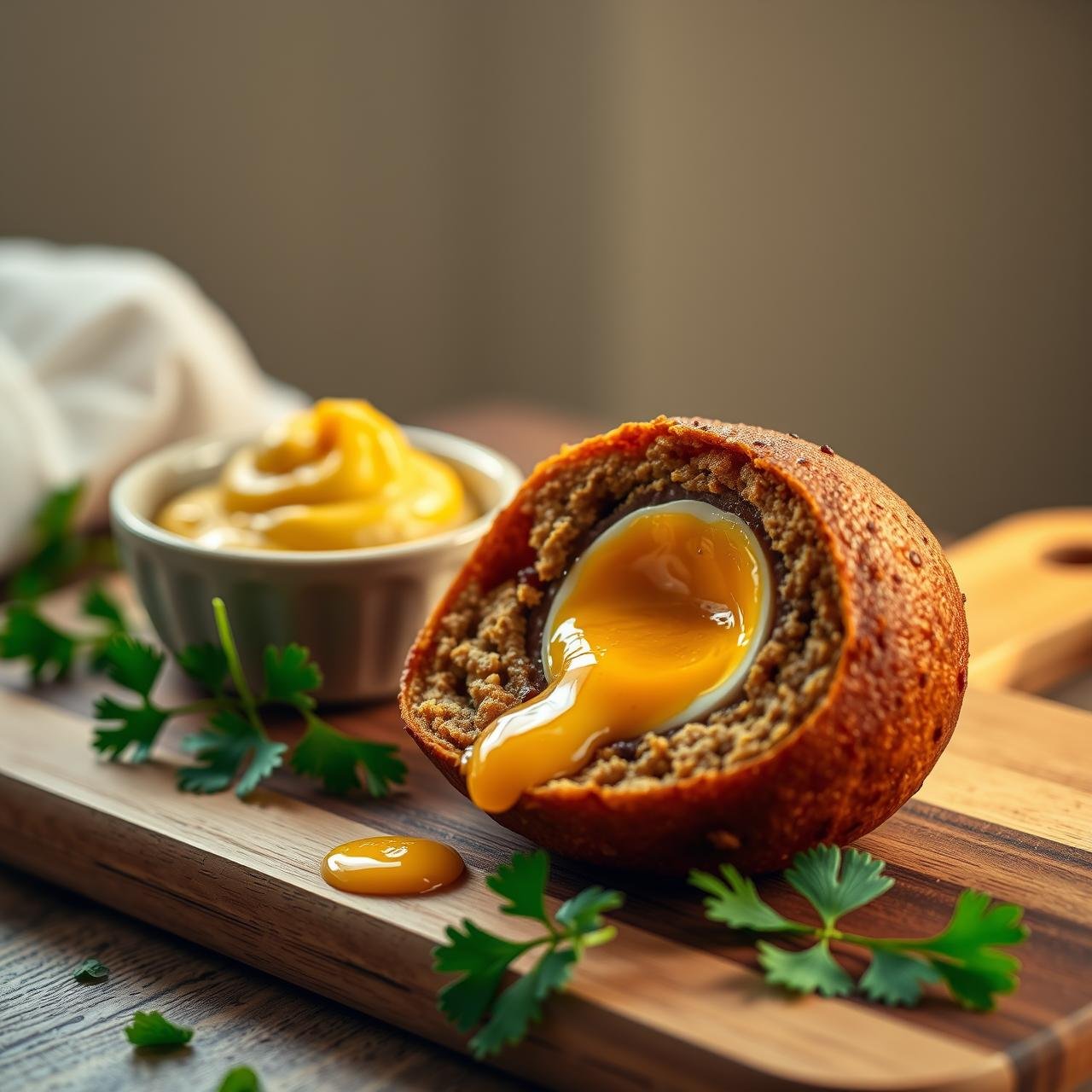
Baked Sausage Scotch Eggs: The Perfect Low Carb Snack
The Scotch egg is a culinary marvel—a perfect orb of savory sausage embracing a tender, boiled egg, traditionally breaded and deep-fried to golden perfection. It’s a staple of British pub fare and picnics, beloved for its hearty, satisfying nature. However, the classic preparation can be heavy and messy. We’re here to revolutionize this rustic classic, transforming it into a dish that aligns with a clean, health-conscious lifestyle without sacrificing an ounce of flavor. Welcome to the world of Baked Sausage Scotch Eggs.
This recipe is a game-changer for home cooks, budget-conscious individuals, and anyone following a low-carb or ketogenic diet. By swapping the deep fryer for the reliable heat of your oven, we eliminate excess oils and messy cleanup, creating a snack that’s not only delicious but also wonderfully convenient. Each bite delivers a powerful punch of protein, making these Scotch eggs an ideal choice for a post-workout refuel, a grab-and-go breakfast, or a sophisticated yet simple appetizer. Prepare to master a timeless classic, reimagined for the modern, healthy kitchen.
Why Baked Scotch Eggs are a Game-Changer
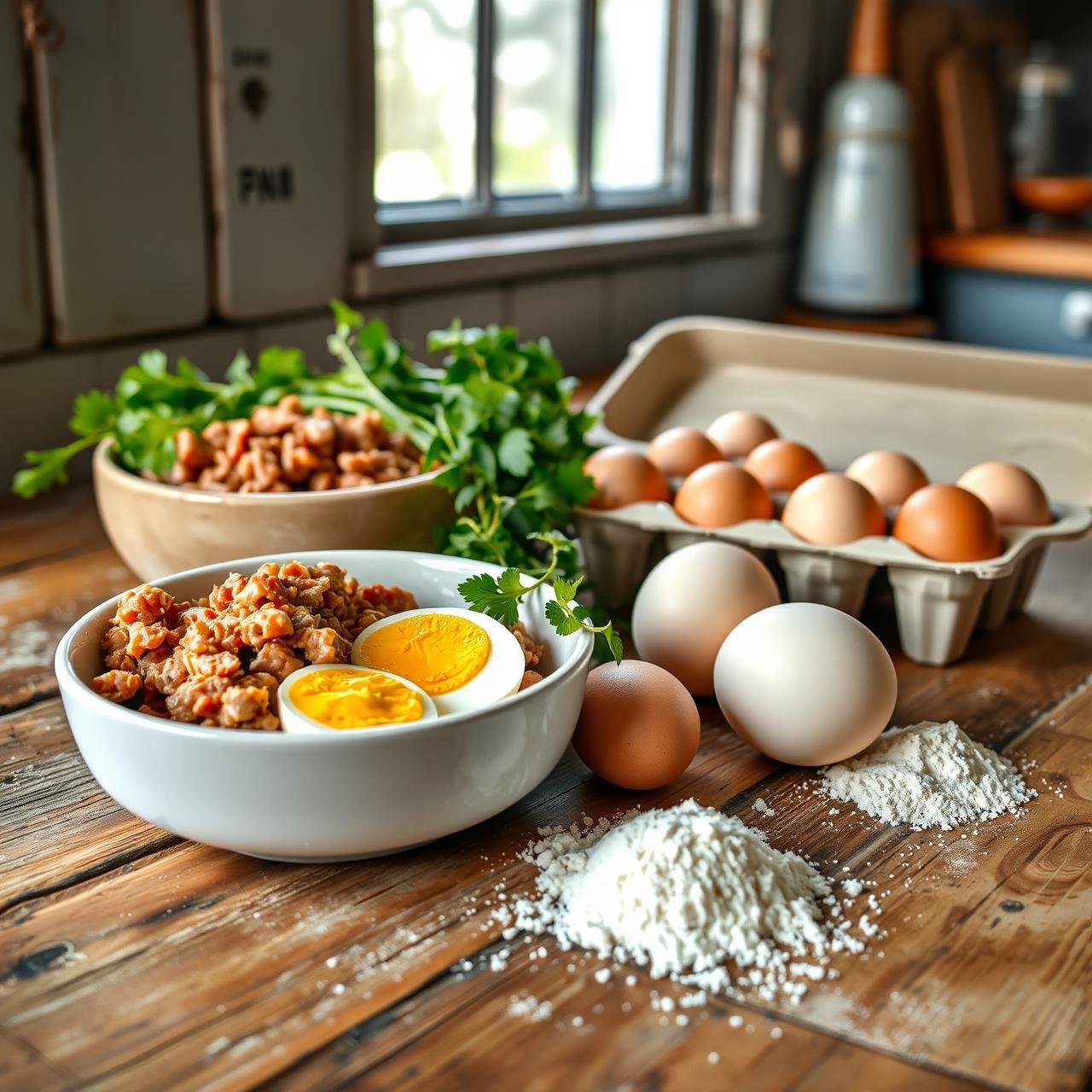
Opting to bake Scotch eggs rather than fry them is more than just a simple cooking method swap; it’s a fundamental upgrade that enhances both the health profile and the practicality of the dish. Let’s explore the compelling reasons why your oven is your best friend for this recipe.
A Healthier Profile
The most significant advantage is the reduction in fat and calories. Deep-frying involves submerging the food in hot oil, which inevitably gets absorbed, adding a substantial amount of unhealthy fats. Baking, on the other hand, requires little to no added oil—perhaps just a light brush to encourage browning. This simple change makes the Scotch egg a leaner, cleaner source of protein that you can enjoy without guilt. It’s a perfect fit for anyone monitoring their fat intake or aiming for a heart-healthy diet.
Consistent, Even Cooking
An oven provides a consistent, enveloping heat that cooks the sausage layer through to the center without the risk of burning the exterior. This is crucial for food safety, especially when working with ground meat. It eliminates the guesswork of oil temperatures and frying times, ensuring your Scotch eggs are perfectly cooked every single time. The result is a juicy, tender sausage casing that’s cooked evenly from edge to egg.
Simplicity and Less Mess
Let’s be honest: deep-frying can be a messy, intimidating process. You have to deal with a large quantity of hot oil, the potential for splatters, and the lingering smell. Baking is clean and contained. Simply place the Scotch eggs on a parchment-lined baking sheet, slide them into the oven, and set a timer. The cleanup is as easy as discarding the parchment paper. This simplicity makes the recipe far more approachable for everyday cooking.
Perfect for Meal Prepping
Baked Scotch eggs are a meal prepper’s dream. They hold up beautifully in the refrigerator and are just as delicious cold as they are warm. Because they aren’t greasy from frying, they are easy to pack in lunchboxes or containers for a quick, protein-rich snack on the go. You can prepare a large batch at the beginning of the week and have a nutritious, satisfying option ready at a moment’s notice.
Gathering Your Culinary Tools
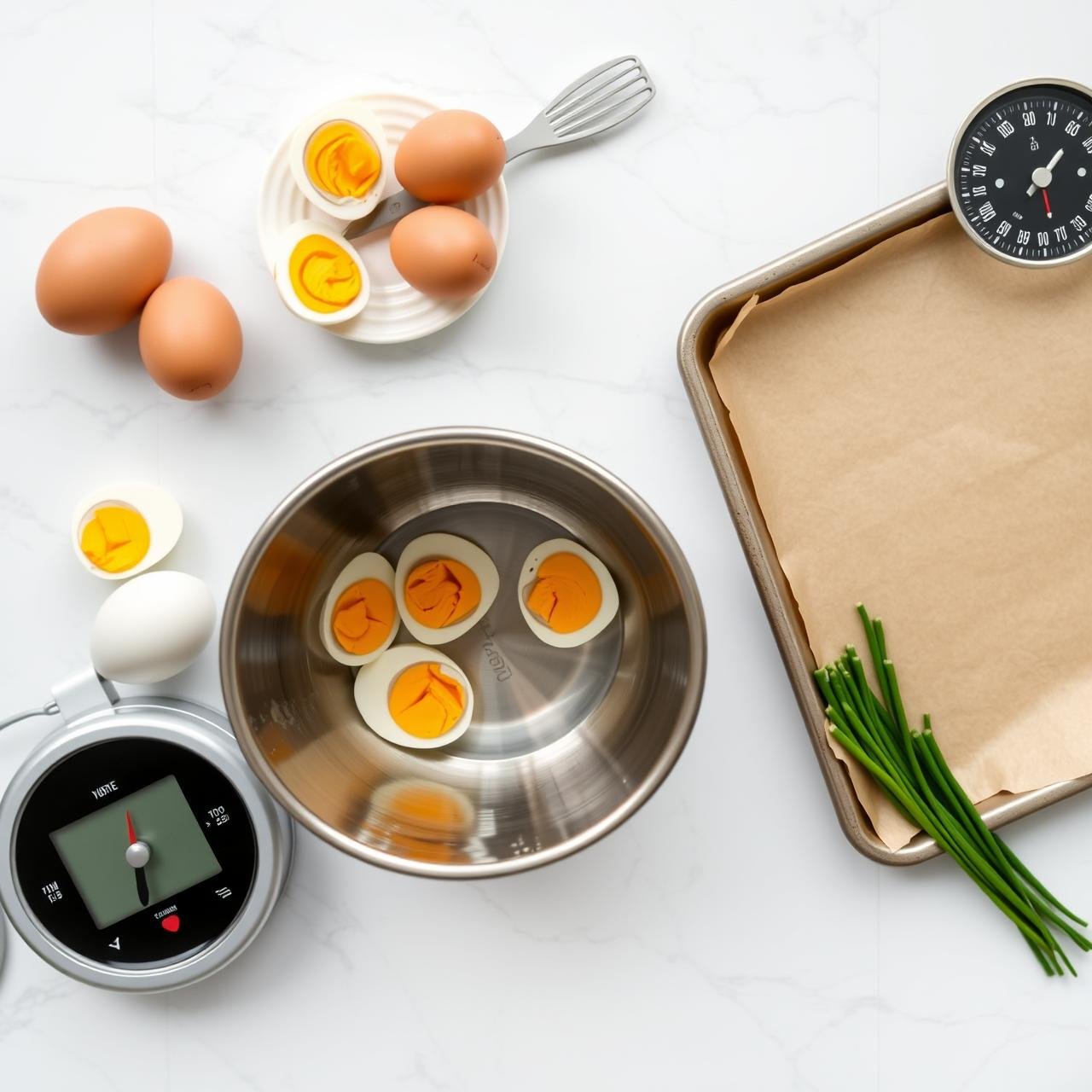
You don’t need any specialized gadgets to create exceptional baked Scotch eggs. This recipe relies on standard kitchen equipment, making it accessible for any home cook. Here’s what you’ll need to have ready.
| Equipment | Purpose |
|---|---|
| Large Pot | For boiling the eggs to the perfect consistency. |
| Slotted Spoon | To safely transfer eggs into and out of boiling water. |
| Ice Bath (Large bowl with ice and water) | To immediately stop the cooking process and make eggs easier to peel. |
| Large Mixing Bowl | For combining the ground sausage with seasonings. |
| Baking Sheet | The primary cooking surface for baking the Scotch eggs in the oven. |
| Parchment Paper or Wire Rack | To line the baking sheet, preventing sticking and ensuring easy cleanup. A wire rack can help circulate air for a crispier bottom. |
| Kitchen Scale (Optional but recommended) | To ensure sausage portions are even, resulting in uniform cooking. |
Quality Ingredients for Superior Flavor
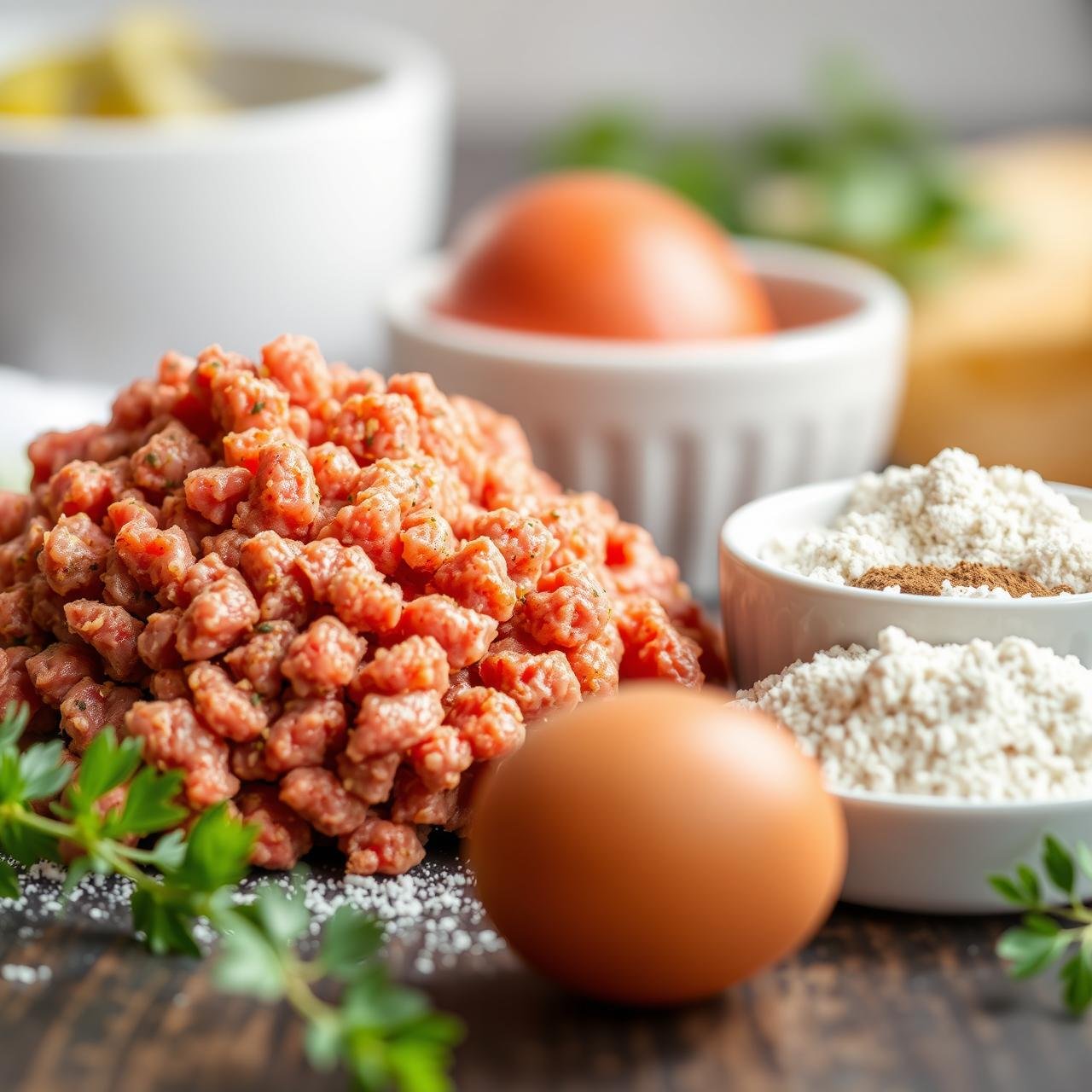
The beauty of a simple recipe like this lies in the quality of its components. Using fresh, flavorful ingredients is the key to elevating your baked Scotch eggs from good to truly memorable. This recipe is naturally gluten-free and low-carb.
- Eggs: You will need 8 large eggs. Six of these will be for the center, and two will be used for an egg wash to help the coating adhere.
- Ground Sausage: 1.5 pounds (24 oz) of high-quality ground sausage is the star. Look for a bulk sausage with a good fat content for flavor and moisture. Plain ground pork, seasoned breakfast sausage, or even spicy Italian sausage works wonderfully. For a leaner option, ground turkey or chicken can be used, but you may want to add extra seasonings and a bit of fat.
- Almond Flour: 1/2 cup of finely ground almond flour serves as our low-carb ‘breading’. It creates a lovely golden-brown crust with a slightly nutty flavor. For an even lower-carb (and keto-friendly) option, you can use crushed pork rinds (pork panko).
- Seasonings: While many sausages are pre-seasoned, adding a few extras creates a more complex flavor profile. We recommend:
- 1 teaspoon dried sage
- 1/2 teaspoon dried thyme
- 1/2 teaspoon garlic powder
- 1/2 teaspoon onion powder
- 1/2 teaspoon black pepper
- 1/4 teaspoon salt (adjust based on your sausage’s saltiness)
- Dijon Mustard: 1 tablespoon mixed into the sausage meat adds a subtle tang that cuts through the richness.
- Fresh Parsley: 2 tablespoons of finely chopped fresh parsley brightens up the sausage mixture.
Crafting Your Baked Sausage Scotch Eggs: A Step-by-Step Guide

Follow these detailed instructions to assemble and bake your Scotch eggs to perfection. The process is straightforward and rewarding, yielding a delicious and impressive final product.
-
Prepare the Eggs:
Bring a large pot of water to a rolling boil. Gently lower 6 of the eggs into the water. For a jammy, slightly soft yolk, boil for exactly 7 minutes. For a firmer, fully cooked yolk, boil for 9-10 minutes. While the eggs are boiling, prepare an ice bath. Once the timer goes off, immediately transfer the eggs to the ice bath using a slotted spoon. Let them cool completely for at least 10 minutes before peeling. This stops the cooking and makes the shells easier to remove. Peel the eggs carefully and set them aside.
-
Preheat and Prepare:
Preheat your oven to 400°F (200°C). Line a large baking sheet with parchment paper or place a wire rack inside it.
-
Season the Sausage:
In a large mixing bowl, combine the 1.5 lbs of ground sausage with the dried sage, thyme, garlic powder, onion powder, salt, pepper, Dijon mustard, and chopped fresh parsley. Use your hands to mix everything together until the seasonings are evenly distributed, but be careful not to overwork the meat.
-
Portion and Assemble:
Divide the sausage mixture into 6 equal portions (about 4 ounces each). A kitchen scale is very helpful here for uniformity. Take one portion of sausage and flatten it into a thin, even patty in the palm of your hand. Place one of the peeled, soft-boiled eggs in the center.
-
Encase the Egg:
Carefully wrap the sausage patty around the egg, gently pressing and molding it to form a smooth, seamless layer that completely covers the egg. Ensure there are no cracks or air pockets. Roll the sausage-covered egg between your palms to create a uniform, oval shape. Repeat with the remaining eggs and sausage.
-
Create the ‘Breading’:
In a shallow bowl, whisk the remaining 2 eggs to create an egg wash. Place the 1/2 cup of almond flour in another shallow bowl. One by one, dip each sausage-wrapped egg into the egg wash, allowing any excess to drip off. Then, roll it in the almond flour until it’s lightly and evenly coated.
-
Bake to Golden Perfection:
Arrange the coated Scotch eggs on your prepared baking sheet, leaving some space between each one. Bake for 25-30 minutes, or until the sausage is cooked through and the exterior is golden brown and crisp. The internal temperature of the sausage should reach 160°F (71°C).
-
Rest and Serve:
Remove the Scotch eggs from the oven and let them rest for a few minutes before serving. They are delicious served warm with a side of mustard, or you can let them cool completely to enjoy later.
Pro Tips and Flavor Variations
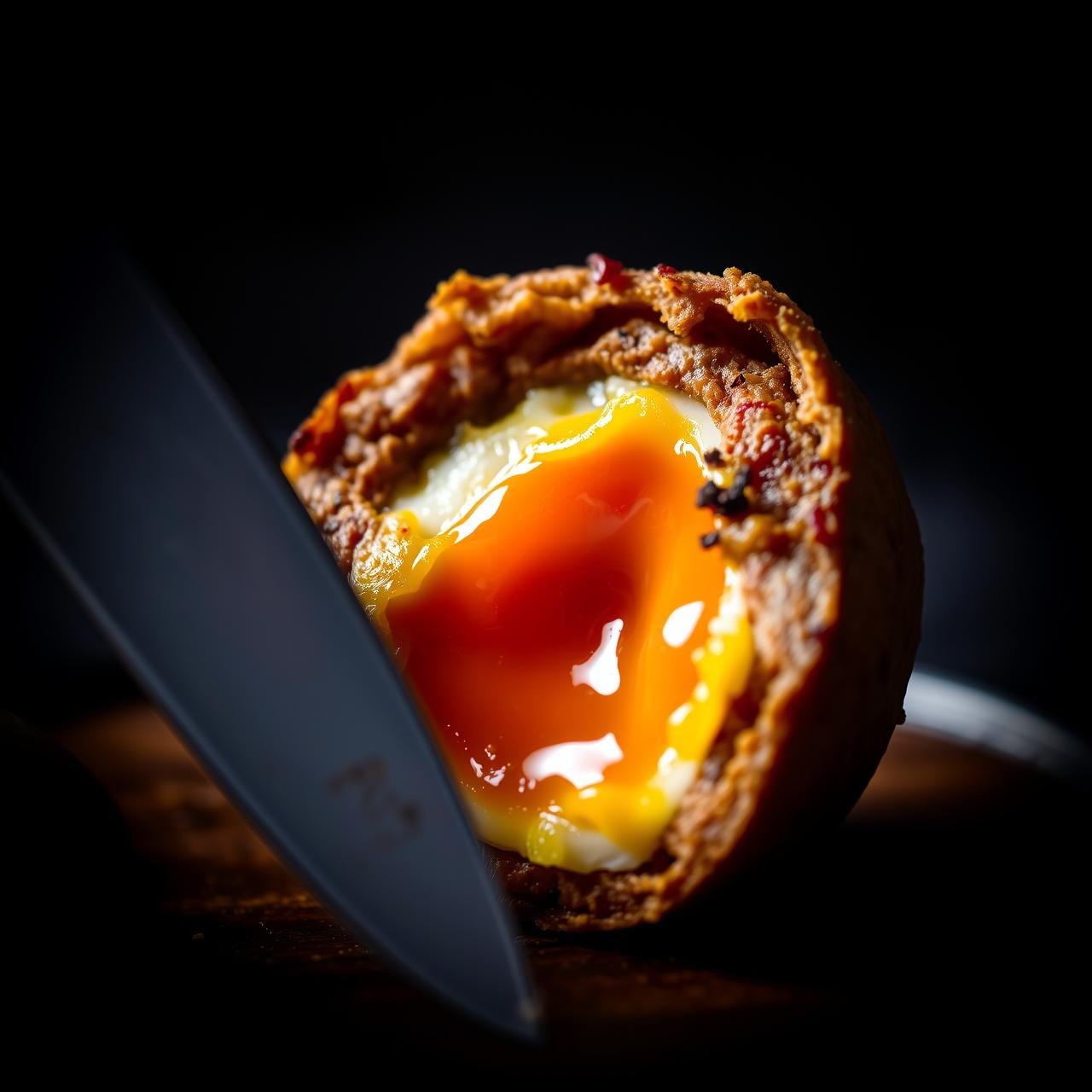
Once you’ve mastered the basic technique, you can start experimenting. Here are some expert tips to ensure flawless results and ideas for customizing your Scotch eggs.
Achieving the Perfect Yolk
The texture of the egg yolk is a matter of personal preference. Use this guide for boiling your eggs:
- Runny Yolk (6 minutes): For those who love a liquid gold center. Best enjoyed immediately while warm.
- Jammy Yolk (7 minutes): The ideal middle ground. The yolk is soft and custard-like, perfect for eating warm or cold.
- Firm Yolk (9-10 minutes): A fully set yolk, which is great for durability if you’re packing them for picnics or lunches.
Preventing Cracks and Splits
A common issue is the sausage casing splitting during baking. To prevent this, ensure the sausage layer is of uniform thickness and that you’ve sealed all the seams completely. Using slightly damp hands when molding the sausage around the egg can help create a smoother surface.
Flavor Variations to Explore
- Spicy: Use a spicy Italian sausage or add 1/2 teaspoon of red pepper flakes or a pinch of cayenne pepper to your sausage mixture.
- Cheesy: Mix 1/4 cup of finely shredded sharp cheddar or smoked gouda into the sausage meat for a delicious, cheesy surprise.
- Herbaceous: Add other fresh herbs like chives, rosemary, or marjoram to the sausage for a different flavor profile.
- Smoky: A 1/2 teaspoon of smoked paprika can add a wonderful smoky depth to the sausage casing.
Nutritional Profile (Estimated)

This recipe is designed to be a satisfying, high-protein, and low-carbohydrate option. The nutritional information below is an estimate for one baked Scotch egg, based on the ingredients listed. Actual values may vary depending on the specific type of sausage and other ingredients used.
| Nutrient | Amount per Serving (1 Scotch Egg) |
|---|---|
| Calories | ~380 kcal |
| Protein | ~25g |
| Fat | ~30g |
| Total Carbohydrates | ~4g |
| Fiber | ~2g |
| Net Carbohydrates | ~2g |
Disclaimer: This is an approximation and should be used as a guideline. For precise nutritional data, you should calculate based on your specific ingredients.
Storing and Reheating for Later
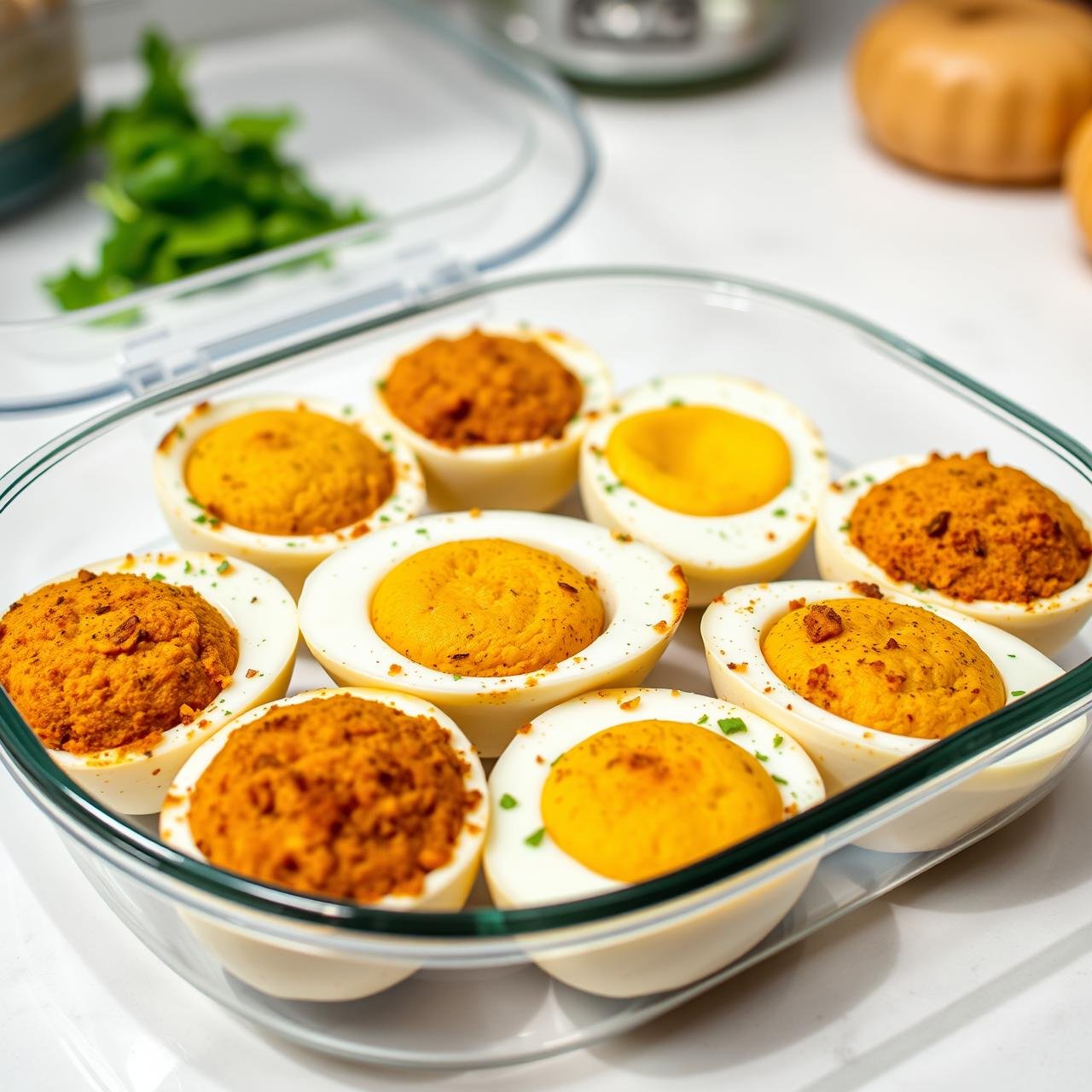
Baked Scotch eggs are an excellent make-ahead dish. Proper storage ensures they remain fresh and delicious for days.
Refrigeration
Once cooled completely to room temperature, store the Scotch eggs in an airtight container in the refrigerator. They will keep well for up to 4 days. They can be enjoyed cold straight from the fridge—perfect for a quick snack or packed lunch.
Reheating
While delicious cold, you can easily reheat them. For the best texture that preserves the crisp exterior, avoid the microwave, which can make them rubbery. Instead, use one of these methods:
- Oven: Place the Scotch eggs on a baking sheet and heat in a preheated oven at 350°F (175°C) for 10-15 minutes, or until warmed through.
- Air Fryer: Reheat in an air fryer at 350°F (175°C) for 5-7 minutes. This method is excellent for re-crisping the outside.
Freezing Instructions
You can freeze baked Scotch eggs, though be aware that the texture of the egg white and yolk may change slightly upon thawing. To freeze, first let them cool completely. Place them on a baking sheet in a single layer and freeze until solid. Then, transfer them to a freezer-safe bag or container. They can be stored for up to 3 months. Thaw overnight in the refrigerator before reheating using the oven or air fryer method.
Conclusion
Our journey to create the perfect Baked Sausage Scotch Egg proves that classic comfort food and healthy eating can coexist beautifully. By embracing the simple, clean heat of the oven, we’ve crafted a recipe that is not only packed with protein and low in carbs but also bursting with the rustic, homestyle flavor you crave. It’s a versatile dish that shines as a hearty breakfast, a satisfying lunch, a post-workout snack, or an elegant appetizer.
We encourage you to bring this recipe into your own kitchen. Enjoy the process of molding each egg, the delicious aroma that fills your home as they bake, and the immense satisfaction of slicing into that perfect, jammy-yolked center. This is more than just a recipe; it’s a new staple for your healthy lifestyle. Give it a try, and discover your new favorite way to enjoy a timeless classic.