Melt Fat Fast With This Authentic Baked Ratatouille (No Fluff Guide)
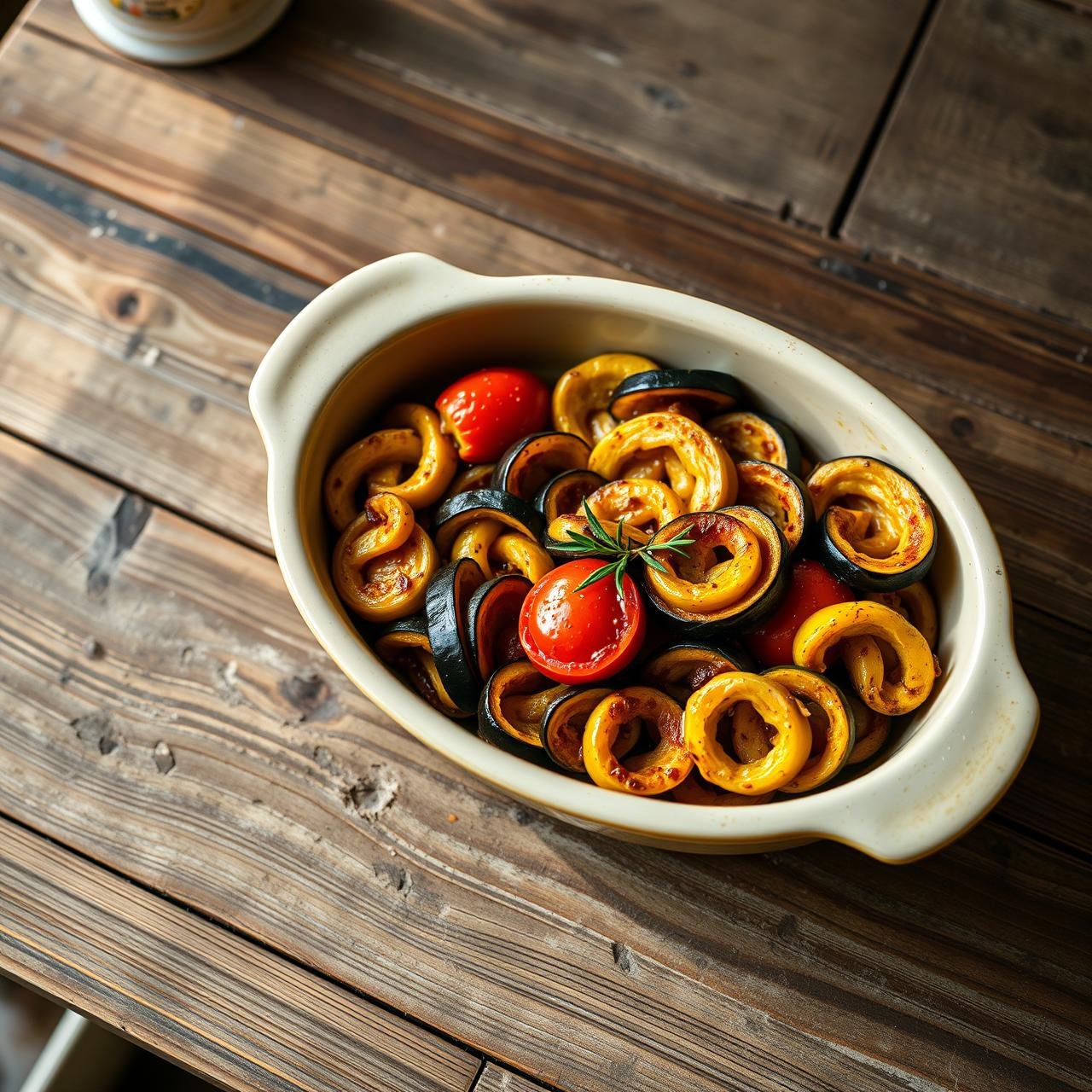
Imagine the sun-drenched fields of Provence, the air thick with the scent of ripe tomatoes, garlic, and fresh herbs. This is the soul of ratatouille, a humble peasant dish transformed into a culinary icon. But we’re not just making any ratatouille. Forget the soupy, stewed versions. Today, we are crafting an exquisite Baked Ratatouille, known as a tian, where thinly sliced vegetables are layered in a beautiful spiral over a rich, savory tomato and pepper base. This method concentrates the flavors, creating a dish that is both visually stunning and intensely delicious.
More than just a feast for the eyes, this recipe is a powerhouse for your health. Each bite is packed with fiber, vitamins, and antioxidants, yet it remains incredibly low in calories and fat. It’s the kind of meal that nourishes your body from the inside out, making it the perfect centerpiece for a clean-eating lifestyle. This is not just food; it’s a vibrant, guilt-free indulgence that proves healthy eating can be a truly gourmet experience. Let’s begin this no-fluff journey to mastering an authentic classic.
Why Baked Ratatouille is a Game-Changer
While traditional ratatouille involves dicing and stewing vegetables together, the baked method offers a more refined result. By thinly slicing and arranging the vegetables, each piece cooks evenly while maintaining its individual texture and flavor. The slow bake allows the natural sugars to caramelize, deepening the taste in a way that stewing simply cannot. The result is a dish with less water content and a more intense, concentrated vegetable flavor.
Health and Wellness in Every Slice
This dish is a testament to the power of simple, whole foods. It’s naturally vegan, gluten-free, and loaded with benefits:
- Low Calorie, High Volume: You can enjoy a generous, satisfying portion without derailing your calorie goals. The high water and fiber content in the vegetables promotes a feeling of fullness.
- Rich in Nutrients: Eggplant provides fiber and antioxidants, zucchini is packed with Vitamin A, and tomatoes are a fantastic source of lycopene and Vitamin C.
- Healthy Fats: The use of high-quality extra virgin olive oil provides monounsaturated fats, which are essential for heart health.
By choosing to bake, you create a dish that is as elegant and impressive as it is wholesome and slimming.
Essential Kitchen Equipment
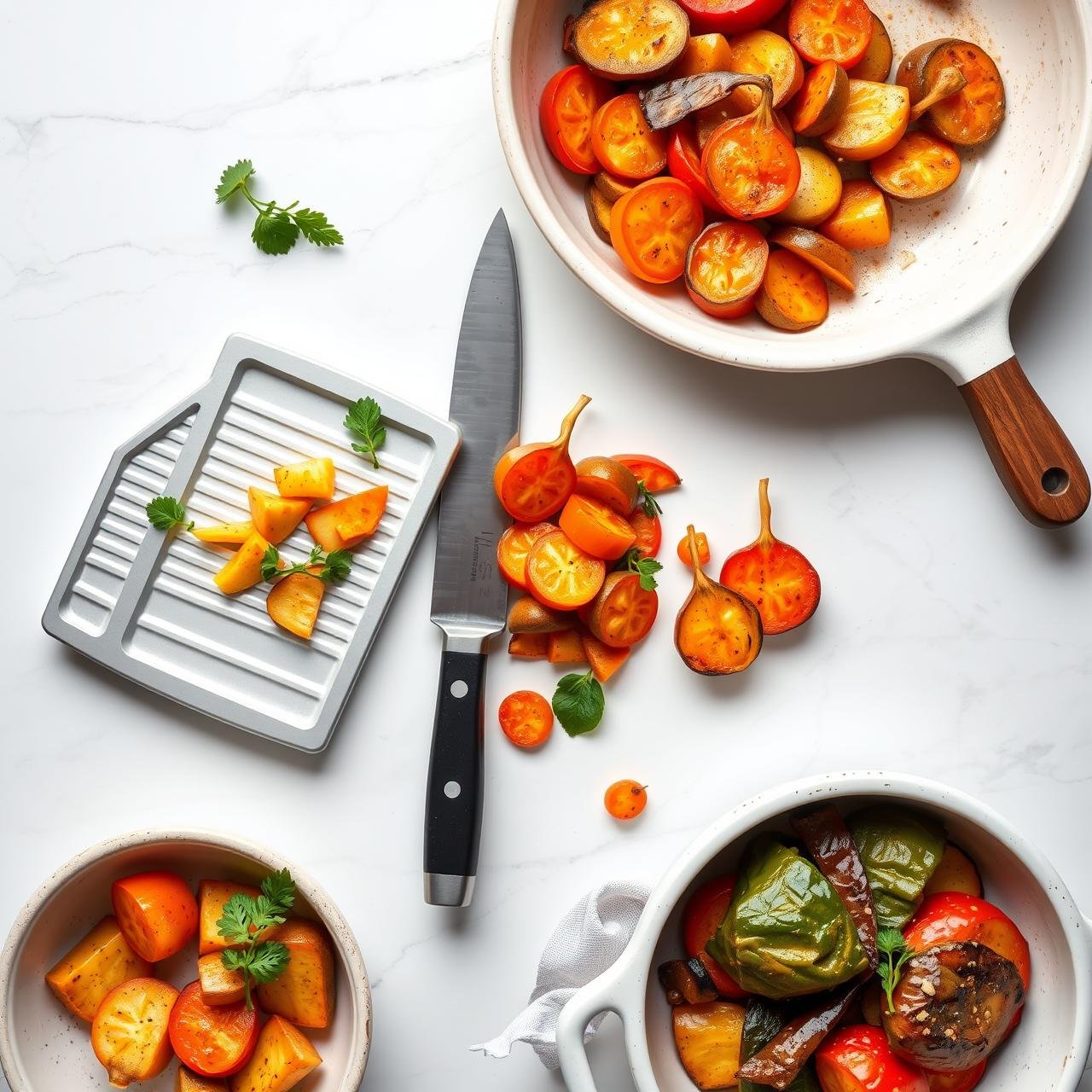
Having the right tools is the first step to success. This recipe doesn’t require fancy gadgets, but a few key items will make the process seamless. This is the foundation of our ‘no-fluff’ approach—proper preparation.
| Tool | Purpose | Chef’s Note |
|---|---|---|
| Mandoline Slicer | Creating uniform, paper-thin vegetable slices. | This is the secret to a professional-looking ratatouille. If you don’t have one, a very sharp chef’s knife and a steady hand will work. |
| 9×13 inch or 10-inch Round Baking Dish | The vessel for baking your masterpiece. | Ceramic or glass dishes work best as they distribute heat evenly. An oven-safe skillet also works beautifully. |
| Large Sauté Pan | Cooking the piperade (tomato and pepper base). | Choose one with a heavy bottom to prevent scorching the sauce. |
| Chef’s Knife & Cutting Board | General chopping and dicing for the sauce base. | A sharp knife is a safe knife. Keep your tools well-maintained. |
The Garden’s Bounty: Ingredients List
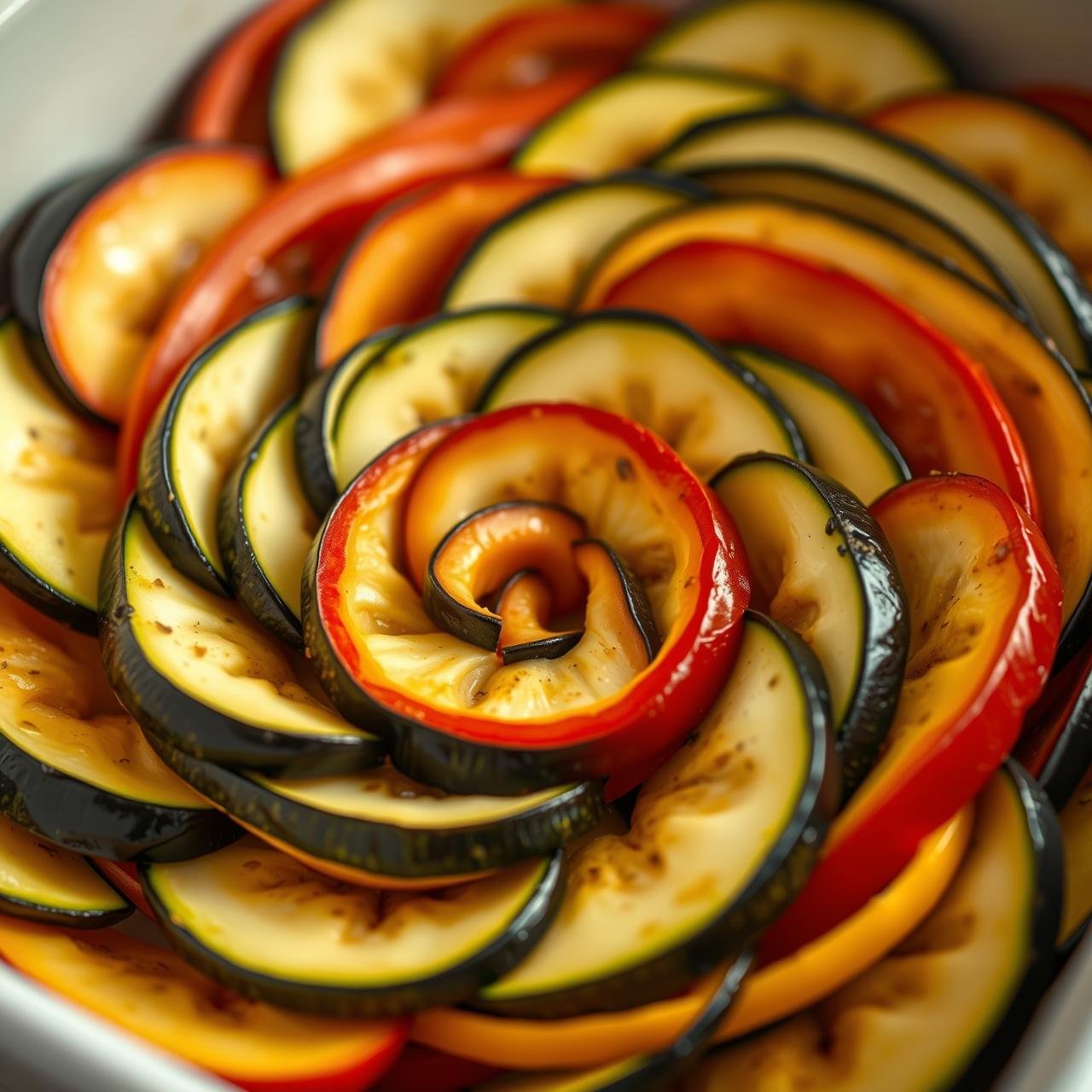
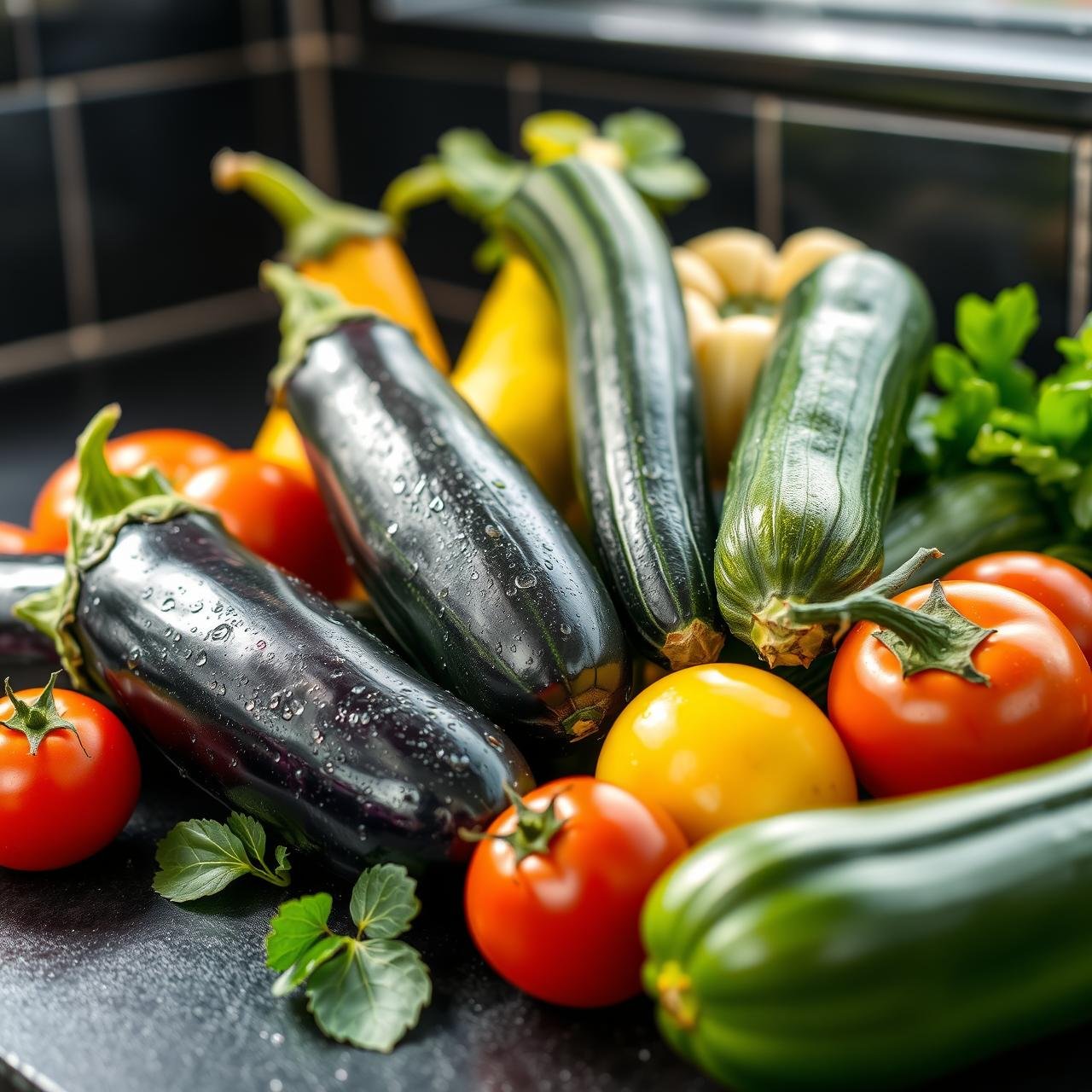
The quality of your ratatouille is directly tied to the quality of your ingredients. Seek out the freshest, most vibrant produce you can find. The ideal vegetables will be similar in diameter for a uniform, beautiful spiral.
For the Piperade (Sauce Base)
- 1 tablespoon Extra Virgin Olive Oil
- 1 large Yellow Onion, finely diced
- 2 cloves Garlic, minced
- 1 Red Bell Pepper, finely diced
- 1 (28-ounce) can Crushed Tomatoes (preferably San Marzano)
- 1 teaspoon Dried Oregano
- 1/2 teaspoon Dried Thyme
- A handful of fresh Basil leaves, chopped
- Salt and freshly ground black pepper to taste
For the Vegetable Layers
- 1 medium Eggplant (about 1 lb)
- 1 medium Zucchini (about 1 lb)
- 1 medium Yellow Squash (about 1 lb)
- 4-5 Roma Tomatoes
- 2 tablespoons Extra Virgin Olive Oil
- 1 teaspoon fresh Thyme leaves
- Salt and freshly ground black pepper
The Method: A Step-by-Step Guide to Perfection
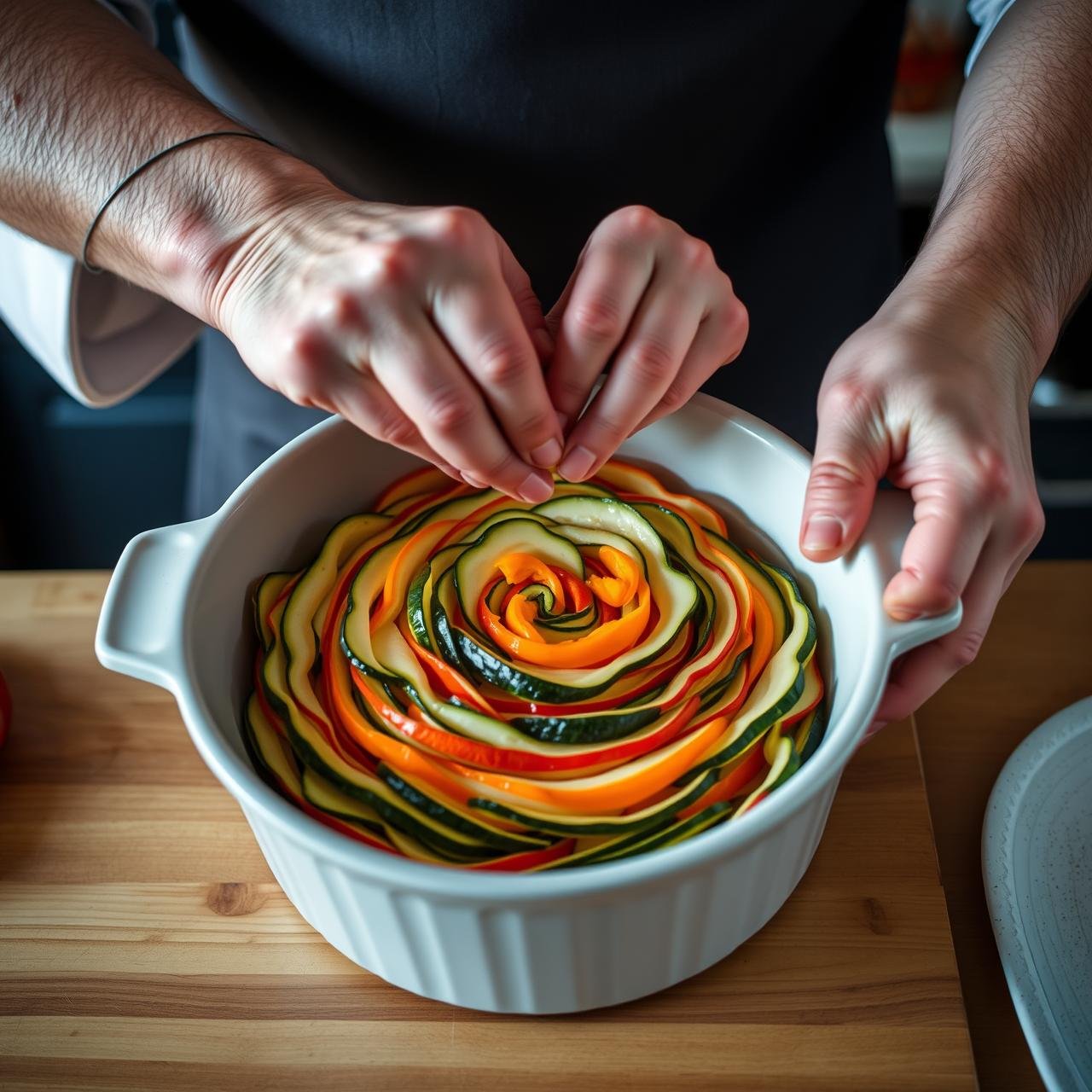
Follow these steps closely to build your ratatouille. The process is meditative and rewarding, turning simple ingredients into an edible work of art.
-
Prepare the Piperade:
Start by heating 1 tablespoon of olive oil in your large sauté pan over medium heat. Add the diced onion and cook until softened and translucent, about 5-7 minutes. Add the minced garlic and diced red bell pepper, cooking for another 5 minutes until the pepper is tender. Pour in the crushed tomatoes, oregano, and dried thyme. Season generously with salt and pepper. Bring the sauce to a simmer and let it cook for 10-15 minutes, allowing the flavors to meld. Stir in the fresh basil, then spread the finished sauce evenly across the bottom of your baking dish.
-
Slice the Vegetables:
While the sauce simmers, prepare your layering vegetables. Preheat your oven to 375°F (190°C). Using a mandoline or a very sharp knife, slice the eggplant, zucchini, yellow squash, and Roma tomatoes into uniform 1/8-inch thick rounds. Uniformity is key for even cooking and a beautiful presentation. Discard the end pieces.
-
Assemble the Spiral:
Now for the artistic part. Starting from the outer edge of the baking dish, arrange the vegetable slices in an alternating pattern (e.g., eggplant, tomato, yellow squash, zucchini) on top of the sauce. Overlap them slightly and pack them in tightly, working your way towards the center until the dish is full.
-
Season and Bake:
Drizzle the arranged vegetables with 2 tablespoons of olive oil. Sprinkle evenly with the fresh thyme leaves, salt, and freshly ground black pepper. Cover the dish tightly with aluminum foil.
-
The First Bake:
Place the covered dish in the preheated oven and bake for 40 minutes. The foil traps the steam, gently cooking the vegetables until they are tender.
-
The Final Bake:
After 40 minutes, carefully remove the foil. Return the dish to the oven and bake uncovered for another 20-25 minutes, or until the vegetables are fully cooked and the top is beautifully golden brown with slightly caramelized edges. Let it rest for 10 minutes before serving to allow the flavors to settle.
Nutritional Profile: A Guilt-Free Indulgence
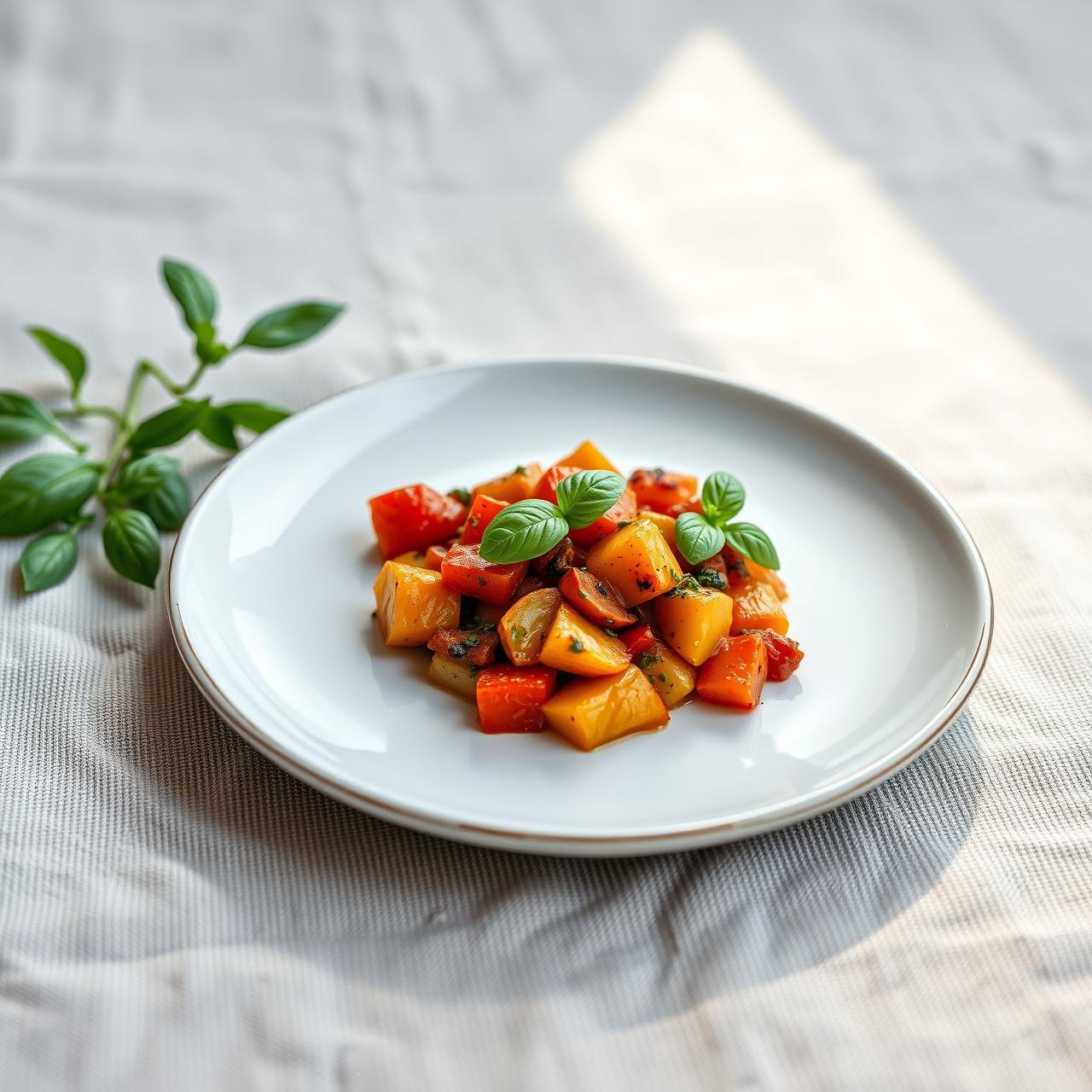
This dish is proof that food can be both decadent and incredibly healthy. Here is an approximate nutritional breakdown per serving (assuming the recipe makes 6 servings).
| Nutrient | Amount per Serving |
|---|---|
| Calories | ~150 kcal |
| Fat | 7g |
| Carbohydrates | 20g |
| Fiber | 8g |
| Sugar | 11g |
| Protein | 4g |
| Sodium | 350mg |
Disclaimer: These values are estimates and can vary based on the specific ingredients and portion sizes used.
Pro Tips, Storage, and Serving Suggestions
Chef’s Secrets for Flawless Ratatouille
- Sweat the Eggplant: For an even silkier texture, you can salt your eggplant slices and let them sit for 20-30 minutes. This draws out excess moisture and bitterness. Be sure to pat them dry before assembling.
- Flavor Boost: For a deeper, more savory sauce, add a tablespoon of tomato paste or a splash of balsamic vinegar to the piperade.
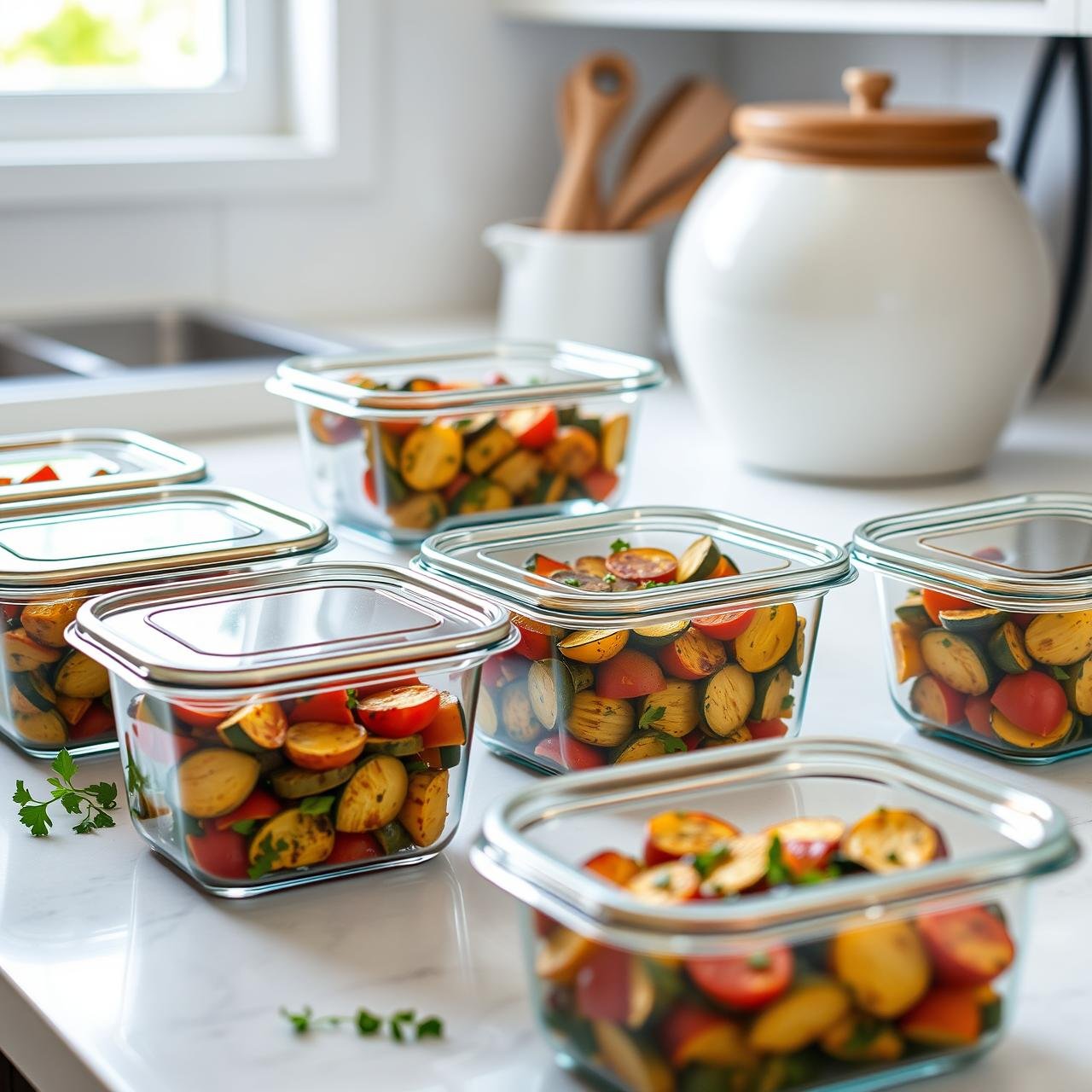
- Make it Ahead: Ratatouille is one of those magical dishes that tastes even better the next day! The flavors have more time to meld and deepen. It’s a perfect dish for meal prepping.
Storing and Reheating Your Masterpiece
Store any leftovers in an airtight container in the refrigerator for up to 4-5 days. To reheat, place it in an oven-safe dish and warm at 350°F (175°C) for 15-20 minutes, or until heated through. Microwaving works in a pinch, but the oven best preserves the texture.
Serving Suggestions
While magnificent on its own, ratatouille is incredibly versatile. Serve it as a main course with a side of crusty bread for dipping, spoon it over polenta or quinoa, or serve it as a side dish alongside grilled fish or chicken.
Conclusion
You have now mastered the art of authentic baked ratatouille—a dish that is as nourishing for the body as it is pleasing to the palate. By transforming a handful of simple, fresh vegetables into an elegant and flavorful masterpiece, you’ve embraced the very essence of rustic, healthy cooking. This ‘no-fluff’ guide has equipped you with the techniques to create a meal that is perfect for a quiet weeknight dinner, yet impressive enough for a special occasion. We encourage you to step into your kitchen, embrace the process, and enjoy the vibrant, sun-drenched flavors of Provence. Bon appétit!