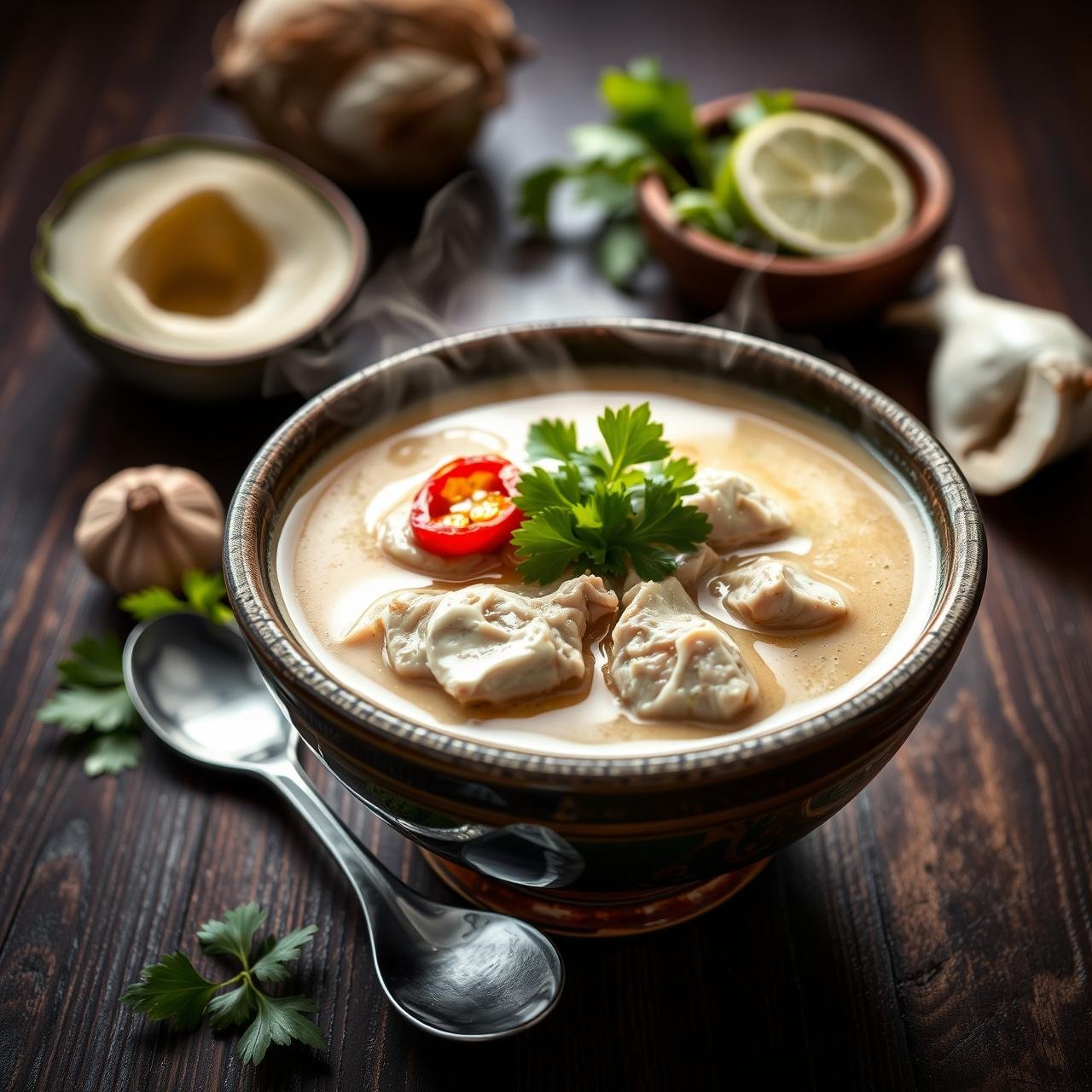
Authentic Tom Kha Gai: Spicy Thai Coconut Chicken Soup (No Fluff Recipe)
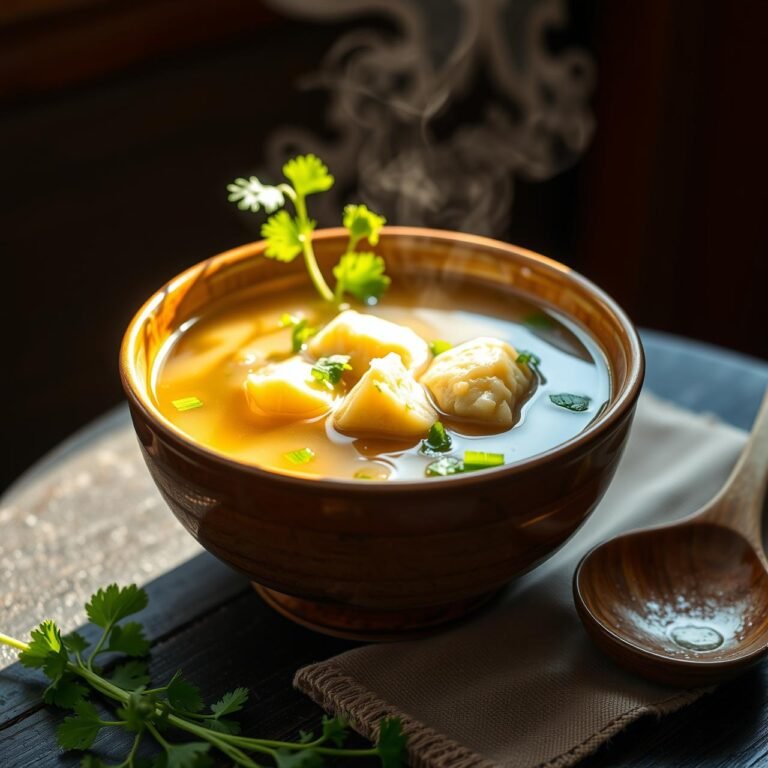
Imagine the vibrant streets of Bangkok, where the air is thick with the scent of sizzling woks and fragrant spices. Now, imagine capturing that essence in a single, soul-warming bowl. That’s the magic of Tom Kha Gai. More than just a soup, it’s a delicate dance of flavors—a perfect harmony of creamy, spicy, sour, and savory that comforts and awakens the senses simultaneously. This isn’t your average chicken soup; it’s a Thai classic celebrated for its aromatic depth, derived from a trio of non-negotiable ingredients: galangal, lemongrass, and kaffir lime leaves.
Our ‘No Fluff’ promise means we’re cutting straight to the chase. We’re bypassing the long, winding stories and diving deep into the craft of creating a truly authentic Tom Kha Gai. This recipe is designed for the home cook who craves restaurant-quality results, the health enthusiast seeking a nourishing meal, and the gourmet foodie who appreciates the nuance of traditional flavors. We will guide you through each step, from preparing the aromatics to achieving that perfectly balanced, silky coconut broth. Get ready to transform your kitchen into a gateway to Thailand.
The Essential Toolkit for Tom Kha Gai
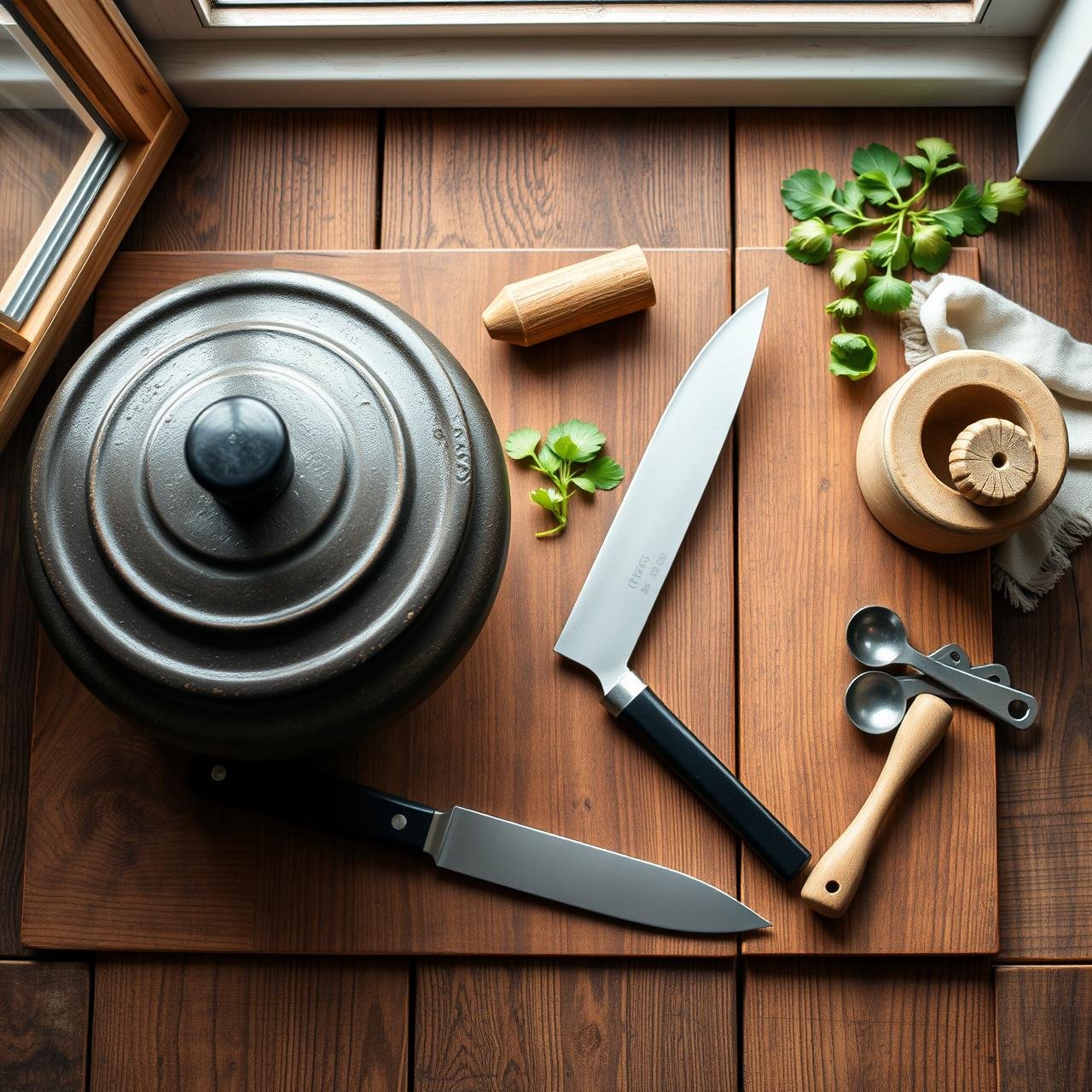
Crafting this masterpiece doesn’t require a professional kitchen, but having the right tools on hand makes the process seamless and enjoyable. A clean, organized workspace is the first step to culinary success. Here’s what you’ll need to assemble before you begin your journey into Thai flavors.
| Equipment | Purpose |
|---|---|
| Large Pot or Dutch Oven | A heavy-bottomed pot, around 5-6 quarts, is ideal for even heat distribution, preventing the delicate coconut milk from scorching and allowing the flavors to meld beautifully. |
| Sharp Chef’s Knife | Essential for precisely slicing the chicken and preparing the tough aromatics like galangal and lemongrass. A sharp knife ensures clean cuts and safe preparation. |
| Sturdy Cutting Board | A large wooden or plastic cutting board provides a stable surface. It’s wise to use a separate board for raw chicken to prevent cross-contamination. |
| Mortar and Pestle (Optional) | While not strictly necessary, using a mortar and pestle to lightly bruise the chili and lemongrass helps release their essential oils, adding a profound depth of flavor. A gentle tap with the back of your knife works as a substitute. |
| Measuring Cups and Spoons | Accuracy is key, especially when balancing the core flavors of fish sauce, lime juice, and sugar. Precise measurements ensure a consistent and harmonious result every time. |
| Ladle | For serving the beautiful, brothy soup and ensuring each bowl gets a generous helping of chicken, mushrooms, and aromatics. |
A Symphony of Authentic Ingredients
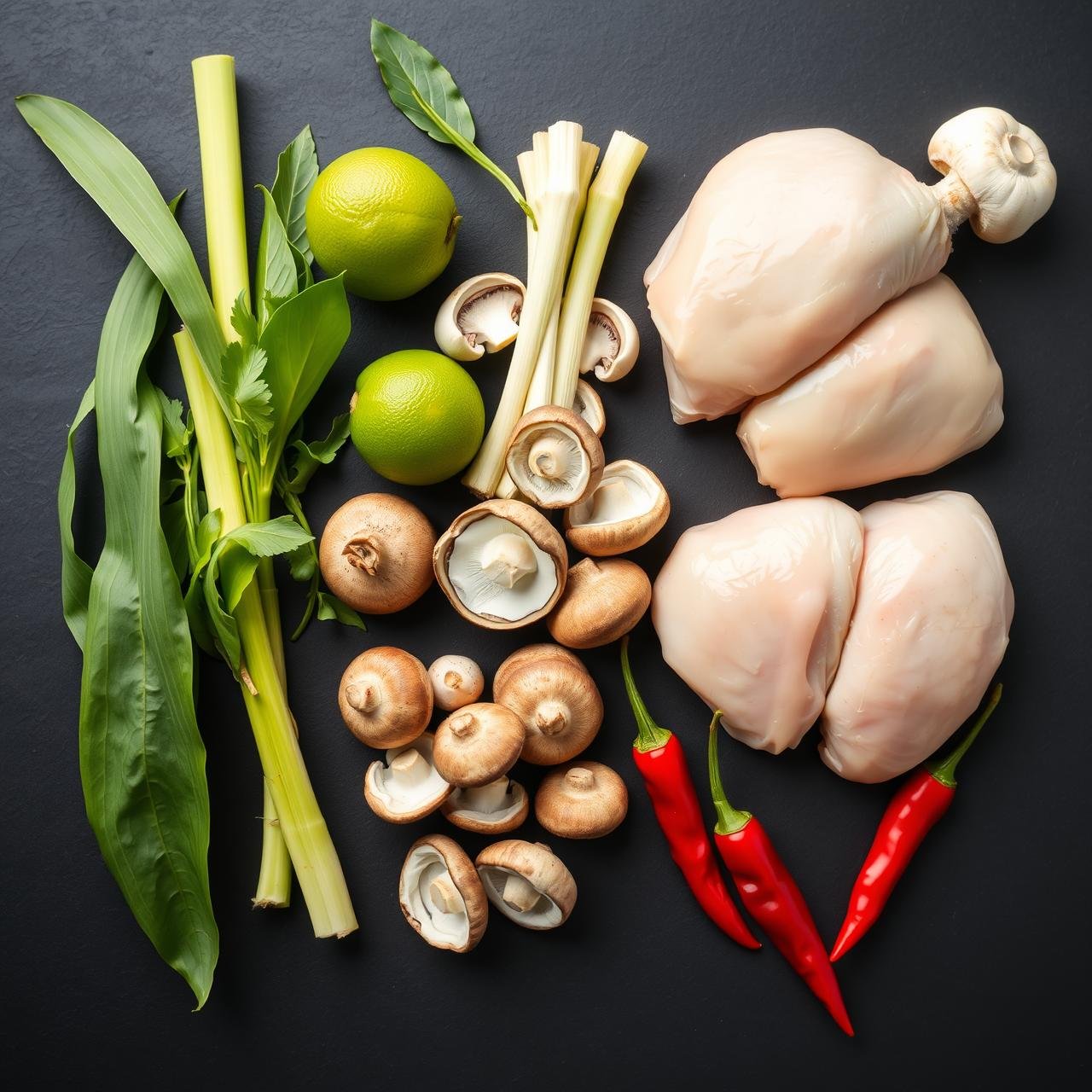
The soul of Tom Kha Gai lies in its fresh, aromatic ingredients. While some may require a trip to an Asian market, the effort is what separates a good soup from an unforgettable one. Do not be tempted by powdered substitutes; the real magic is in the fresh herbs and roots. Here’s a breakdown of the key players:
For the Aromatic Broth:
- Full-Fat Coconut Milk: 2 cans (13.5 oz each). This is non-negotiable for a rich, creamy texture. Light coconut milk will result in a thin, watery soup. Look for brands with minimal additives.
- Chicken Broth: 4 cups of low-sodium chicken broth. Using a quality broth provides a savory backbone that complements the coconut milk.
- Galangal: A 2-inch piece, thinly sliced. It looks like ginger but has a sharp, citrusy, and piney flavor that is the heart of Tom Kha. Do not substitute with ginger, as the flavor profile is completely different.
- Lemongrass: 2 stalks. Use the bottom two-thirds. Smash them with the back of your knife to release their fragrant oils before cutting them into 2-inch pieces.
- Kaffir Lime Leaves: 6-8 whole leaves, torn in half to release their aroma. Their unique floral and citrus scent is irreplaceable.
For the Substance and Flavor:
- Boneless, Skinless Chicken Thighs: 1.5 pounds, cut into bite-sized pieces. Thighs stay more tender and flavorful than breasts during simmering.
- Mushrooms: 8 ounces of cremini or straw mushrooms, halved or quartered. They add an earthy depth and a wonderful texture.
- Thai Bird’s Eye Chilies: 3-5 chilies, bruised or sliced. Adjust the quantity based on your heat preference. Bruising them releases a milder heat, while slicing them exposes the seeds for a more fiery kick.
- Fish Sauce: 1/4 cup. This is the primary source of salty, umami flavor. Brands can vary in saltiness, so start with a little less and add more to taste.
- Fresh Lime Juice: 1/4 cup, from about 2-3 limes. This adds the essential sour ‘Kha’ element. Always add it at the very end, off the heat, to preserve its bright flavor.
- Palm Sugar or Brown Sugar: 1 tablespoon, finely chopped. A touch of sweetness is crucial to balance the sour and salty notes. Palm sugar adds a subtle caramel flavor.
For the Garnish:
- Fresh Cilantro: A generous handful of fresh leaves and tender stems, roughly chopped.
- Chopped Scallions or Red Onion: For a final fresh, pungent bite.
- Extra Sliced Chilies: For those who like it extra spicy.
The Step-by-Step Method to Perfection
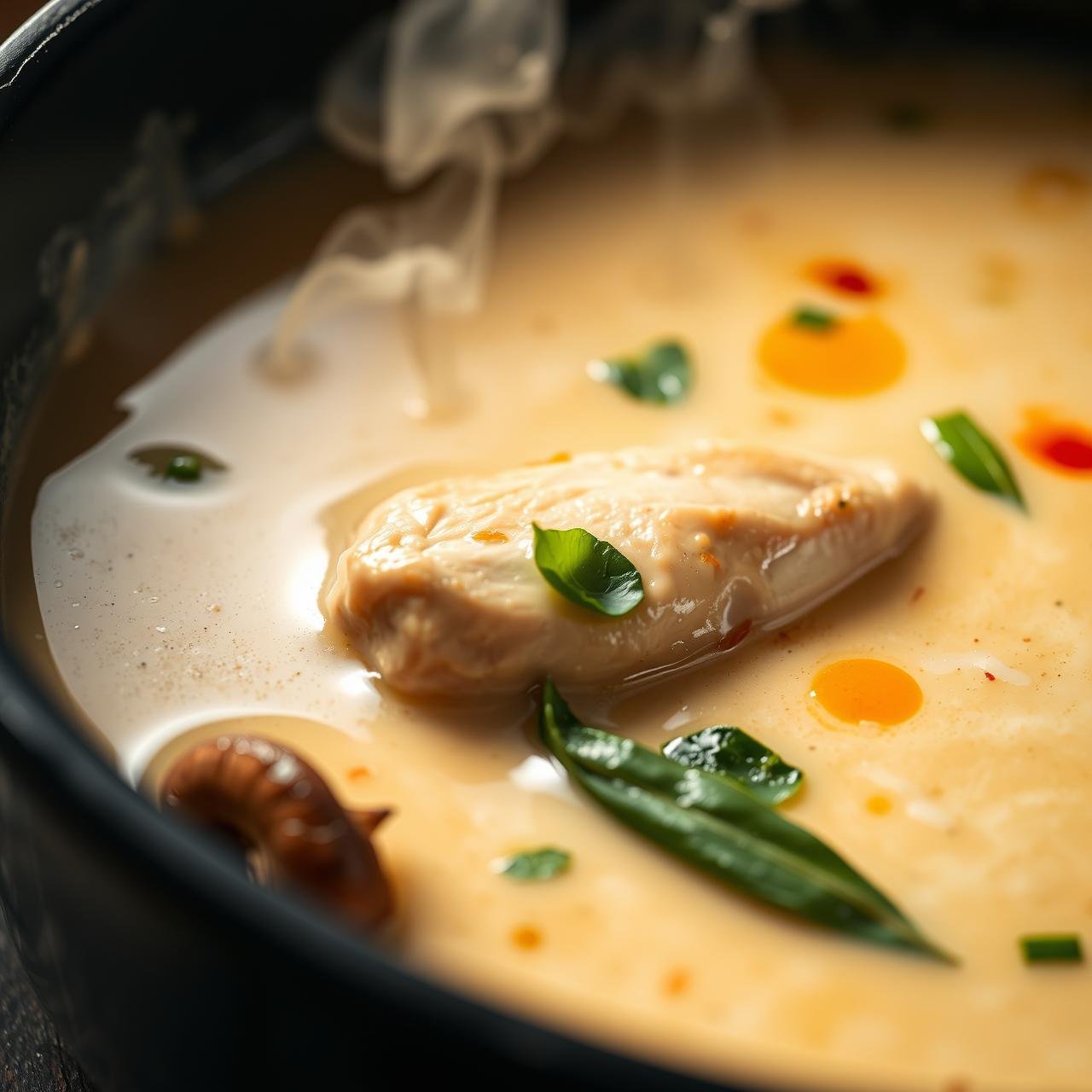
Follow these instructions closely to build layers of flavor, resulting in a soup that is both complex and comforting. The key is to gently simmer, never boil, the coconut milk to maintain its creamy consistency.
-
Create the Aromatic Base:
In your large pot or Dutch oven, combine 1 cup of the coconut milk (use the thick cream from the top of the can) and the 4 cups of chicken broth. Bring to a gentle simmer over medium heat. Add the sliced galangal, smashed lemongrass pieces, torn kaffir lime leaves, and bruised Thai chilies. Let this aromatic mixture simmer for 5-7 minutes. The kitchen should start to smell incredible! This step infuses the liquid with the foundational flavors of the soup.
-
Cook the Chicken:
Add the bite-sized chicken thighs to the simmering broth. Continue to simmer gently until the chicken is cooked through, which should take about 8-10 minutes. Skim off any impurities that rise to the surface to keep your broth clear and clean.
-
Incorporate Mushrooms and Coconut Milk:
Once the chicken is cooked, stir in the mushrooms and the remaining coconut milk. Bring the soup back to a very gentle simmer. It is crucial not to let it come to a rolling boil, as this can cause the coconut milk to separate or ‘break’. Cook for another 3-5 minutes, just until the mushrooms are tender.
-
Balance the Flavors:
Turn off the heat. This is the most important step for balancing the taste. Stir in the fish sauce and the palm sugar, making sure the sugar dissolves completely. Now, add the fresh lime juice. Taste the broth. This is your moment to be a chef! Does it need more saltiness? Add a splash more fish sauce. More sourness? A squeeze more lime. Not quite balanced? A tiny bit more sugar. Adjust until you have that perfect trifecta of salty, sour, and subtly sweet.
-
Garnish and Serve:
Ladle the hot soup into bowls. Be sure to get a good mix of chicken, mushrooms, and broth. Garnish generously with fresh cilantro, chopped scallions, and extra sliced chilies if desired. Advise your guests that the pieces of galangal, lemongrass, and lime leaves are for flavor and are typically not eaten.
Chef’s Secrets for Restaurant-Quality Soup
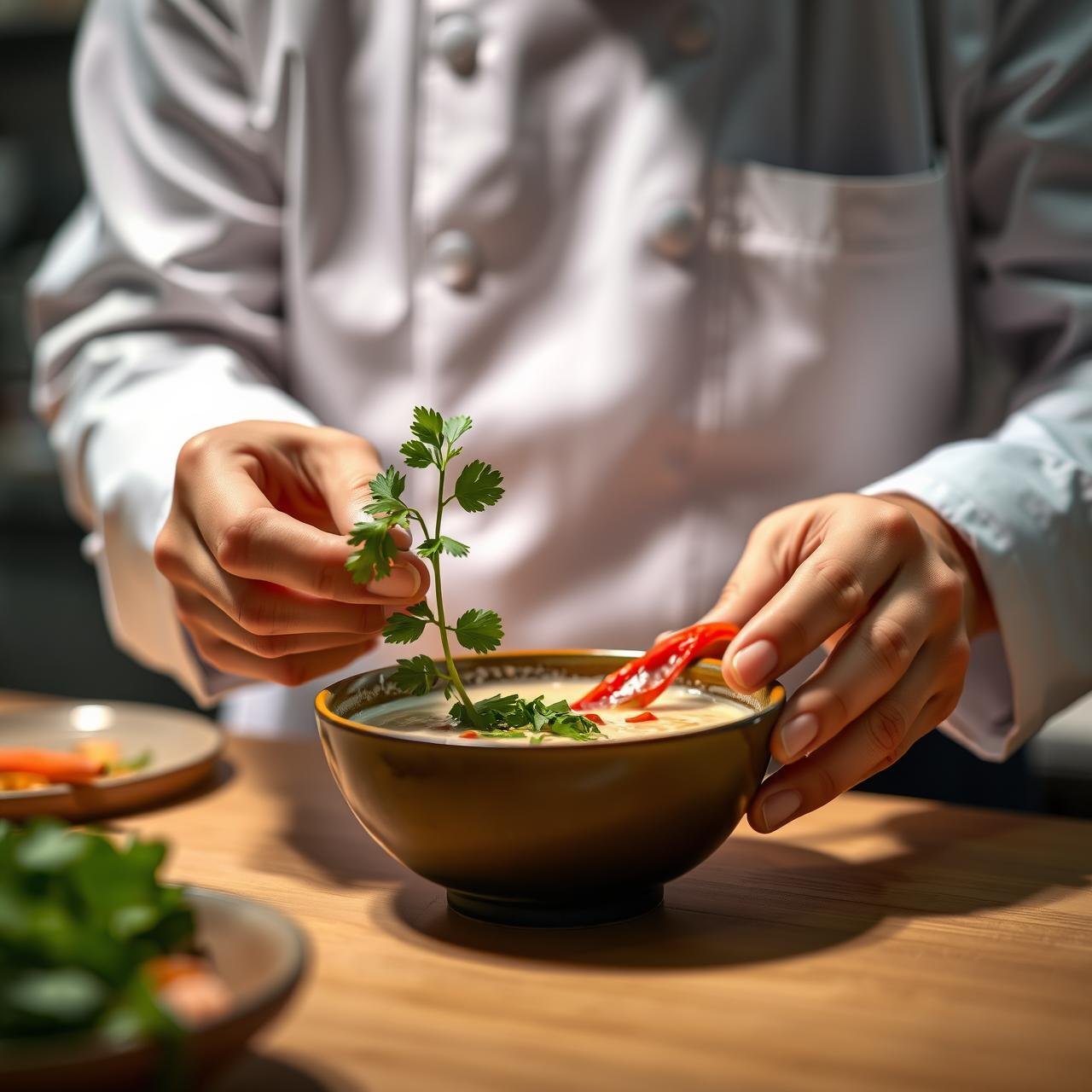
The difference between a good and a great Tom Kha Gai often lies in the small details and techniques. Here are some professional tips to elevate your soup from homemade to world-class.
Sourcing and Substitutions:
- Finding the Holy Trinity: Galangal, lemongrass, and kaffir lime leaves are best fresh. Check your local Asian supermarket. Many carry frozen versions which are an excellent substitute for fresh and far superior to dried.
- Vegetarian/Vegan Tom Kha: To make a plant-based version, substitute the chicken with firm tofu or a mix of exotic mushrooms (like shiitake and oyster). Swap the chicken broth for a rich vegetable broth and use a vegan fish sauce or a mix of soy sauce and miso paste for that umami depth.
- A Note on Galangal vs. Ginger: While they are related, they are not interchangeable. Ginger is spicy and pungent, while galangal is floral, peppery, and citrusy. Using ginger will create a delicious soup, but it will not be Tom Kha Gai.
Technique and Timing:
- Don’t Boil the Coconut Milk: I cannot stress this enough. A rolling boil will cause the fats and liquids in the coconut milk to separate, resulting in a curdled, oily texture. Maintain a gentle, bare simmer throughout the cooking process after the full amount of coconut milk is added.
- Layer Your Flavors: The order of operations matters. Building the aromatic base first allows the tough herbs to fully release their oils. Adding the lime juice last and off the heat preserves its bright, fresh flavor, which would otherwise cook off and become dull.
- Taste and Adjust Fearlessly: Authentic Thai cooking is all about balancing the core flavors. Your palate is the final judge. Taste at the end and adjust the fish sauce (salty), lime juice (sour), and sugar (sweet) until it sings. The perfect balance is a subjective, beautiful thing.
Nutritional Profile
This Tom Kha Gai is not only delicious but also packed with nourishing ingredients. It’s naturally gluten-free and can be a fantastic part of a healthy, balanced diet. The coconut milk provides healthy fats, while the chicken offers lean protein. The herbs like galangal and lemongrass have been used in traditional medicine for centuries. Here is an approximate nutritional breakdown per serving (recipe makes about 6 servings).
| Nutrient | Amount per Serving |
|---|---|
| Calories | Approx. 380 kcal |
| Protein | 28g |
| Fat | 25g |
| Saturated Fat | 18g |
| Carbohydrates | 9g |
| Fiber | 2g |
| Sugar | 4g |
| Sodium | 950mg (can vary with broth and fish sauce) |
Disclaimer: These values are estimates and can vary based on the specific ingredients and brands used.
Storing and Savoring Later
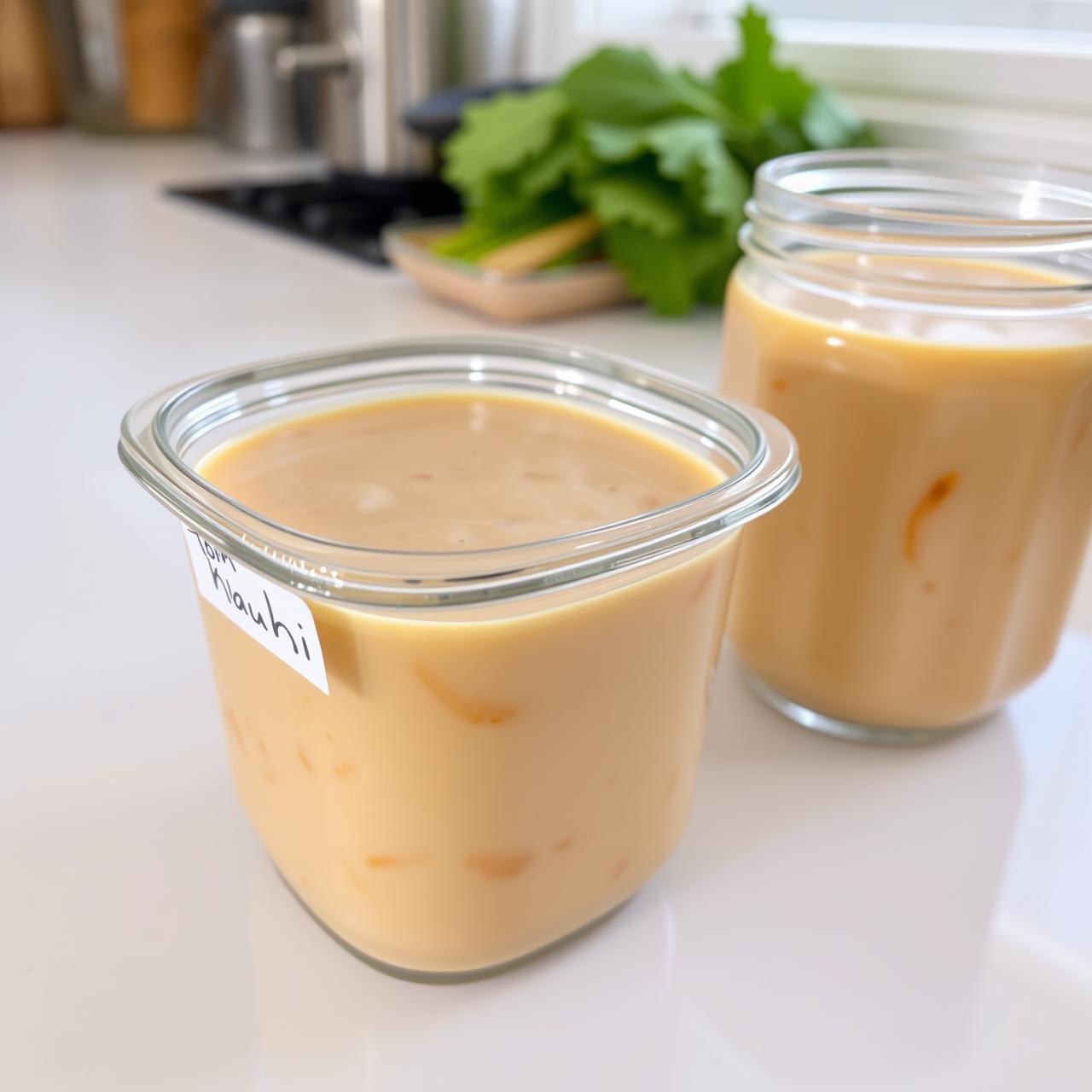
One of the best things about this soup is that the flavors continue to meld and deepen over time, making the leftovers just as delicious, if not more so. Proper storage is key to enjoying it later.
Refrigeration:
Allow the soup to cool completely to room temperature before storing. Transfer it to an airtight container and it will keep well in the refrigerator for up to 3-4 days. The coconut fat may solidify at the top, which is perfectly normal. It will melt back into the soup upon reheating.
Freezing:
Tom Kha Gai freezes surprisingly well. For best results, cool the soup completely and then pour it into freezer-safe containers or heavy-duty freezer bags. Leave about an inch of headspace to allow for expansion. It can be frozen for up to 3 months. Note that the texture of the mushrooms might change slightly upon thawing, but the flavor will remain robust.
Reheating:
To reheat, gently warm the soup in a saucepan over medium-low heat, stirring occasionally until it is heated through. Avoid boiling it. If reheating from frozen, it’s best to thaw it in the refrigerator overnight first. Once reheated, you can refresh the flavors with a fresh squeeze of lime juice and a sprinkle of new cilantro to brighten it up.
Conclusion
You have now mastered the art of creating an authentic, soul-satisfying Tom Kha Gai. This recipe proves that you don’t need to compromise on flavor to create a healthy, clean, and deeply comforting meal in your own kitchen. The beauty of this soup is its perfect, delicate balance—a testament to the brilliance of Thai cuisine. It’s a dish to be shared, to be savored, and to be proud of. Whether you’re a seasoned cook or a curious beginner, we hope this recipe becomes a cherished favorite in your home. So go ahead, fill a bowl, breathe in the fragrant steam, and transport yourself to the heart of Thailand with every spoonful.