Spicy Kani Salad: The Crunchy, Creamy Japanese Side You Can Eat endlessly
There are certain dishes that transport you instantly. For many, the Spicy Kani Salad is a direct ticket to the lively atmosphere of a favorite Japanese steakhouse—the sizzle of the hibachi, the clatter of utensils, and that first bite of a cool, creamy, and refreshingly spicy salad. It’s a prelude to the main event, yet often, it steals the show. Kani Salad, at its heart, is a masterful study in texture and flavor: the delicate sweetness of crab, the cool crunch of cucumber, the creamy heat of spicy mayo, and the delightful pop of tobiko. It’s a dish that seems complex in its satisfaction but is, in reality, beautifully simple to create in your own kitchen. This recipe is more than just a set of instructions; it’s a guide to understanding the balance and technique that elevates this humble side dish into something truly special, a recipe you’ll find yourself returning to time and time again for its effortless elegance and addictive taste.
The Allure of Kani: More Than Just a Salad
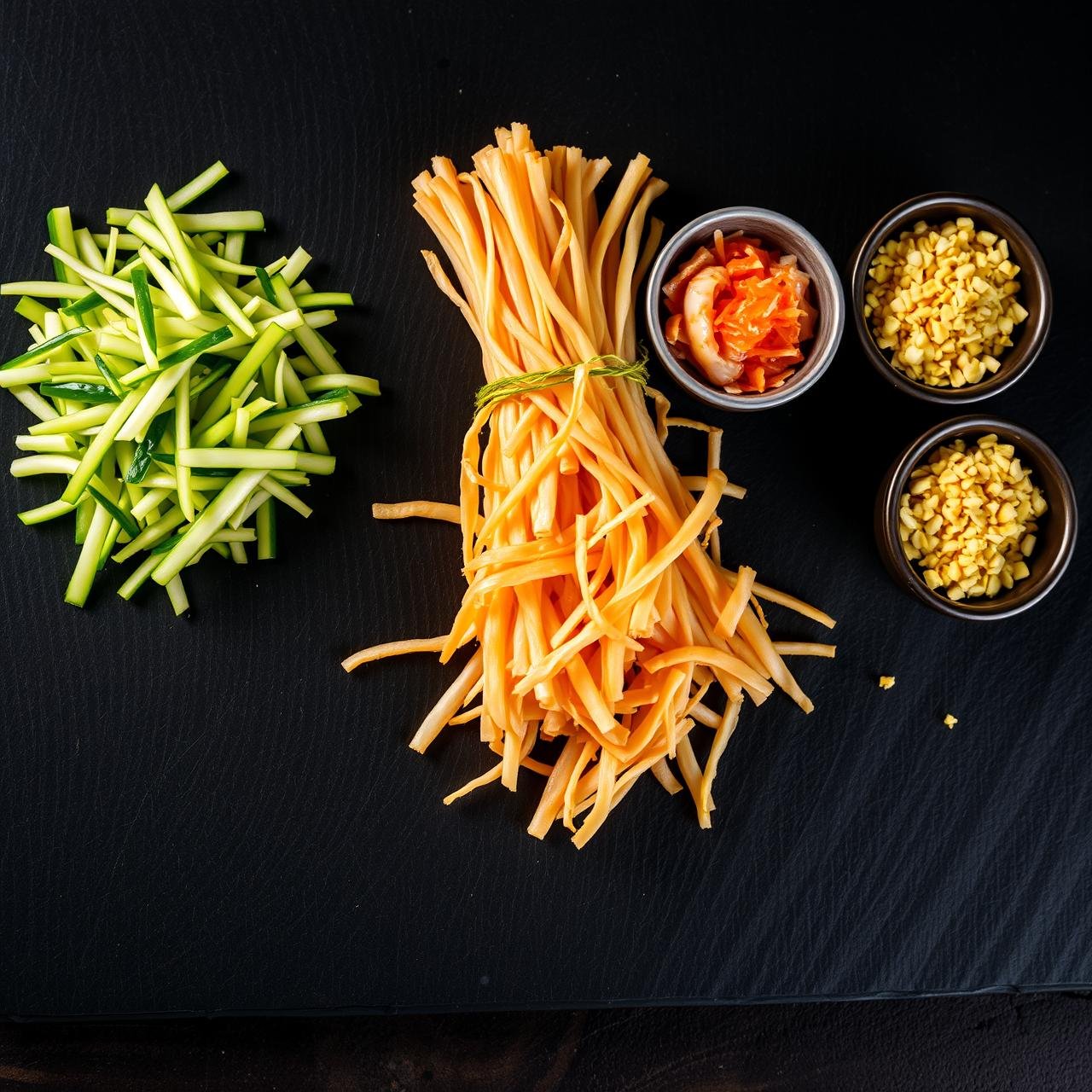
Before we dive into the creation process, let’s appreciate what makes this dish so universally loved. ‘Kani’ is the Japanese word for crab, but in the context of this popular salad, it almost always refers to kanikama, or imitation crab. Made from surimi—a paste of white fish (typically pollock) that is flavored and shaped to resemble crab leg meat—kanikama is the budget-friendly and accessible star of the show. Its invention in Japan in the 1970s revolutionized the seafood industry, making the flavor and texture of crab available to the masses.
The Kani Salad as we know it is largely a Japanese-American invention, a brilliant fusion that took the core ingredient and dressed it in a creamy, spicy sauce that appealed to the Western palate. It became a non-negotiable staple on sushi and hibachi menus across the country. Its magic lies in the symphony of contrasts: the soft, flaky crab against the crisp, watery crunch of cucumber; the rich, fatty creaminess of the mayonnaise cut by the sharp heat of sriracha; and the savory foundation punctuated by the briny pop of fish roe. It’s a dish that hits every note, making it a perfect appetizer, a light lunch, or a refreshing side to a heavier meal.
Essential Equipment for Perfect Kani Salad
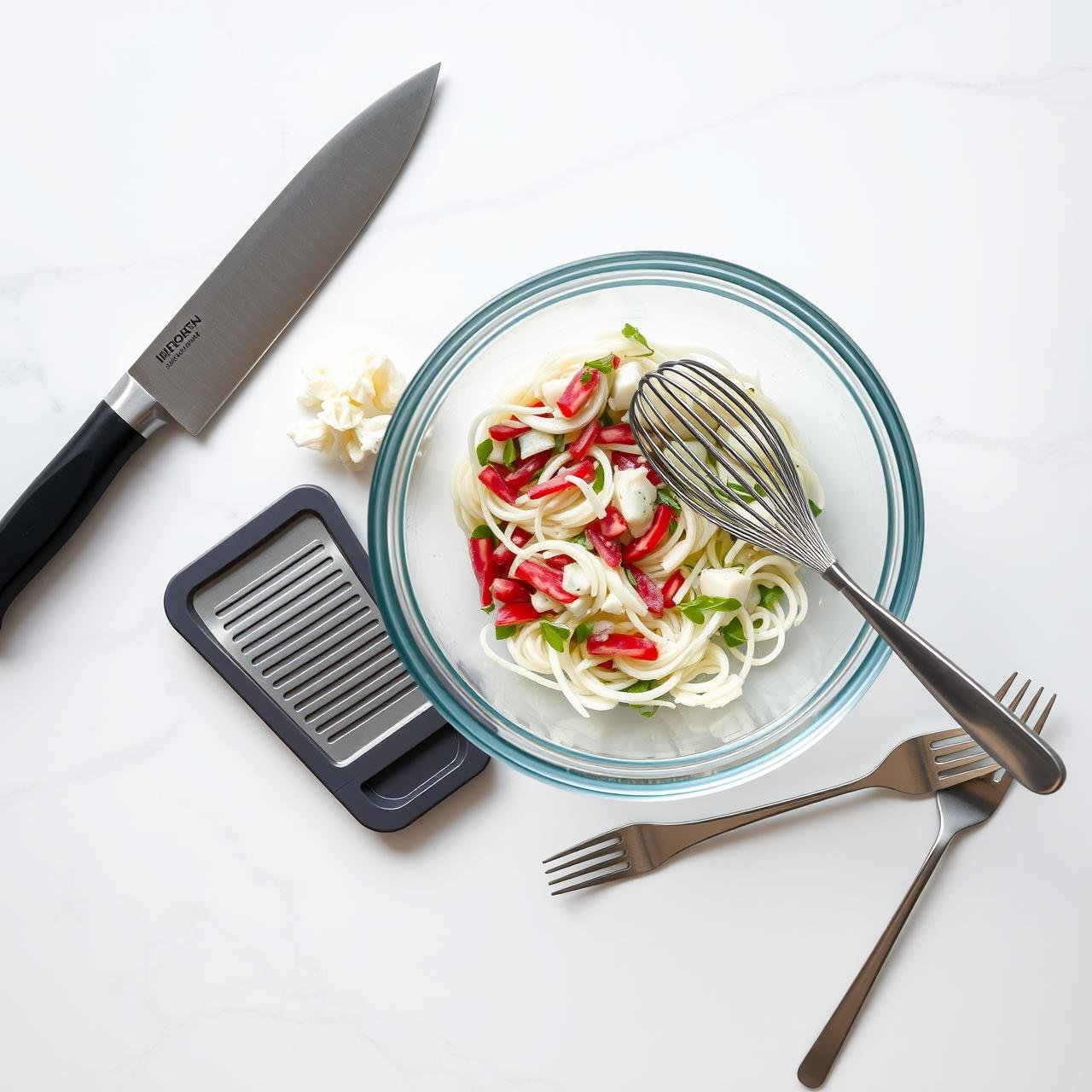
The beauty of this recipe lies in its simplicity, which extends to the tools required. You won’t need any specialized gadgets, just a few kitchen basics to ensure perfect texture and easy preparation.
- Sharp Chef’s Knife: Essential for thinly slicing the cucumber and any other vegetables you choose to add.
- Mandoline Slicer (Optional): For achieving ultra-thin, uniform julienne strips of cucumber with ease. If you have one, this is the time to use it.
- Large Mixing Bowl: To give you ample space to gently toss the ingredients without crushing them.
- Whisk: For creating a smooth, fully incorporated spicy mayonnaise dressing.
- Cutting Board: A stable surface for all your prep work.
- Forks or Chopsticks: Surprisingly, two forks or a pair of chopsticks are the best tools for shredding the imitation crab into fine, delicate strands.
Sourcing Your Ingredients: Quality on a Budget
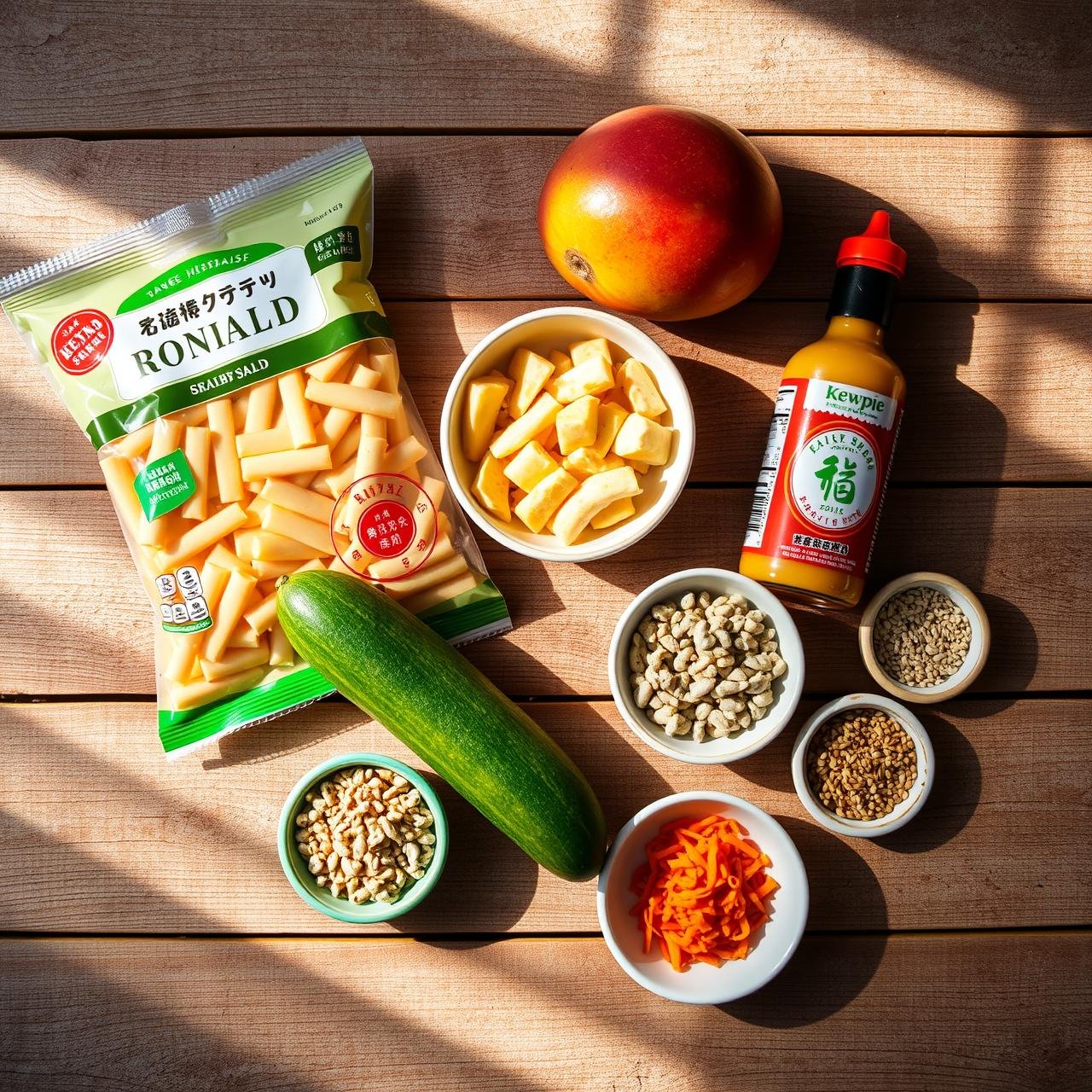
The final dish is only as good as its components. While Kani Salad is inherently budget-friendly, choosing the right versions of each ingredient will make a significant difference.
For the Salad Base
- Imitation Crab (Kanikama): Look for the ‘stick’ or ‘leg’ style, as it’s the easiest to shred. While all are made from surimi, some brands have a better texture and flavor than others. Don’t be afraid to try a couple to find your favorite. You’ll need about 1 pound (450g).
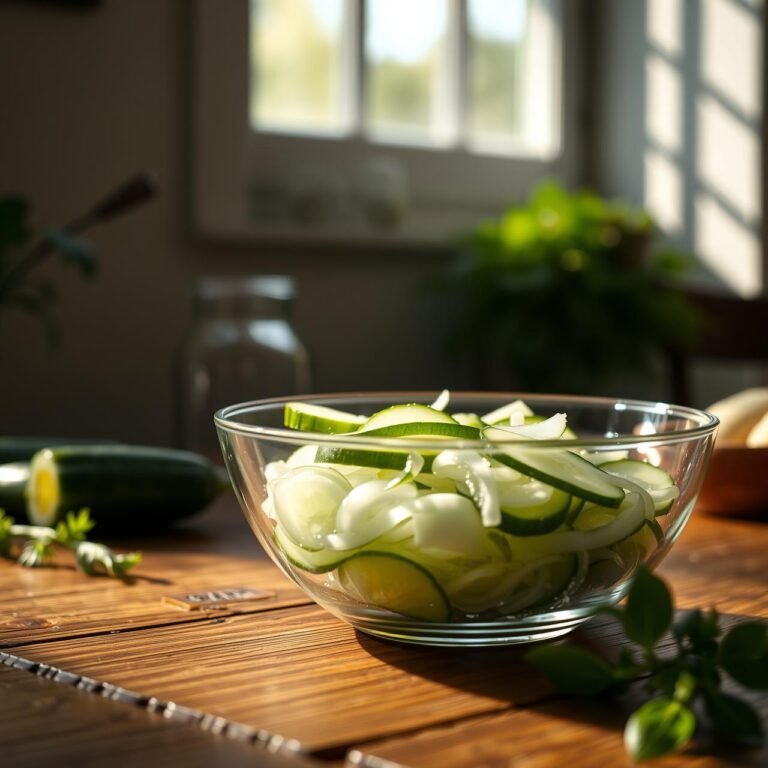
- Cucumber: English or Persian cucumbers are ideal. They have thin skins, fewer seeds, and a less watery flesh, which means a crunchier, less soggy salad. You will need 1 large English cucumber or 2-3 smaller Persian cucumbers.
- Mango (Optional, but Recommended): For a touch of sweetness that beautifully contrasts the spice. Choose a mango that is ripe but still firm to the touch, so it holds its shape when julienned. You will need 1 ripe mango.
- Panko Breadcrumbs: This is the secret to an incredible crunch. Toast them lightly in a dry skillet until golden for an extra layer of nutty flavor. You’ll want about 1/2 cup.
- Masago or Tobiko (Fish Roe): These tiny, crunchy eggs add a burst of color and a subtle briny flavor. Masago (smelt roe) is smaller and less expensive, while Tobiko (flying fish roe) is larger and has a more pronounced crunch. Find them in the refrigerated or freezer section of most Asian markets. You will need 2-3 tablespoons.
- Toasted Sesame Seeds: For garnish and a nutty aroma. A mix of black and white seeds looks beautiful.
For the Spicy Mayo Dressing
- Japanese Mayonnaise (Kewpie): This is non-negotiable for authentic flavor. Made with only egg yolks and rice vinegar, it’s richer, creamier, and has a distinct umami tang that American mayonnaise lacks.
- Sriracha: The source of our heat. Adjust the amount to your personal preference.
- Rice Vinegar: A splash to thin the dressing slightly and add a bright, acidic note.
- Sesame Oil: Just a touch for its deep, nutty aroma. A little goes a long way.
- A Pinch of Sugar: To balance the heat and acidity.
- Soy Sauce or Tamari: For a savory, umami depth.
Step-by-Step Instructions for Assembling Your Salad
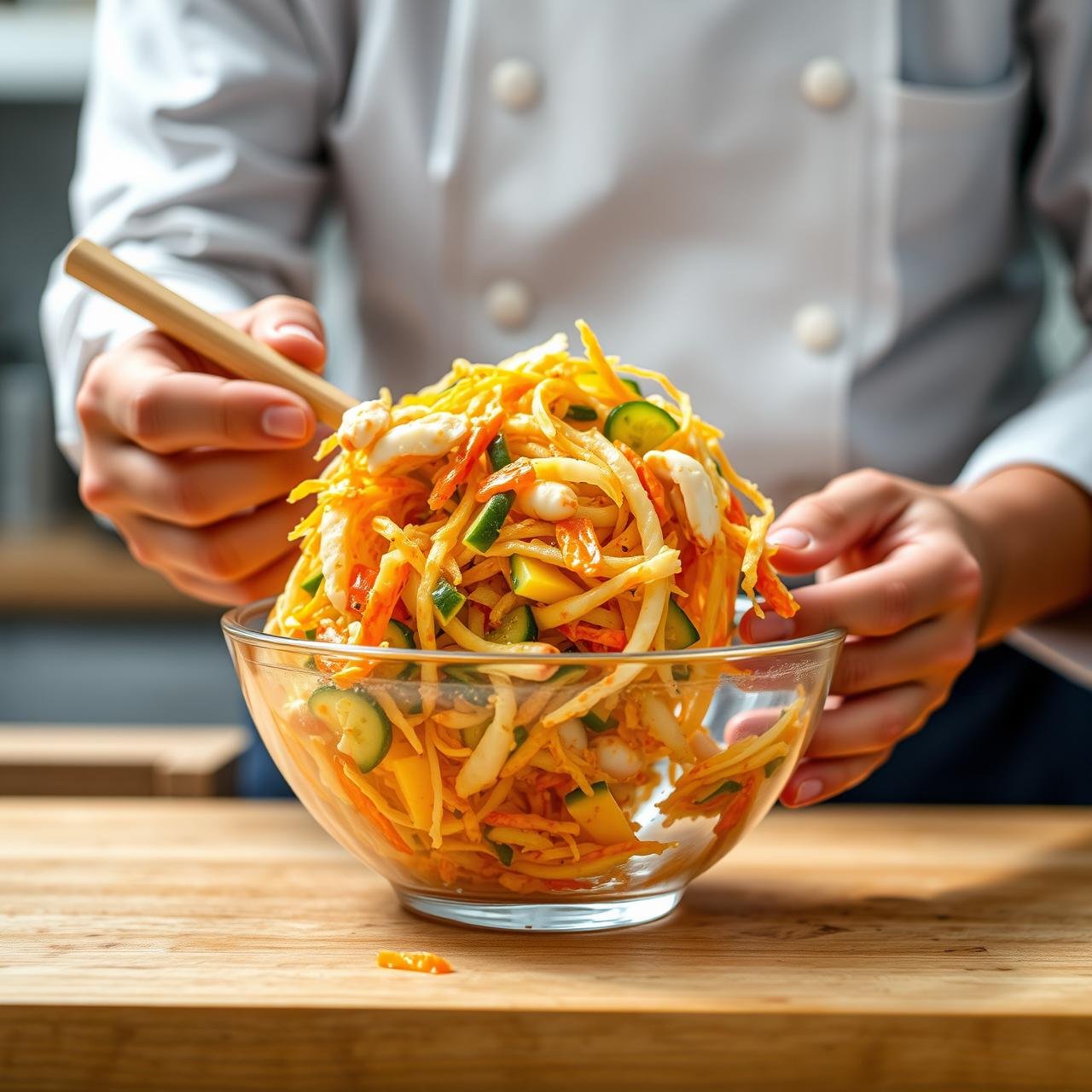
Follow these steps carefully to build your salad, focusing on texture and gentle handling to keep the ingredients distinct and vibrant.
-
Prepare the Components:
First, focus on your prep work. Use a sharp knife or a mandoline to julienne the cucumber into long, thin, matchstick-like pieces. If using a mango, peel it and slice the flesh away from the pit, then julienne it in the same manner as the cucumber. Set both aside.
-
Shred the Imitation Crab:
Unwrap the imitation crab sticks. The key to the classic texture is to shred them, not chop them. You can do this by hand, pulling them apart into fine strands. For a faster method, use two forks to pull and shred the sticks apart in a bowl. Aim for thin, feathery pieces. Place the shredded crab in your large mixing bowl.
-
Toast the Panko:
Place the 1/2 cup of panko breadcrumbs into a small, dry skillet over medium heat. Toast, stirring frequently, for 2-3 minutes, or until they are fragrant and a light golden brown. Immediately remove them from the pan to a plate to stop the cooking process and allow them to cool completely. This step is crucial for maximum crunch.
-
Whisk the Spicy Mayo Dressing:
In a separate, smaller bowl, combine 1 cup of Japanese mayonnaise, 2-3 tablespoons of Sriracha (or to taste), 1 teaspoon of sesame oil, 1 teaspoon of rice vinegar, 1/2 teaspoon of sugar, and 1 teaspoon of soy sauce. Whisk until the sauce is completely smooth, creamy, and uniform in color. Taste and adjust the seasonings if necessary—more Sriracha for heat, more sugar for balance, etc.
-
Combine and Dress the Salad:
Add the julienned cucumber and mango to the large bowl with the shredded crab. Pour about three-quarters of the spicy mayo dressing over the ingredients. Using chopsticks or your hands, gently toss everything together until the crab and vegetables are evenly coated. Be careful not to overmix, as this can make the salad mushy. Add more dressing if you prefer a creamier consistency.
-
Garnish and Serve:
Transfer the salad to a serving platter or individual bowls. Just before serving, generously sprinkle the top with the toasted panko breadcrumbs, the 2-3 tablespoons of masago or tobiko, and a pinch of toasted sesame seeds. Serve immediately to enjoy the contrast between the cool, creamy salad and the warm, crunchy toppings.
Chef’s Tips for a Restaurant-Quality Salad
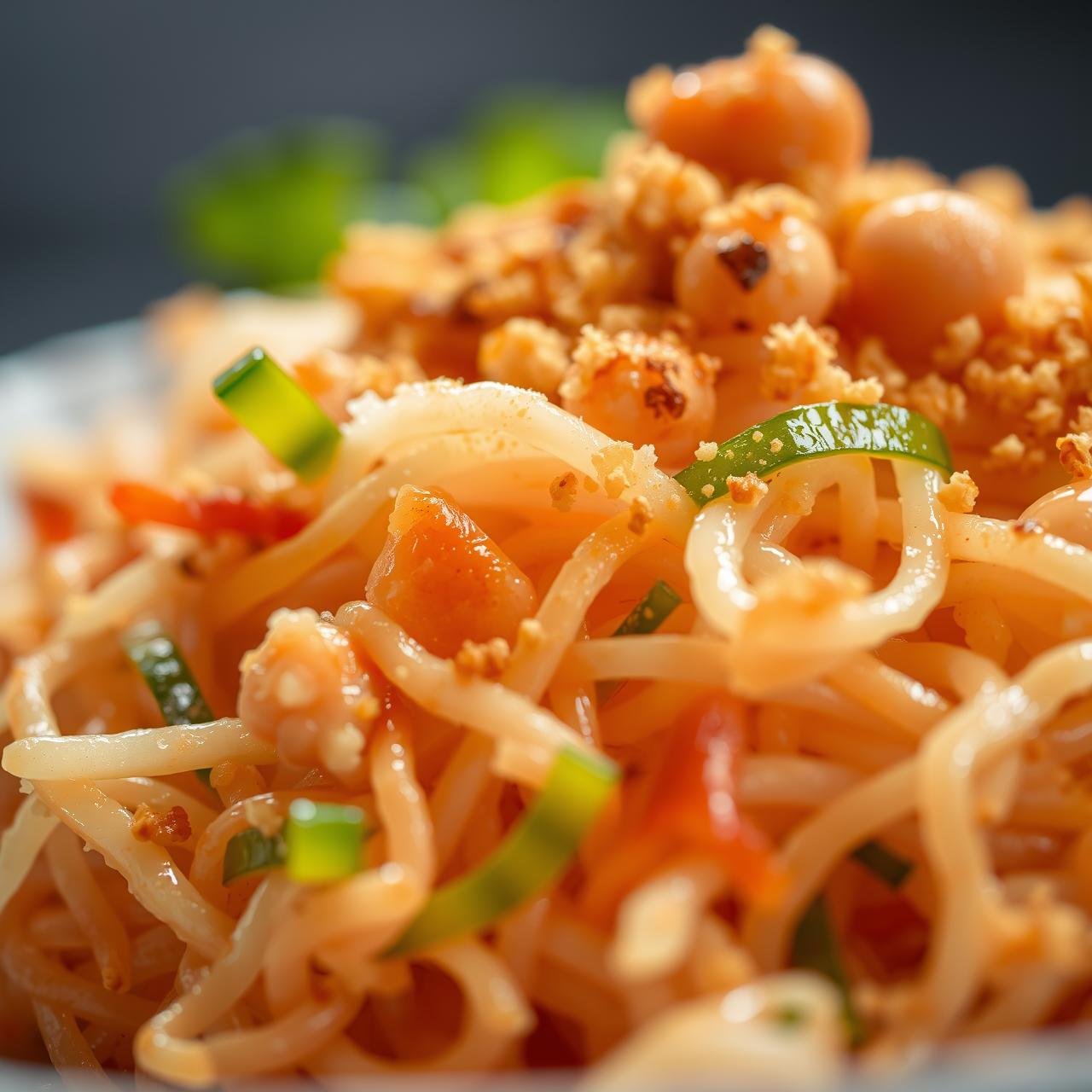
Achieving the Perfect Shred
The texture of the crab is paramount. If you find the fork method cumbersome, try this: slightly unroll each crab stick, and you’ll see the natural layers. You can then easily pull these layers apart by hand into very fine, delicate threads. This manual method yields the most authentic, restaurant-style texture.
Controlling the Water Content
Cucumber naturally releases water, which can thin the dressing and make the salad soggy over time. To mitigate this, you can lightly salt the julienned cucumber strips and let them sit in a colander for about 15-20 minutes. The salt will draw out excess moisture. Rinse the cucumber lightly with cold water and pat it thoroughly dry with paper towels before adding it to the salad. This extra step ensures your salad stays crisp and creamy.
The Importance of Japanese Mayonnaise
It cannot be overstated: using Kewpie or another Japanese-style mayonnaise will transform your salad. Its unique blend of egg yolks, rice vinegar, and MSG (in the classic formulation) provides an umami-rich creaminess that standard American mayo simply cannot replicate. It’s the soul of the dressing.
Balancing Flavors
Taste your dressing before you add it to the salad. Is it spicy enough? Does it need a brighter note? Don’t hesitate to adjust. A tiny squeeze of fresh lime juice can also be added to the dressing to cut through the richness of the mayonnaise and add another layer of complexity.
Customization and Delicious Variations
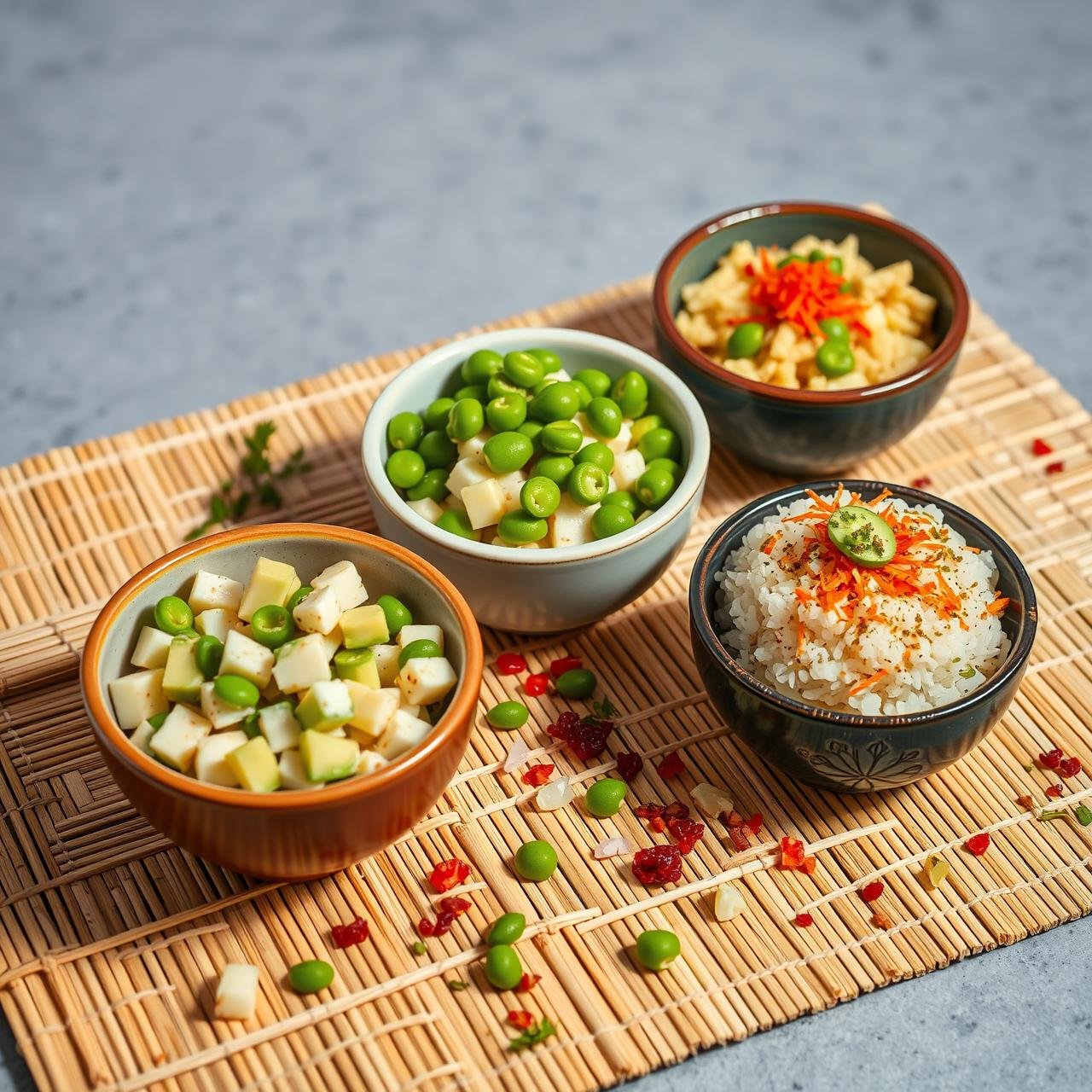
Once you’ve mastered the classic recipe, feel free to experiment. Kani Salad is a fantastic canvas for other flavors and textures.
- Add Avocado: For extra creaminess, dice a ripe avocado and gently fold it in at the very end.
- Incorporate Edamame: Shelled and cooked edamame adds a pleasant pop and a boost of plant-based protein.
- Introduce Other Vegetables: Thinly sliced red onion, shredded carrots, or even thinly sliced jalapeño can add extra crunch and flavor dimensions.
- Switch up the Crunch: Instead of panko, try crushed tempura flakes (tenkasu) for an even more authentic Japanese crunch. Fried wonton strips or crispy fried onions also work wonderfully.
- Make it a Full Meal: Serve the spicy kani salad over a bed of sushi rice to create a delicious and satisfying Kani bowl. You can also use it as a filling for sushi rolls or hand rolls (temaki).
Nutritional Information
Here is an approximate nutritional breakdown for one serving of this Spicy Kani Salad, based on the recipe yielding four servings. Please note that these values are estimates and can vary based on specific ingredients used, such as the brand of mayonnaise and imitation crab.
| Nutrient | Amount per Serving |
|---|---|
| Calories | 380 kcal |
| Protein | 15 g |
| Carbohydrates | 25 g |
| – Sugars | 12 g |
| Fat | 22 g |
| – Saturated Fat | 3.5 g |
| Sodium | 950 mg |
| Fiber | 2 g |
Storage and Make-Ahead Tips
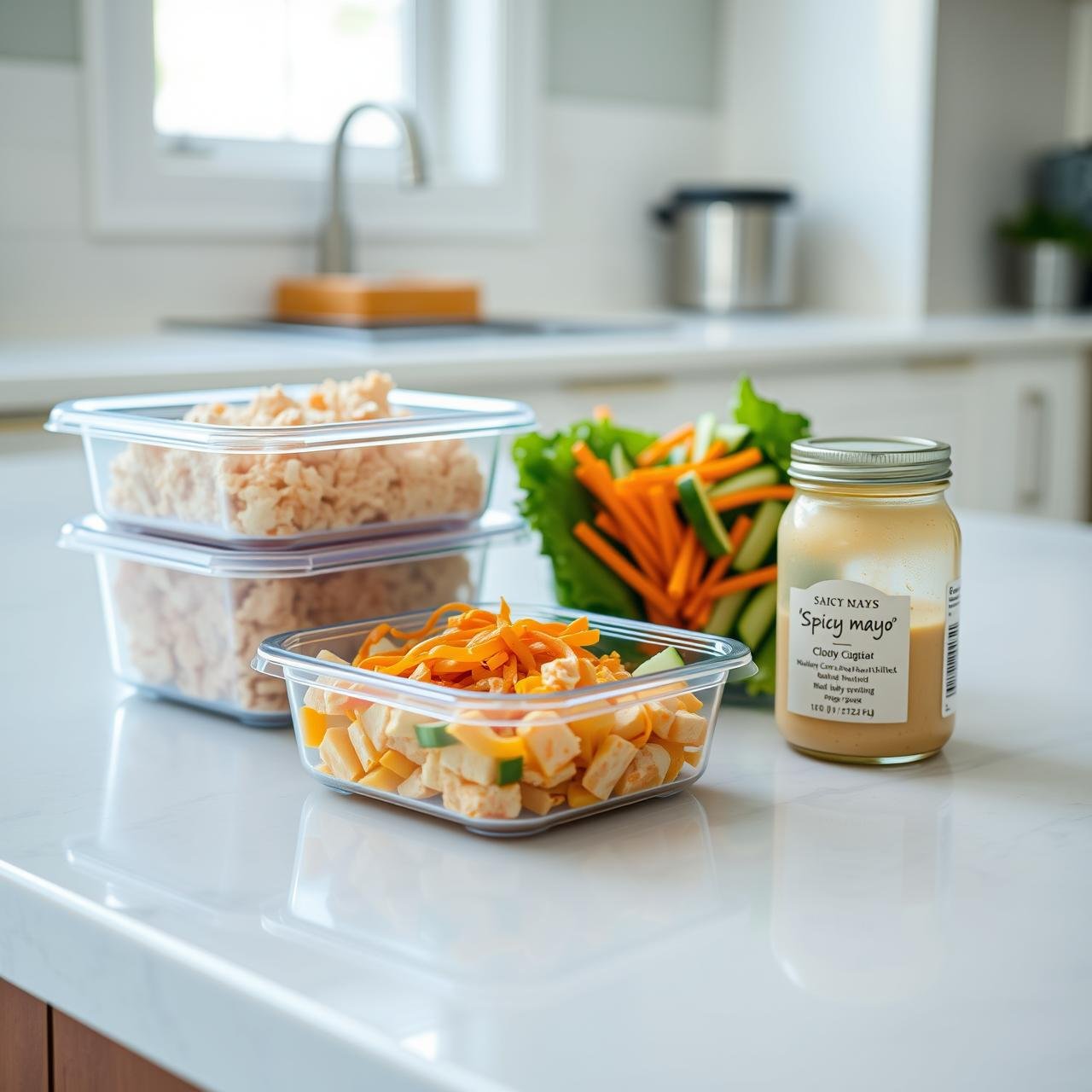
Spicy Kani Salad is best enjoyed fresh, immediately after it’s made, to preserve the delightful crunch of the panko and the crispness of the cucumber. However, with a few strategic steps, you can prepare components in advance.
For Make-Ahead Preparation:
- The dressing can be whisked together and stored in an airtight container in the refrigerator for up to 5 days.
- The imitation crab can be shredded and stored in a separate airtight container in the refrigerator for up to 2 days.
- The cucumber and mango can be julienned and stored in a container lined with a paper towel to absorb excess moisture for up to 1 day.
- The panko can be toasted ahead of time and kept in an airtight container at room temperature.
When you’re ready to serve, simply combine the crab, cucumber, and mango, toss with the dressing, and top with the crunchy garnishes.
Storing Leftovers:
If you have leftovers, store them in an airtight container in the refrigerator for up to 2 days. Be aware that the panko will lose its crunch, and the cucumber will release more water over time, making the salad softer and more watery. It will still be delicious, but the texture will be different from when it was freshly made.
Conclusion
The Spicy Kani Salad is a testament to the fact that extraordinary flavor doesn’t require complicated techniques or expensive ingredients. It’s a harmonious blend of textures and tastes that is both comforting and exciting. By understanding the role of each component—from the essential creaminess of Japanese mayo to the game-changing crunch of toasted panko—you are now equipped to recreate, and even elevate, this steakhouse classic in your own home. Whether you serve it as an elegant appetizer for guests or enjoy it as a quick and satisfying lunch, this recipe is a versatile, delicious, and endlessly repeatable addition to your culinary repertoire. Enjoy the process, savor every crunchy, creamy bite, and embrace the simple joy of making something truly delicious.